
Electric mining excavators are forcing mines to plan power before productivity
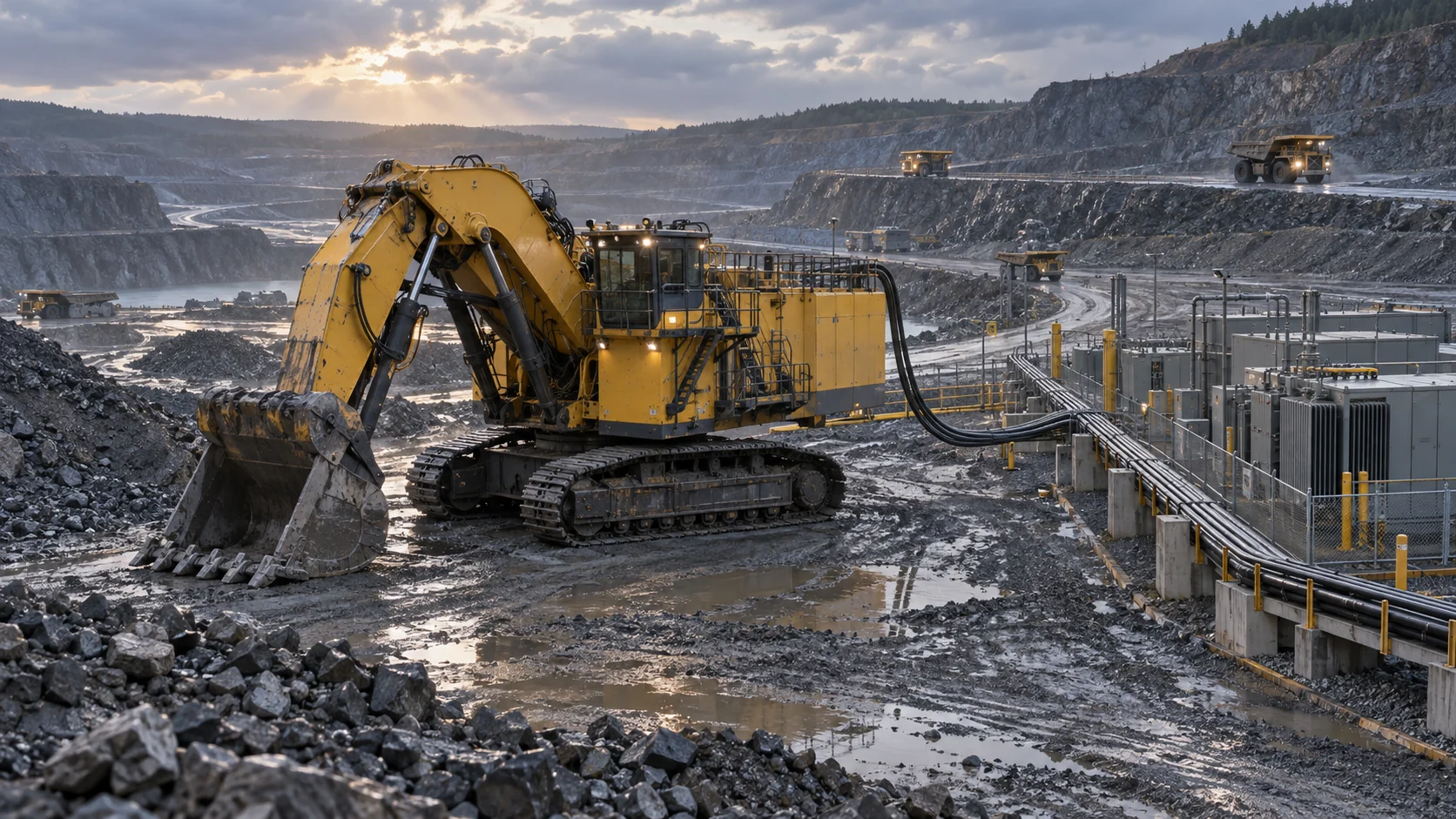
A mine crew can lose a full night to a problem that never appears on a diesel machine checklist: pulling a mud-soaked high-voltage cable into position after heavy rain, then checking every connector before the excavator can start work. That scene says a lot about where heavy earthmoving is heading. Electric and hybrid mining excavators are no longer just clean-machine talking points. They are pushing mines to rethink site power, cable handling, maintenance routines, and the way haulage fleets are matched to loading equipment.
Reports this week from 21-SUN and D1CM point in the same direction. 21-SUN described a large cable-powered electric mining excavator, weighing about 83 tonnes and fitted with a 5 cubic metre bucket, entering mine service after a difficult wet-weather installation. D1CM separately reported the delivery of a nearly 40-tonne class hybrid excavator for mining work in Xinjiang, with fuel-saving claims tied to swing energy recovery. D1CM also covered electric and autonomous mining trucks alongside mine microgrids, a sign that the power question now extends beyond a single machine.
The real question is not whether the excavator is electric
For buyers, the more useful question is: can the jobsite support the machine every shift?
A diesel excavator carries most of its energy onboard. A cable electric excavator moves part of that burden to the mine’s electrical layout. Cable route, ground condition, connection protection, water exposure, transformer position, emergency backup and operator training all become part of production planning. If those details are handled poorly, a machine that looks efficient on paper can spend too much time waiting for power, repositioning, or inspection.
Hybrid excavators sit in a different position. They still use fuel, but they recover energy from repeated swing braking and reuse it during acceleration or digging. That matters in truck-loading cycles, where swing motion can take a large share of the working rhythm. The appeal is practical: less fuel burned without asking the site to rebuild its entire energy system on day one.
Cable electric machines change the jobsite discipline
Cable electric mining excavators can cut local emissions and reduce energy cost in suitable fixed or semi-fixed applications. They make the most sense where loading faces are planned, the haul road pattern is stable, and the site can keep power infrastructure close enough to the machine.
The trade-off is discipline. High-voltage cable handling is not a side task. It affects how the pit is organized, how the machine moves, how wet-weather work is controlled, and how maintenance teams inspect seals, connectors and protective routing. In muddy or rainy conditions, the cable can become heavy, abrasive and difficult to manage. That does not make the technology unsuitable. It means mines need operating rules that are as mature as the machine itself.
For contractors used to flexible diesel fleets, this is the biggest adjustment. The excavator is no longer an isolated asset. It is part of an energy system.
Hybrid excavators are a bridge for high-duty loading
Hybrid mining excavators are easier for many sites to absorb. They keep the familiar fueling model while reducing wasted swing energy. In heavy loading, repeated swing-stop-swing cycles are exactly where energy recovery can help.
The value is not only fuel economy. A well-designed hybrid system can smooth engine load, support acceleration and reduce heat losses in repetitive work. Buyers should still be careful with headline saving figures. Real savings depend on bucket size, material density, bench layout, truck positioning, operator habits, altitude and temperature. A hybrid machine that saves fuel in a controlled loading cycle may show a smaller gain in scattered utility work.
That is why site trials matter more than brochures. Measure litres per hour, tonnes moved per litre, cycle time, downtime and maintenance alarms over several weeks. A clean comparison should include the diesel baseline, not just the new machine’s best day.
Electric excavators and electric dump trucks must be planned together
The next step is fleet-level planning. Electric excavators, electric dump trucks and autonomous mining trucks are starting to appear in the same conversation because they all depend on energy availability. If a mine electrifies loading but leaves haulage untouched, the power plan is simpler. If it electrifies both loading and hauling, charging windows, route grade, downhill regeneration, battery thermal management and grid capacity become connected decisions.
This is where microgrids are attracting attention. A mine that combines solar, wind, storage and backup generation may reduce diesel dependence, but only if the power system is sized for real production peaks. The charging load from electric dump trucks can be very different from the steady demand of a cable excavator. Planning them together prevents one upgrade from creating a bottleneck somewhere else.
What buyers should ask before choosing an electric or hybrid excavator
- What production pattern is the machine expected to handle: fixed-face loading, frequent repositioning, trenching, quarry work or mixed duties?
- For cable electric models, where will the cable run, and who is responsible for moving, inspecting and protecting it?
- What happens after heavy rain, freezing weather or a power interruption?
- For hybrid models, how much of the duty cycle is repeated swing loading where energy recovery can pay back?
- Can the supplier provide site-level fuel, energy and downtime data from similar conditions?
- If electric dump trucks are planned later, will today’s excavator power design still make sense?
A practical view from XeMach
The lesson for equipment buyers is simple: electrification is no longer only a product specification. It is a site design decision. Electric mining excavators can be strong choices where the work face is stable and power can be managed safely. Hybrid excavators can be a lower-disruption step for mines that want measurable fuel reduction without changing every part of the pit. Electric dump trucks add another layer, because charging and haul-cycle planning have to match the loader’s rhythm.
For XeMach customers, the next sensible step is not to ask for the newest powertrain first. Start with the work: material, altitude, climate, haul distance, shift hours, maintenance capability and available power. Once those facts are clear, the right excavator specification becomes much easier to defend.
Originally published by XEMACH · 06 SEPT 2026. Original article content and its source links are retained.
Explore equipment