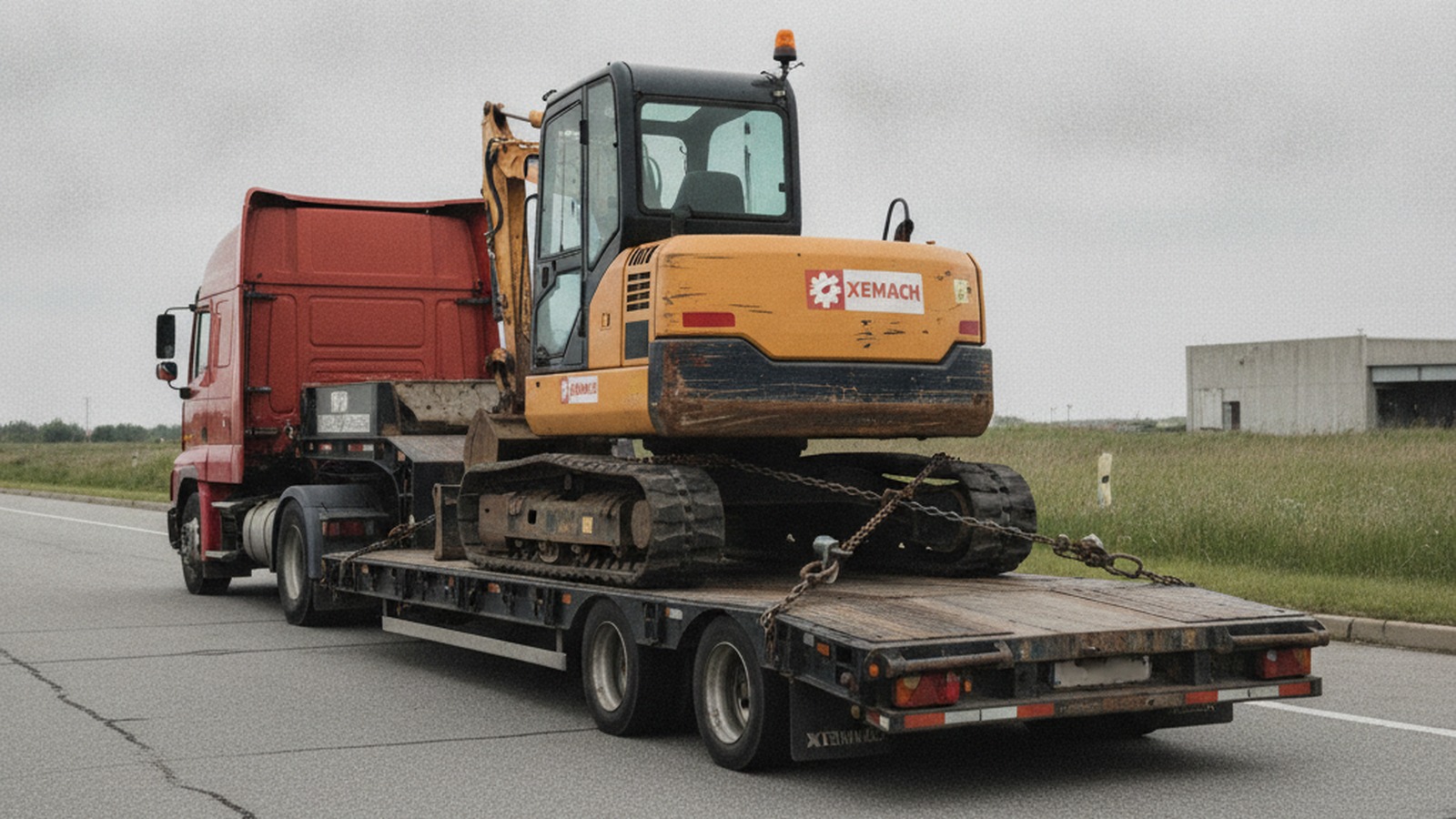
At 6:30 in the morning, a utility crew is trying to load two machines onto one trailer before city traffic closes half the lane. The excavator has to fit a narrow trench job, run a breaker in the afternoon, and still stay light enough that the pickup-and-trailer combination does not become the day's first problem. That is exactly why the 2.5- to 4-ton mini excavator segment is getting so much attention this year.
Recent coverage across industry media points in the same direction: manufacturers are treating the 3-ton class less like an entry machine and more like the center of the compact earthmoving market. The headline features keep repeating, but the reason is practical. Buyers want one machine that can move between rental, utilities, landscaping, municipal work, and small commercial jobs without feeling stripped down.
Why this size class is heating up
The small mini excavator used to be the machine you bought when access was the main constraint. In 2026, it is increasingly the machine crews buy because it covers the widest mix of jobs per transport dollar. A machine in this band can often get into tight urban work, travel behind a lighter truck-and-trailer setup, and still handle a serious attachment package.
That matters because jobsite planning has changed. Crews are under more pressure to reduce mobilization time, squeeze work into smaller windows, and avoid sending extra support equipment unless it clearly earns its keep. In that environment, the best mini excavator is no longer the cheapest one. It is the one that removes the most friction from a full working day.
The real product story is not horsepower
If you read the latest launch reports carefully, the pattern is obvious. The sales pitch is shifting away from raw spec-sheet talk and toward operator usability.
Zero-tail-swing or minimal-tail-swing layouts keep showing up because they solve a real cost: accidental contact in confined spaces. Better cab visibility keeps showing up because tight work is tiring, and fatigue becomes a productivity problem long before it becomes a safety report. Joystick-based auxiliary hydraulic controls, touchscreen monitors, keyless start, and simplified service access are all signs that compact excavators are borrowing expectations from larger machines.
This is a bigger shift than it looks. When compact excavators start getting judged by cab layout, control logic, and attachment workflow instead of just digging depth, the buying process changes. Owners start comparing them as income-generating tools, not just access solutions.
Attachment readiness is now a deciding factor
The most interesting part of the current launch wave is how often attachment compatibility appears near the top of the feature list. That is not marketing filler. It reflects where contractors are trying to get more return from one base machine.
Quick coupler options, one-way and two-way auxiliary hydraulics, extra circuits for higher-demand tools, and thumb-ready configurations all point to the same reality: buyers expect a mini excavator to switch roles fast. Morning trenching, midday pipe placement, afternoon breaking, and end-of-day cleanup is not an unusual schedule anymore.
For dealers and fleet owners, that raises a more useful question than "How big is the engine?" The better question is "How much downtime or setup time disappears when the attachment package is right from day one?" In many fleets, that answer will matter more than a small gain in breakout force.
What smart buyers should check before they sign
This part is getting easier to miss because the new compact machines look more polished than ever. But a cleaner cab and a nicer monitor do not automatically mean the machine is the right tool.
Buyers should check four things carefully:
- Trailer and tow compatibility in real operating trim, not brochure trim.
- Hydraulic flow and circuit configuration for the attachments that will actually earn money.
- Rear swing, transport width, and blade setup against the tightest site on the weekly schedule.
- Service access and parts support, because compact machines lose their advantage fast when they sit idle.
There is also a training angle. If a fleet runs multiple compact machines, common controls and predictable machine behavior are becoming more valuable. That is one reason recent launches keep talking about shared platforms and simplified operator onboarding. The labor market is not loose enough for owners to ignore that.
What this means for the market
The compact excavator segment is maturing into a serious specification battle. Manufacturers clearly think buyers will pay attention to uptime details, not just basic dimensions. That is healthy for the market because it pushes product development toward real field problems: transport limits, attachment changes, visibility, and operator fatigue.
From XeMach's side, the takeaway is straightforward. Demand in mini excavators is moving toward compact machines that behave like complete jobsite systems. Buyers want a machine sized for access, but equipped for a broader day of work. Any supplier that understands that balance and delivers the right hydraulic, coupler, and operator package will be speaking the market's real language, not just reciting specs.