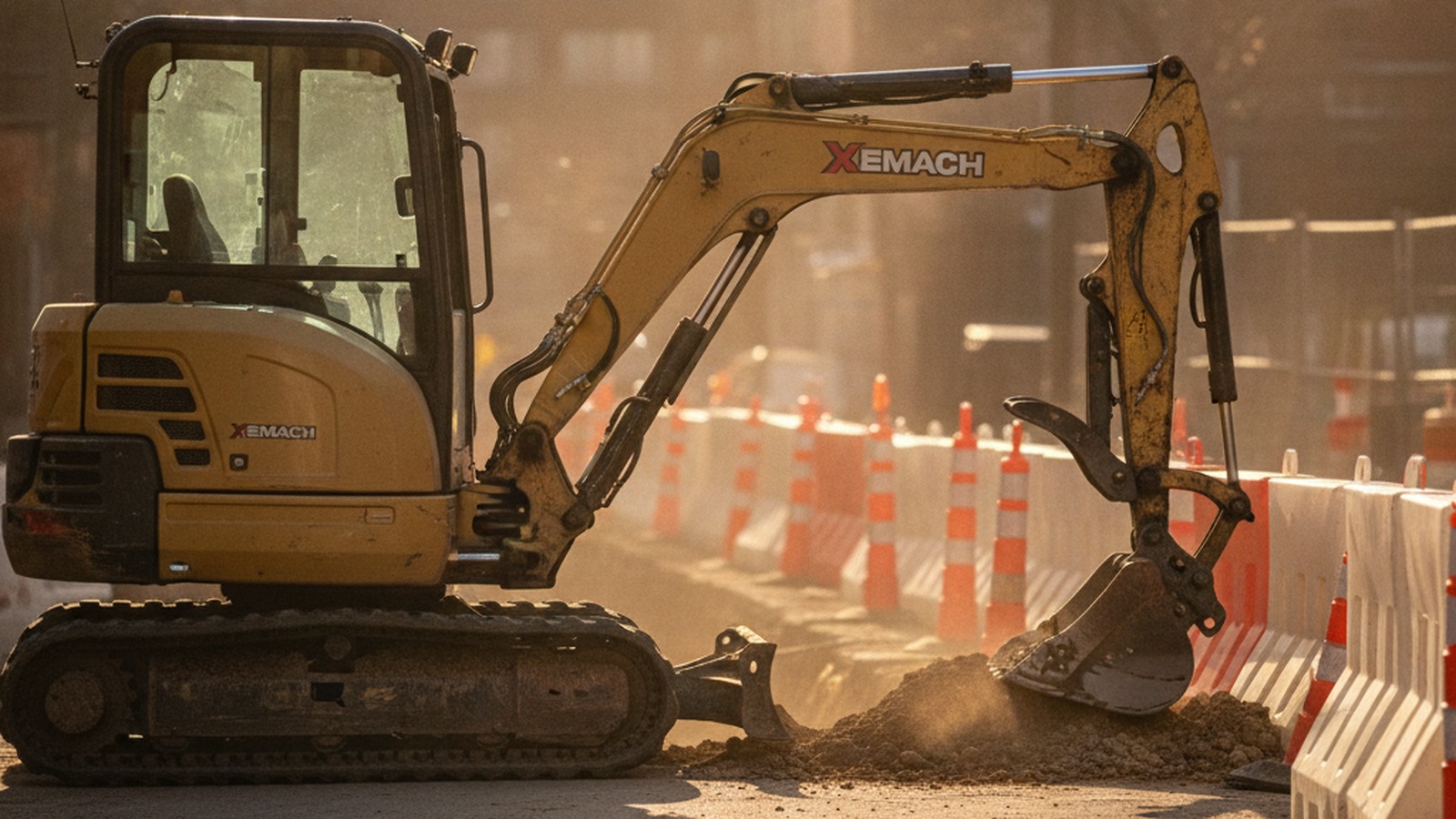
A utility crew loses two hours on a short trench repair because the machine on site can dig well, but swapping between a bucket, thumb, and breaker takes longer than the actual pipe work. That kind of delay is why compact excavator buying criteria are shifting. In 2026, more contractors are no longer judging a mini excavator only by digging depth or breakout force. They are judging it by how fast it can move from one task to the next.
Recent product launches and excavator updates point in the same direction: the machine itself matters, but the hydraulic layout, coupler setup, control logic, and attachment readiness now decide whether a compact excavator earns money across a full day of mixed work.
The compact excavator is taking on more jobs per shift
Across the latest mini excavator releases, a clear pattern is showing up. Features that used to be optional or aftermarket are moving into the base machine. Angle blades, thumbs, auxiliary hydraulics, and quick couplers are becoming part of the standard conversation instead of premium add-ons.
That matters because job mix has changed. A contractor handling drainage, light demolition, trenching, grading, and cleanup may want one compact machine to cover all of it. When that happens, attachment changeover time becomes a real productivity number, not a brochure feature.
One recent three-ton launch cycle emphasized zero-tail-swing layouts, hydraulic flexibility, and standard provision for fast attachment changes. Another mini excavator launch in the 3.5-ton and 5.7-ton classes leaned on standard angle blades, thumbs, auxiliary hydraulics, and quick couplers from day one. The signal is hard to miss: compact excavators are being packaged to arrive jobsite-ready for mixed tasks.
Buyers are starting to care more about hydraulic architecture
On paper, two machines can sit in the same weight class and look similar. In the field, the difference often shows up in the hydraulic spec.
Contractors now need to look beyond engine power and bucket numbers. They need to ask how many auxiliary circuits are available, whether constant-flow functions are supported, how easy the machine is to tune for different attachments, and whether the coupler setup is factory-ready or still a retrofit story.
This is where a lot of real ownership cost hides. If a breaker, auger, compactor, or tilt attachment needs extra plumbing later, the initial machine price stops looking cheap very quickly. A machine that is ready for those tools at delivery usually costs less pain than a machine that has to be adapted after purchase.
Fast attachment change is becoming an operator retention issue too
The industry often talks about labor shortages in broad terms, but excavator spec has a very practical role here. Operators stay more productive when the cab, control layout, visibility, and attachment setup do not fight them all day.
That is also why this trend is not limited to mini excavators. In larger crawler excavators, manufacturers are putting more effort into attachment management, in-cab setup, and stored attachment settings. Once that logic moves upstream into bigger machines, it usually does not stay there for long. Compact equipment buyers start expecting the same convenience, even if the machine is much smaller.
For fleet owners, that means “easy to switch tasks” is no longer just a sales phrase. It affects training time, daily output, and whether less-experienced operators can still keep the machine useful across a varied work order.
What contractors should check before they sign
- Coupler readiness: Is the machine delivered with quick-coupler provision, or will the fleet need extra installation work?
- Auxiliary hydraulics: How many circuits are available, and which common attachments can the machine run without modification?
- Control memory: Can attachment settings be stored, recalled, or adjusted without wasting setup time?
- Stability in real work: Does the machine still feel planted when grading, lifting, or using powered attachments in tight space?
- Service access: Are daily checks and hydraulic service points easy to reach, or does attachment capability come with maintenance frustration?
The next comparison point is use, not just specification
The compact excavator market is getting more crowded, so headline specs alone are losing some of their selling power. The smarter comparison is machine use across a week of mixed work. Can one unit trench on Monday, run a breaker on Tuesday, grade on Wednesday, and still avoid downtime from setup friction?
From XeMach’s side of the market, that is the useful takeaway. Buyers should treat attachment readiness as part of the core machine, not as an accessory decision to postpone. The manufacturers that make hydraulic flexibility, quick change, and simple control setup standard will be closer to where demand is moving next.