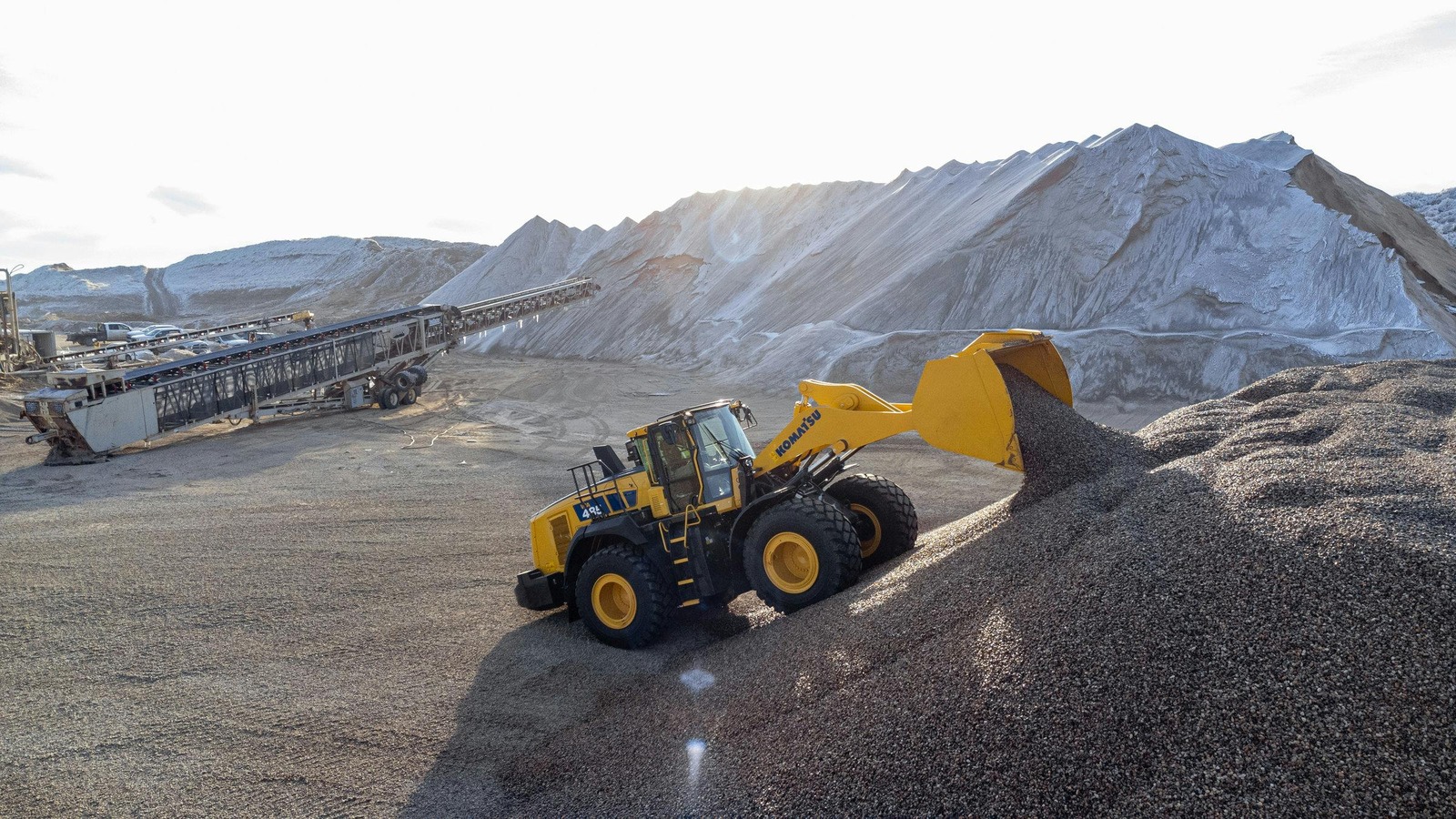
At 6:20 in the morning, a quarry loader is already the bottleneck. Three trucks are waiting, the crusher feed cannot slow down, and nobody on site cares whether the machine brochure promised another ten horsepower if the loader loses half an hour to dust-related service or inconsistent bucket fill. That is the real buying context behind the latest wave of large wheel loader launches.
Recent June roundups from Construction Equipment point to a clear industry shift in large wheel loaders for quarries and aggregates: buyers are still paying attention to payload, breakout force, and cycle speed, but the real separation now comes from how consistently a machine can stay in the loading rhythm. In other words, the market is moving from “big loader” thinking to “reliable production system” thinking.
The quarry job has become less forgiving
Large wheel loaders have always lived and died by production. What feels different in 2026 is how many variables now punish inconsistency. Truck loading targets are tighter. Fuel is still a line item nobody can ignore. Operators are harder to find and harder to keep. Dust, long shifts, and repetitive load-and-carry cycles expose weak points fast.
That is why the latest machines are being framed less as raw iron and more as complete uptime packages. Across the recent market examples, the headline features are not just larger buckets or higher horsepower. The emphasis is on drivetrains that waste less energy, hydraulic response that helps repeat clean cycles, cabs that reduce fatigue over a full shift, and service layouts that shorten the distance between a warning light and a machine back at work.
Drivetrain design is becoming a profit question
One of the strongest signals in the current loader market is the amount of attention going into drivetrain architecture. Recent models highlighted in the June coverage show several routes to the same goal: reduce power losses, keep acceleration predictable under load, and improve fuel use without giving back productivity.
That matters because a quarry loader does not win on top speed. It wins on repeated short cycles under stress. A drivetrain that feels smooth in a demo but loses efficiency over thousands of load-and-carry repetitions will show up in fuel burn, tire wear, and truck waiting time. Buyers are starting to evaluate transmission strategy, torque delivery, and traction behavior with much more discipline than they did when horsepower was enough to close the sale.
Service access now belongs in the same conversation as bucket size
This is probably the least glamorous shift, but it may be the most practical one. Recent product coverage repeatedly points to grouped maintenance points, ground-level access, remote diagnostics, telematics, and longer service intervals. That is not marketing filler. In dusty aggregate environments, maintenance design changes the economics of ownership.
Air filtration is a simple example. In quarry conditions, inspection intervals can tighten dramatically depending on the site. If basic checks are awkward, they get delayed. If they get delayed, performance drifts first and downtime follows. The same logic applies to cooling packages, articulation joints, hydraulic hoses, and any component that lives in dust and shock every day.
A large wheel loader that is easy to inspect is not just easier to own. It is easier to trust in a production schedule.
Operator consistency is the new hidden spec
The next buying shift is more human than mechanical. Loader makers are putting real effort into visibility, joystick steering, automated dig and dump functions, object detection, braking control, and seat-and-cab improvements. That is a response to labor reality, not just feature inflation.
A quarry operation no longer assumes every shift will be staffed by a deeply experienced operator who can deliver the same bucket fill and truck placement hour after hour. Machines now have to help average operators get closer to expert-level repeatability. Features that reduce shoulder strain, improve sightlines, or stabilize bucket approach angles do not just make the cab nicer. They protect throughput across long shifts and mixed operator skill levels.
For fleet owners, this changes the buying question. The best machine is not always the one with the most impressive peak number. It is often the one that produces the smallest performance drop between a top operator and a merely competent one.
What buyers should audit before the next loader order
If the June market direction holds, quarry and aggregate buyers should tighten their evaluation process in four areas:
- Measure cycle consistency, not just best-case cycle speed.
- Ask how the drivetrain behaves under repeated short-load work, not only on a spec sheet.
- Check daily service access in person, especially around filters, cooling, and inspection points.
- Look at operator-assist features as production tools, not optional comfort extras.
Those questions are especially important for distributors and export buyers comparing machines across different support environments. A loader that looks competitive in a brochure can become expensive very quickly if local service routines are slow, operator training is thin, or site dust is harsher than the test conditions behind the sales claim.
What this means from the XeMach side
The useful lesson here is straightforward: the quarry wheel loader market is getting more operational and less theatrical. Buyers still want power, but power by itself is no longer persuasive. Machines now need to prove that they can keep material moving with fewer interruptions, lower fatigue, and more predictable costs over a long production week.
For XeMach and for buyers working with XeMach, that points to a sharper conversation. The right loader pitch is not “ours is bigger.” It is “here is how this machine stays productive when dust, labor pressure, and service reality show up at the same time.” That is where decisions are heading, and that is where real differentiation will keep happening.