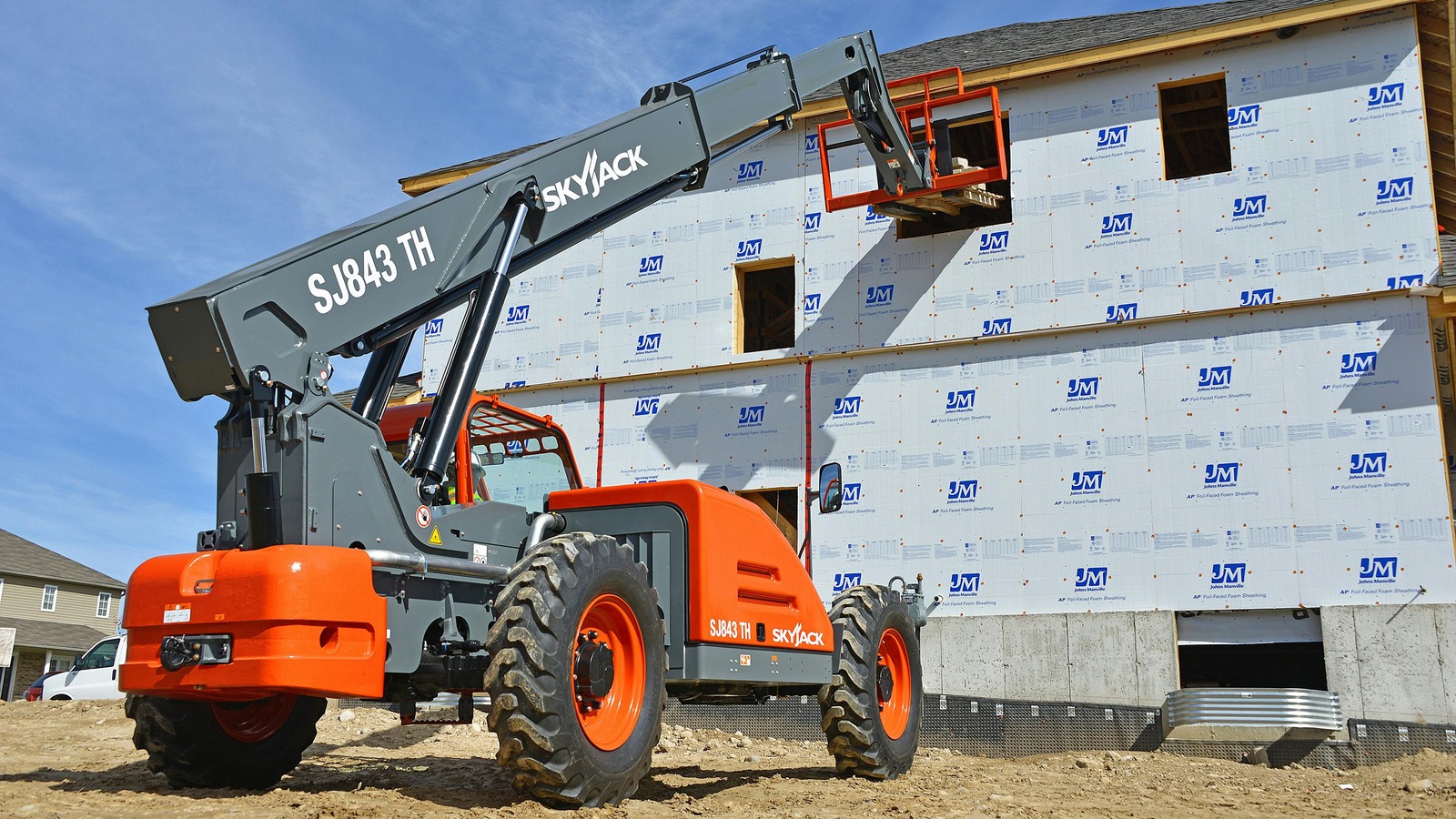
At 6:30 in the morning on a data-center project, the first problem is not pouring concrete or closing punch lists. It is moving heavy pallets of cable tray, duct sections, formwork, and packaged equipment across a crowded site without waiting on a crane every time a crew needs material at height. That is exactly where pick-and-place telehandlers are gaining ground.
Telehandlers have always been useful, but the market signal in 2026 looks stronger than a normal product-cycle refresh. Demand is moving toward larger, higher-capacity machines because project owners are building bigger facilities with tighter schedules, while contractors want one machine that can shuttle materials, reach over obstacles, and support multiple attachments in the same shift. On top of that, the used market is tightening and manufacturers are investing in local production capacity. Put together, that tells us telehandlers are no longer being treated as a nice-to-have support unit on major jobs. They are becoming part of the core material-flow plan.
Where the demand is coming from
Recent industry coverage points in the same direction. Large pick-and-place telehandlers are seeing stronger demand from data centers, manufacturing plants, energy projects, distribution hubs, and large commercial builds. Those jobs share one trait: they move bulky materials all day, and they lose money when lifting equipment becomes a bottleneck.
A crane still makes sense for specific lifts. But cranes are not ideal for every short move, every repositioning task, or every delivery-to-workface cycle. A wheel loader with forks can move material around the yard, but it cannot reach up and over structure the way a telehandler can. That middle ground is why the category is expanding. Contractors want a machine that can travel quickly around the site, handle repeated placement work, and switch roles when the daily plan changes.
Why reach and capacity are no longer enough
Too many buying conversations still stop at maximum lift height, forward reach, and rated capacity. Those numbers matter, but they do not tell the whole story once the machine hits a real jobsite.
On congested projects, maneuverability often decides whether the machine saves time or creates it. Turning radius, steering mode changes, overall footprint, and visibility while traveling all affect how many cycles a machine can finish in a shift. A telehandler that looks strong on paper but wastes time getting into position will not deliver the productivity buyers expect.
Serviceability matters just as much. Ground-level daily checks, cleaner hydraulic access, sensible hose routing, and straightforward attachment hookups reduce lost time. For fleets working under schedule pressure, uptime is the real currency. The machine that is easier to inspect, grease, and return to work can outperform a higher-spec unit that spends too much time waiting for maintenance.
The real buying question: how much material can you move in one day?
The best telehandler buyers are shifting from headline specs to material-flow economics. Instead of asking only, “How high does it lift?” they are asking harder questions:
- How many delivery-to-workface cycles can this machine finish per shift?
- How long does it take to deploy stabilizers and return to travel mode?
- Can one operator handle pallets, buckets, and specialty attachments without creating setup delays?
- Will the machine fit the transport plan without adding permitting or trailer complications?
- Can the cab, visibility, and controls support long hours without wearing out the operator?
That change in thinking matters. On fast-track jobs, a telehandler is not judged by one maximum lift. It is judged by how smoothly it keeps multiple trades supplied through the day.
What the used market is quietly saying
The used-equipment market is reinforcing the same story. January 2026 data cited by Construction Equipment showed used telehandler inventory down nearly 3% month over month, while asking values rose 4.49% and auction values jumped more than 9% from the prior month. That is not proof of a permanent shortage, but it is a clear sign that buyers are not treating telehandlers like an easy category to replace at the last minute.
When used inventory tightens and prices firm up, buyers tend to become more serious about lifecycle cost, attachment strategy, and residual value. For manufacturers and dealers, that is a reminder that the sales conversation has to go beyond delivery date and sticker price. Buyers want a machine that will still make sense in year three, not just in week three.
Why local production investment matters
Another useful signal came from North America, where JCB started work on a new $500 million factory in San Antonio that will produce Loadall telehandlers and aerial access equipment. The important takeaway is not the brand announcement itself. It is what that level of investment says about expected demand, regional supply strategy, and the need to shorten response time for customers.
When manufacturers commit capital to local production, they are betting that the category has durable volume ahead of it. That usually benefits buyers through shorter supply chains, better parts support, and more confidence when placing larger fleet orders. In practical terms, it means telehandlers are moving closer to the center of fleet planning in major markets.
What buyers should ask before the next telehandler order
Before signing the next PO, buyers should spend less time comparing brochure superlatives and more time matching the machine to the actual work pattern:
- Map the most common loads by weight, dimensions, and placement height.
- Check whether the machine will spend more time placing materials or shuttling them.
- Review attachment hydraulics, not just attachment availability.
- Look at service access with the same attention given to engine power.
- Test visibility with the boom raised, lowered, loaded, and unloaded.
- Confirm transport, tire, and operator-training requirements before delivery.
Those checks sound basic, but they are where buying mistakes usually start.
What this means from XeMach’s side of the market
From where we sit, the telehandler market is getting less forgiving of generic machine selection. Buyers are becoming more specific about cycle efficiency, attachment flexibility, service access, and total jobsite fit. That is healthy for the industry. It pushes equipment planning closer to real operating conditions instead of catalog comparisons.
For contractors and fleet managers, the next step is simple: treat the telehandler as a material-flow machine, not just a lifting machine. The fleets that make that shift early will usually see the benefit first in schedule stability, operator productivity, and fewer awkward handoffs between machines.