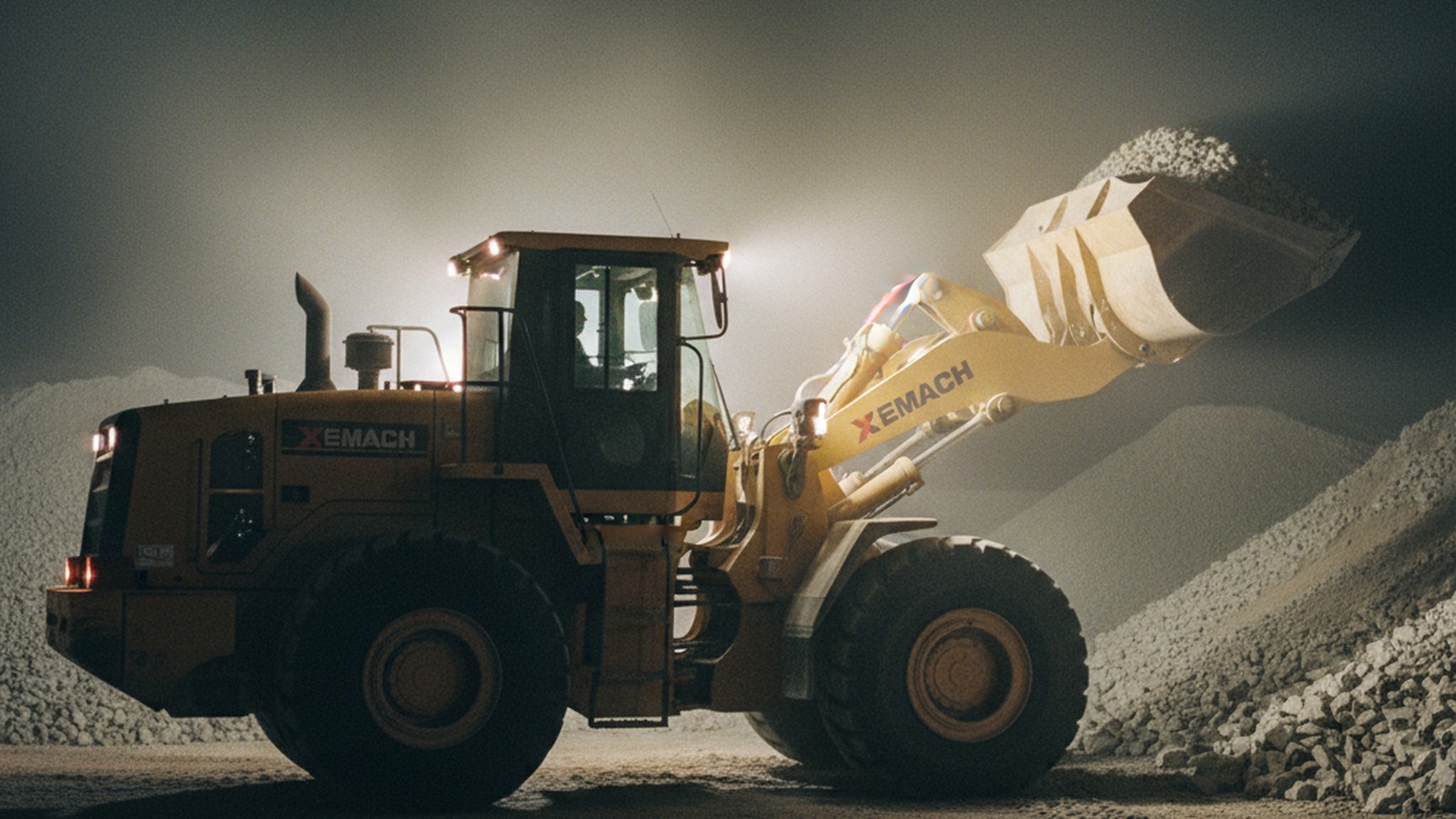
A quarry supervisor has three highway trucks waiting at the loadout point, a stockpile that is getting tighter by the hour, and an operator who still has half a shift to go. On paper, almost any large wheel loader in this class can move material. In real production, the wrong specification shows up fast: extra passes, slow pile penetration, poor visibility around trucks, and service stops that eat into the day.
Recent large-wheel-loader roundups in Construction Equipment point to a clear shift in how quarry and aggregate fleets are buying machines in 2026. The conversation is moving away from raw horsepower alone and toward the combination that actually changes tons per hour: payload match, drivetrain efficiency, operator visibility, and easier daily service.
Start with the loading cycle, not the headline horsepower
The first question is still basic: what truck are you loading, and how many passes are you targeting? In quarry work, a loader that fits the haul fleet properly will usually do more for output than a machine chosen mainly because it has a bigger number on the brochure.
That is why payload capacity is back at the center of the buying conversation. Managers want to reduce loadout time by moving more material per pass, but they also want consistency. An oversized machine can bring unnecessary cost. An undersized one turns every truck into an extra-pass problem. Buyers are increasingly spec’ing loaders around pass match, bucket fill, and stability under repetitive cycles instead of treating size as a shortcut.
Efficiency is becoming a drivetrain decision
The interesting change in this segment is that drivetrain design now matters to buyers in a more practical way. Recent product coverage shows more attention on electric-drive systems, hydrostatic-mechanical combinations, lock-up torque converters, and fuel-saving operating modes.
That is not just a technology story. It is an operating-cost story.
In quarry conditions, loaders spend their lives pushing into dense piles, backing, carrying, climbing, and repeating the same motion hundreds of times. Small gains in response, traction, or reduced powertrain loss compound over a shift. Buyers are paying closer attention to whether a machine keeps momentum into the pile, holds speed on ramps, and trims fuel burn without making the operator wait for the machine.
For contractors and quarry owners, that means the loader market is no longer split simply between “powerful” and “economical.” The better machines are trying to deliver both, and buyers now expect to test that claim in the yard, not just hear it in a sales pitch.
Visibility and fatigue are production issues
A loader can have the right bucket and a strong drivetrain, but it still loses money if the cab wears the operator out.
This matters more in aggregate than many buyers admit. Truck loading is repetitive, fast, and unforgiving. If the operator cannot see bucket edges clearly, judge truck sideboards quickly, or stay comfortable late in the shift, cycle time slips and material placement gets sloppy. That creates rework, spillage, and safety exposure around haul trucks.
The latest market signals show that better sightlines, camera coverage, quieter cabs, joystick steering, and more ergonomic layouts are no longer treated as premium extras. They are part of the core productivity package. Quarry buyers are increasingly valuing the machine that helps a good operator stay good for ten hours, not just the one that feels impressive in the first ten minutes.
Dust-friendly service access deserves more attention
One of the most useful details in recent industry coverage had nothing to do with horsepower at all. It was the reminder that dusty quarry conditions can force air-filter inspection far more often than many mixed-duty fleets expect.
That is a useful buying lens. In this category, uptime is rarely about a single dramatic failure. More often, it is death by interruption: awkward service points, filters buried behind guards, inspection routines that people postpone because they take too long, and small issues that become hot-machine downtime.
That is why ground-level maintenance access, grouped service points, telematics, and predictive alerts are getting more attention. Easy service is not a convenience feature in quarry work. It is part of the production spec.
What buyers should ask before they sign
A few questions now matter more than they did a few years ago:
- What truck payload and pass count is this loader supposed to hit every day?
- How does the drivetrain behave when pushing into dense material and climbing loaded ramps?
- Which service checks can be done from ground level, and how long do daily inspections actually take?
- What visibility aids are standard, and which ones are useful in real truck-loading work instead of demos?
- How much of the fuel-efficiency claim depends on operator technique versus machine design?
These questions sound less glamorous than peak horsepower or breakout-force bragging rights, but they usually tell you more about the machine you are buying.
Where the market is really moving
The big takeaway from this year’s wheel-loader coverage is pretty simple: quarry fleets are getting more disciplined. They are asking for machines that load faster, burn less, stay available, and reduce operator fatigue in the same package. In practice, that means buyers are moving away from choosing a loader on one headline spec alone.
From XeMach’s point of view, that is the signal worth watching. Buyers in this segment are rewarding balanced machines that solve the whole loading cycle, not just one part of it. For manufacturers and fleet planners alike, the next edge will come from making payload, drivetrain efficiency, visibility, and serviceability work together on the jobsite instead of treating them as separate bullet points.