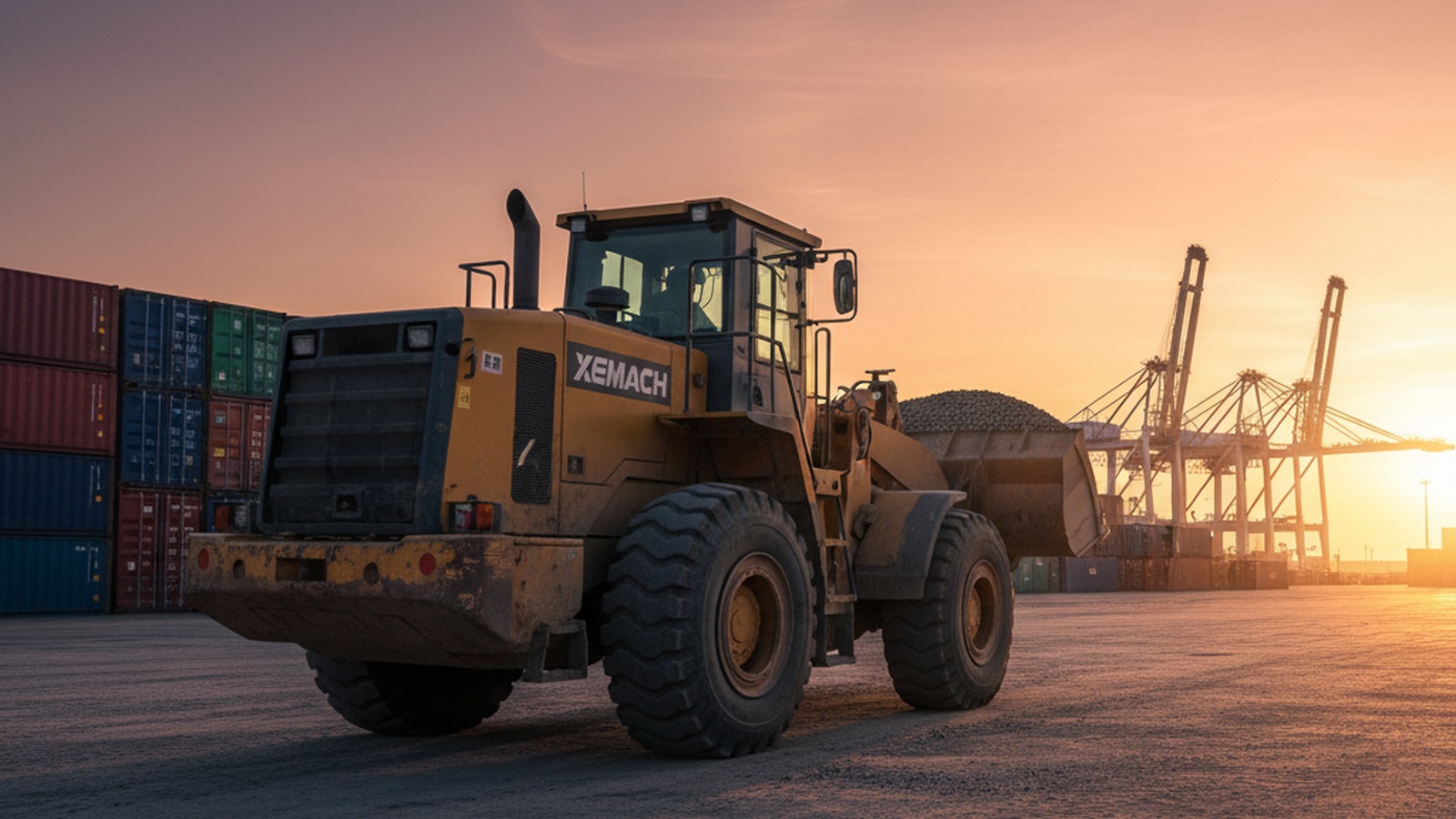
At 6:30 in the morning, a yard manager has three trucks waiting, a tight loading lane, and a crew that needs one machine to switch from aggregate to pallet work before lunch. Five years ago, the answer was usually simple: buy the biggest loader the budget could carry. In 2026, that logic is breaking apart.
The latest signals from industry media point to a wheel loader market that is no longer moving in one direction. Buyers are splitting into two clear tracks. One group wants compact machines with a smaller footprint, easier attachment changes, and lower site impact. The other still needs mid-sized loaders that can move material all day, keep cycle times tight, and justify their cost through better visibility, payload tools, and lower tire and fuel waste.
The middle of the market is being judged harder now
The mid-sized wheel loader class still does the heavy daily work on many sites. It loads trucks, manages stockpiles, carries pallet forks, handles snow, and moves across yards without always needing a trailer. That basic role has not changed.
What has changed is how buyers evaluate the machine. Output alone is not enough. Fleet managers are paying closer attention to travel speed between tasks, bucket-to-truck matching, service access, traction management, onboard weighing, and telematics that can explain where fuel and idle time are going. In other words, the loader is no longer being bought as a simple iron asset. It is being bought as a production system.
That matters because the mid-sized segment covers a very wide range of operating weights and horsepower. A machine that looks right on paper can still be wrong in the field if it spends the day underloaded, spins tires in the pile, or needs too many passes to fill the target truck. The buying conversation has shifted from “How big is it?” to “What cycle does it need to win?”
Small loaders are winning work that used to default to skid steers
At the compact end, the pressure is different. Contractors in landscaping, utility work, tree care, rental, and municipal service want smaller machines that can get into sensitive or crowded sites without giving up loader-style visibility and attachment flexibility.
That is why the recent compact wheel loader launches matter even beyond their own product announcements. They show that the market sees room below the traditional wheel loader sweet spot. Buyers are looking for machines that are easier on finished surfaces, more stable with forks, quicker to reposition, and less fatiguing over a full day than a one-size-fits-all compact platform.
This does not mean the skid steer disappears. It means more fleets are getting stricter about tool-to-task fit. If a contractor spends most of the day moving palletized material, loading light bulk material, or working around landscaped properties, a compact wheel loader or small articulated loader starts to make more business sense than forcing every job through the same machine category.
Electrification is becoming a site decision, not a branding exercise
Electric wheel loaders are still a niche in volume terms, but the conversation around them is getting more practical. The useful question is no longer whether electrification looks modern. It is whether the machine’s runtime, charging pattern, and noise profile fit the site.
That is where compact wheel loaders have an opening. On indoor work, urban jobs, enclosed yards, campuses, and noise-sensitive operations, electric machines can solve a real operating problem. They also change the working pattern: unlike diesel equipment, they do not burn energy while idling in the same way, and that can make runtime look better than some buyers expect if the application has a lot of stop-and-start movement.
The limit is also obvious. If the loader needs to run long, heavy loading cycles far from charging access, diesel still has the easier business case today. So electrification is not replacing the whole wheel loader market. It is carving out the jobs where lower noise, zero tailpipe emissions, and predictable short-cycle usage are worth the planning effort.
What buyers should ask before choosing their next wheel loader
The smartest loader purchase in 2026 usually starts with four blunt questions:
- What material are we moving most of the time, and how dense is it?
- How many passes should it take to load the trucks we actually use?
- Is the machine spending more hours carrying material, handling forks, or traveling between tasks?
- Will this site reward a compact footprint, or punish it with production delays?
Those questions sound basic, but they stop expensive mistakes. A loader that is oversized for the job can waste fuel, cost more in tires, and spend its life partially utilized. A loader that is too small may look efficient at purchase but lose money every day through extra cycles and operator fatigue.
What this trend means from the XeMach side
The takeaway is not that one wheel loader format is winning. The takeaway is that buyers are getting more specific. Compact models are being pulled by access, surface protection, and attachment-driven versatility. Mid-sized models are being pushed toward smarter production, better measurement, and lower operating waste. Electric options fit where the site profile is right, not where the brochure is loudest.
For XeMach, that points to a straightforward product and sales lesson: wheel loader conversations should start with application mapping, not generic spec comparison. The manufacturers that help buyers match machine size, attachment strategy, and duty cycle to real site conditions will have a better shot than those that just chase headline horsepower.
The market is still buying loaders. It is just buying them with less patience for compromise.