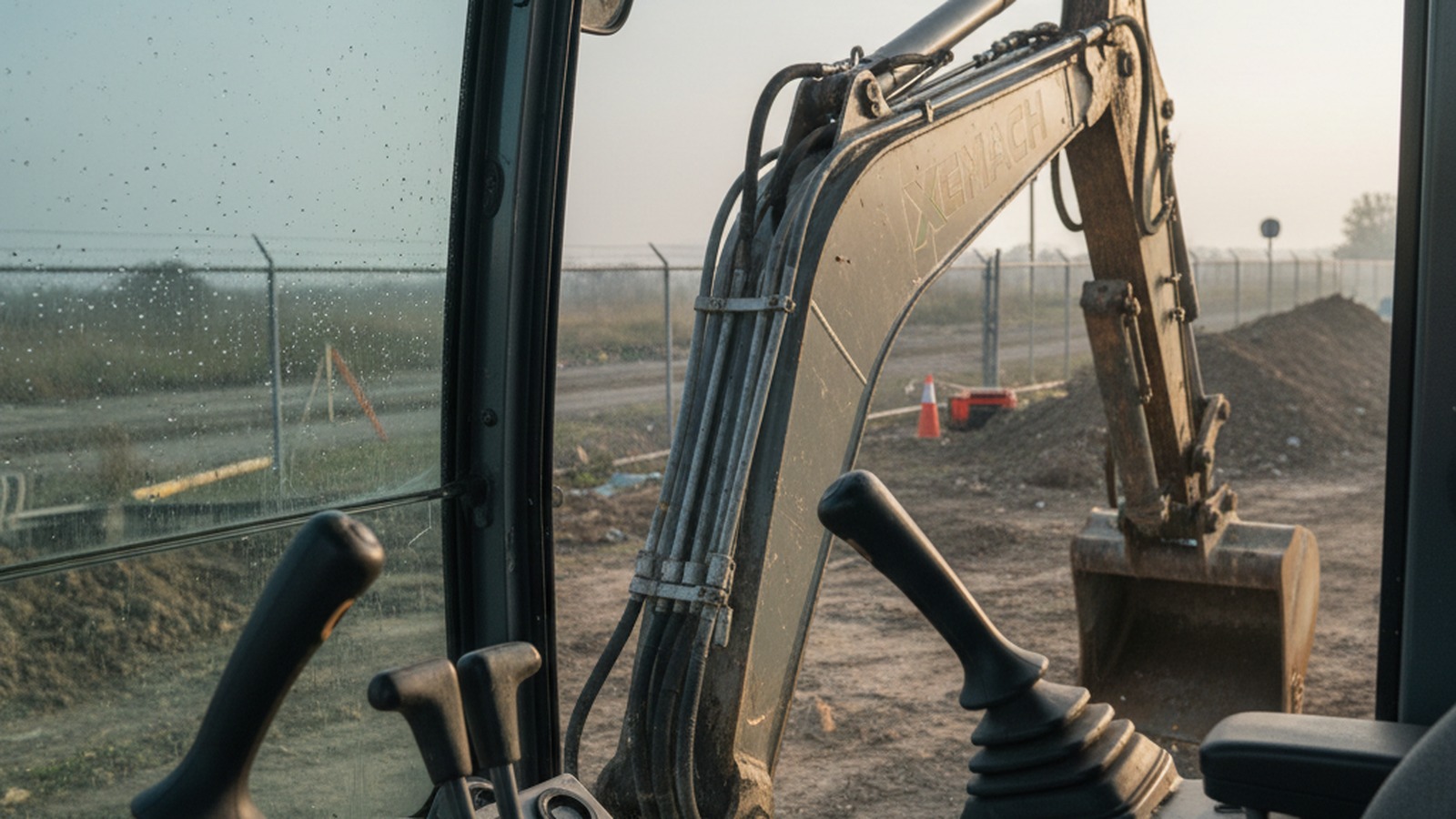
A lane closure, a narrow trench line, a utility crew behind schedule, and barely enough room to swing the house without clipping barriers.
That is where a lot of excavator buying decisions are being made now. Recent product coverage across mini excavators and crawler excavators suggests the market is not obsessed with bigger numbers for their own sake. The more consistent pattern is tighter jobsite fit: compact footprints, cleaner visibility, smarter control layouts, easier transport, faster machine-control readiness, and less wasted motion in confined work.
That matters because excavator buyers are dealing with a different mix of work than they were a decade ago. Urban utility work, road repairs, municipal jobs, site-improvement work, and dense commercial sites all put a price on space, sightlines, and setup time. In that environment, machine size still matters, but the better question is whether the excavator can stay productive when the jobsite gives the operator very little room to work with.
Mini excavators are being asked to do more than light digging
One clear signal from the latest mini excavator launches is that compact size alone is no longer enough. Buyers want more power and more capability, but they do not want to pay for that by giving up transport convenience or operator comfort.
A recent mini excavator debut in the 4-ton class captured that shift well. The machine was presented less as a small digger and more as a compact platform for utility contractors and general construction crews that need extra performance without stepping too far up in size. The details around the launch say a lot about where the market is headed: joystick-mounted functions instead of floor controls, an integrated rear camera, keyless start, cleaner hose routing for better visibility and less snag risk, optional angle blade configurations, and service points grouped for easier daily checks.
Those are not cosmetic upgrades. They speak directly to how mini excavators are being used in the field. When a machine spends its day moving between trenching, grading, attachment work, and cleanup in crowded conditions, the small friction points start to matter. Better sightlines to the front corner, less clutter in the cab, and faster service access all translate into more usable hours.
Crawler excavators are getting smarter without growing bulkier
The same pattern shows up further up the excavator range.
Recent reporting on updated crawler excavators in the 15- and 27-metric-ton classes shows that manufacturers are putting more effort into minimal swing radius designs, optional payload tools, digital level systems, height and depth alarms, and factory grade-readiness. That is a practical package for contractors working in roadwork, utility installation, municipal projects, and tight commercial sites.
The key point is not just that these machines have more technology. It is that the technology is being shaped around constrained jobs. Height and depth alarms help when overhead and underground boundaries matter. Payload tools help contractors track moved material more accurately. Digital level aids repeatable trenching and grading. Factory-prepared machine-control setups cut installation time when fleets want to add guidance systems without long downtime.
Minimal swing radius matters for the same reason. In dense streets or narrow work zones, tail swing is not a brochure detail. It affects safety, permitting, traffic management, and how confidently operators can keep the cycle moving.
The real trend is excavator productivity per square meter of jobsite
That is probably the best way to read the current launch cycle.
Mini excavators are becoming more capable because small crews want one machine to cover more tasks before they need to step up to a larger class. Mid-size crawler excavators are becoming more intelligent because contractors want tighter control over production, safety, and billing without sending oversized machines into restricted work areas.
In both cases, the market is rewarding excavators that make better use of limited space. That includes visibility, control ergonomics, attachment management, camera systems, machine guidance readiness, and serviceability. Raw digging force still matters. So does hydraulic performance. But the buying story is shifting from simple spec escalation to jobsite efficiency.
What buyers should be asking now
- How tight is the real working envelope once barriers, trenches, traffic, and stored material are in place?
- Does the operator need better visibility and camera support more than a larger machine class?
- Will minimal swing radius save time, reduce risk, or simplify permits on this kind of work?
- How quickly can the fleet add payload, grade guidance, or digital level functions if the project mix changes?
- Are the service points and daily checks simple enough for crews that move machine-to-machine often?
- Is the machine sized around the work pattern, or just around habit?
That last question matters because excavator fleets often carry old assumptions. Bigger still wins on some jobs. But on many modern urban and utility sites, the better machine is the one that fits cleanly, sees clearly, and gets back to work faster.
A more grounded XeMach takeaway
From XeMach’s perspective, the excavator market is becoming more disciplined about where productivity really comes from. Buyers are still watching horsepower, operating weight, and dig depth. But they are also looking harder at the invisible losses: poor visibility, awkward controls, setup delays, hard-to-service layouts, and too much machine for the space available.
That is a sensible shift. The excavators that will stand out in the next buying cycle are not simply the ones with the biggest headline numbers. They are the ones that let crews work safely and smoothly in the kind of tight, interruption-heavy jobsites that now define a large share of real-world construction work.