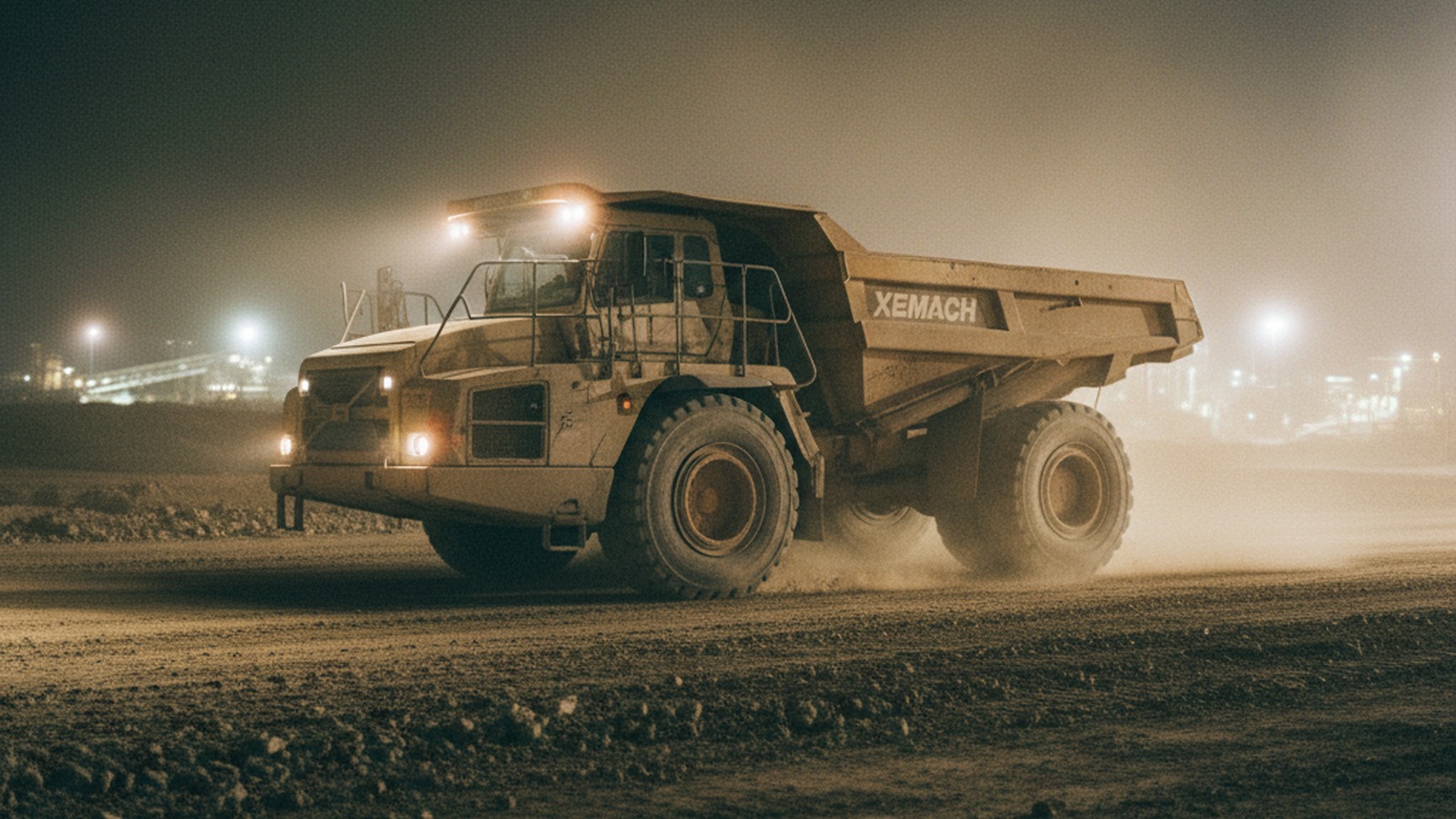
The first warning sign on a wet quarry job is often not engine trouble. It is an articulated dump truck that starts to spin on a ramp, brake harder than it should, and burn through tire life long before the service team expected it. That scene is why more fleet managers are changing the way they buy and run ADTs in 2026.
Recent industry coverage has been pointing in the same direction: buyers are no longer judging ADTs by payload alone. They are looking much harder at haul road conditions, tire strategy, braking control, camera visibility, loading match, and the kind of dump body that actually fits the work.
The haul road is the real spec sheet
On paper, two trucks can look close. On site, the road tells the truth.
When haul routes are muddy, steep, or full of broken surfaces, traction systems and tire choice start to matter as much as rated payload. Wider tires can improve flotation in soft ground. Predictive traction and downhill speed control can reduce wheel slip and help operators keep the truck settled on grades. In rough conditions, suspension setup also affects how much punishment the truck, operator, and material flow take over a long shift.
That is why the buying conversation has moved away from simple size comparisons. A truck that looks bigger in a brochure may not be the better production tool if the haul road forces slower speeds, higher slip, or constant braking intervention.
Pass matching still beats headline payload
A common buying mistake is to choose the truck first and figure out the loading tool later.
That usually shows up as wasted passes, uneven loading, spillage, and fuel burn that creeps up week after week. Recent guidance from the field still points to the same basic rule: match the ADT to the excavator or loader so the truck can be filled consistently in a small number of passes, often in the four-to-six-pass range for many jobs.
That matters for more than cycle time. If the loading tool is too small, the truck spends too much time waiting. If the truck is too small, overfilling becomes easier, which adds wear, safety risk, and unnecessary stress on tires and structure. In a tighter market, that kind of mismatch is expensive.
Safety tech matters most when roads deteriorate
A lot of ADT safety discussion used to focus on operator skill alone. That is changing.
The better machines in this category now use layered controls: automatic traction response, integrated braking or retarding, hill-hold functions, dump support logic, rear or surround camera systems, and object detection. None of that replaces a good operator. What it does is reduce the penalty when site conditions turn against the machine.
This is especially important on jobs where traffic patterns change fast, visibility is limited, or dumping areas are uneven. On those sites, camera coverage and stable braking behavior are not luxury features. They help protect uptime because near-misses, tire abuse, and unstable dumping events all have a cost even when nobody gets hurt.
Tire life and articulation joints reveal the true cost
The hidden ADT conversation is usually a maintenance conversation.
Tires remain one of the biggest operating costs on these trucks, and the wrong choice shows up quickly. Earthmoving fleets running longer, faster cycles may prefer one tire profile, while quarry or mining conditions often call for heavier sidewall protection. Whatever the setup, pressure checks, daily inspections, payload discipline, and haul road maintenance still do most of the hard work.
The articulation joint deserves the same attention. It carries repeated load transfer, twisting movement, and shock from bad roads. If lubrication, cleanliness, and service-interval checks slip, joint wear can accelerate quietly until repair costs become hard to ignore.
In other words, the ADT decision is not finished when the machine arrives. A smart spec only pays off if the site team can support it with road management, loading discipline, and preventive maintenance.
What buyers should ask before placing the order
Before signing off on an ADT purchase, buyers should get specific:
- What are the worst haul road conditions this truck will face for most of the year?
- Which excavator or loader will fill it, and how many passes will that take in real work?
- Is the material sticky, abrasive, oversized, or prone to carryback?
- Would an ejector body, tailgate option, liner, or body-heating setup reduce delays?
- How much visibility support does the operator actually need on this site?
- Can the maintenance team realistically stay on top of tire, articulation, and lubrication checks?
Those questions are less glamorous than top-line payload numbers, but they are often what separates a productive truck from an expensive headache.
The ADT market is getting more practical
The ADT segment is moving toward a more practical kind of buying logic. Contractors still want output, but they are putting more weight on controllability, service life, and machine-to-site fit. That is a healthy shift.
From XeMach’s side of the conversation, the takeaway is simple: the best ADT choice starts with the road, the material, and the loading cycle, not with the biggest number on a brochure. Buyers who spec around actual site stress usually end up with better use, steadier costs, and fewer unpleasant surprises halfway through the job.