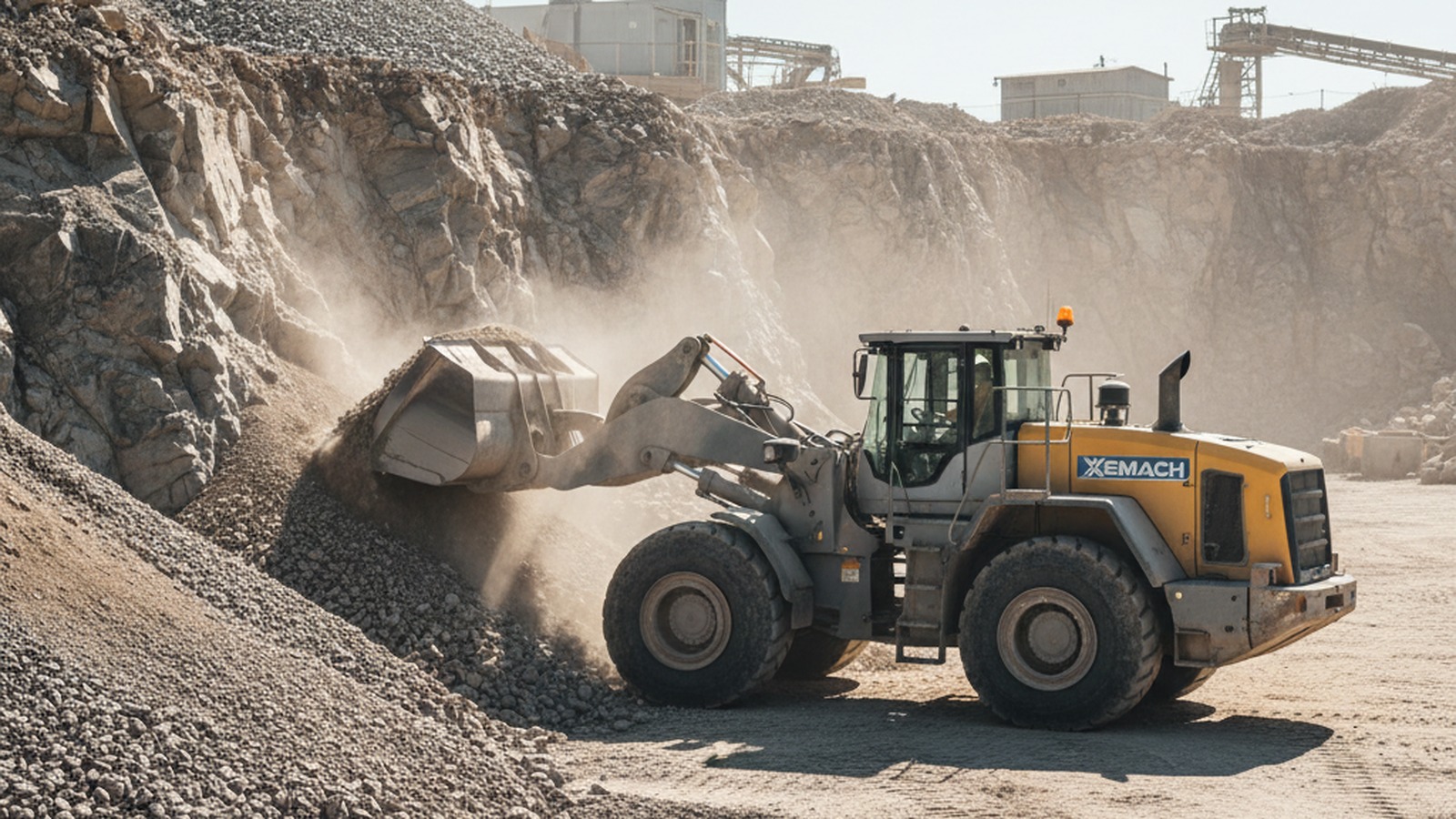
Picture a paving crew working beside a hospital before sunrise. The wheel loader runs the same short route between stockpile and truck for hours, then returns to a fixed staging point after shift. The excavator on the same site has a rougher assignment: trenching, repositioning, idling, then digging hard again once the utility crew catches up. Both machines are under pressure to cut noise and local emissions. Right now, only one of them usually has a clean business case for batteries.
Quick takeaways
- Battery-electric earthmoving is growing, but it is still a niche segment in North America.
- Wheel loaders are reaching repeatable commercial scale earlier than excavators.
- Electric excavators are improving fastest in mini and compact classes, not across the whole size range.
- The real buying question is jobsite fit: duty cycle, charging access, and daily use.
Where battery economics already work
Recent industry reporting points to wheel loaders as the first earthmoving segment where electric competition is starting to look commercial rather than experimental. The reason is not mysterious. Many loader jobs are repetitive. Travel distances are short. Loading cycles are predictable. Machines often return to the same yard, depot, plant, quarry bench, or transfer point. That gives fleet owners a fighting chance to plan charging around real work instead of hoping the machine somehow adapts to a messy schedule.
This pattern is especially visible in China, where electric wheel loaders have moved beyond pilot status and into real volume. That matters because scale changes everything: component cost, service readiness, resale confidence, and the willingness of buyers to spec electric machines for actual production work instead of for demonstration value.
Why excavators still face the harder duty-cycle problem
Excavators have a more uneven day. A loader can repeat the same motion hundreds of times. An excavator may trench, swing, track, wait, hammer, lift, and idle in a single shift, often with no stable charging point nearby. That makes battery sizing trickier and downtime risk more expensive.
The near-term result is pretty clear. Electric excavator adoption is still concentrated in mini excavators and other compact machines working in urban, indoor, or noise-sensitive environments. Those use cases are real, and in the right application they are getting better quickly. Current market guidance suggests many compact electric excavators can deliver roughly four to eight hours of work, depending on the task and charging setup. But that does not automatically translate to larger crawler excavators on remote, high-load jobs.
There is also a market reality buyers should not ignore: conventional excavators still dominate fleet turnover. U.S. financing data for 2025 showed new excavator sales down 4.1% year over year while used excavator sales rose 5.3%. That is a reminder that most contractors are still managing a huge diesel installed base, and many are stretching replacement cycles instead of rushing into a new powertrain.
The market split is now structural, not just technical
The gap between electric loaders and electric excavators is no longer only about battery chemistry. It is also about how different products fit the economics of real fleets.
Wheel loaders benefit when charging can be centralized, use is high, and operators run repeatable cycles. Electric excavators work best when the site values low noise, zero on-site emissions, or indoor operation enough to offset higher purchase cost and tighter runtime planning. That is why the first wins are showing up in city utility work, enclosed jobs, plants, ports, and other controlled environments instead of across every jobsite category.
For manufacturers, the next phase will not be won by the loudest launch calendar. It will be won by matching machine size, battery pack, charging method, and service support to a narrow set of jobs that actually repeat. Once that happens, adoption stops being a press event and starts behaving like procurement.
What buyers should ask before choosing an electric machine
Before adding an electric loader or excavator to the fleet, buyers should get painfully specific:
- Will the machine return to the same charger every shift?
- Is the duty cycle repetitive, or does the work swing between long idle periods and hydraulic peaks?
- How much of the value comes from lower fuel and service cost, and how much comes from noise or emissions requirements?
- If the machine misses its planned charge window, what is the backup plan for the next shift?
- Is this a machine for genuine production work, or is it being bought mainly to satisfy a bid requirement or test program?
Those questions sound basic, but they matter more than the brochure range figure. In this part of the market, application discipline still decides whether electric feels smart or frustrating.
What this means for the next buying cycle
The practical takeaway for 2026 is simple. Electric wheel loaders are closer to repeatable scale. Electric excavators are real, but they remain a sharper tool for selected jobs rather than a universal replacement path.
That is not a weakness in the category. It is how new equipment markets usually mature. The first product to scale is the one whose work pattern is easiest to map, charge, and support. Today, that points more clearly toward wheel loaders than excavators.
From XeMach's point of view, the opportunity is not to force an electric answer into every earthmoving segment. It is to watch where use patterns, infrastructure, and local regulation line up tightly enough to make the machine earn its keep. That is where the next wave of credible demand will come from.