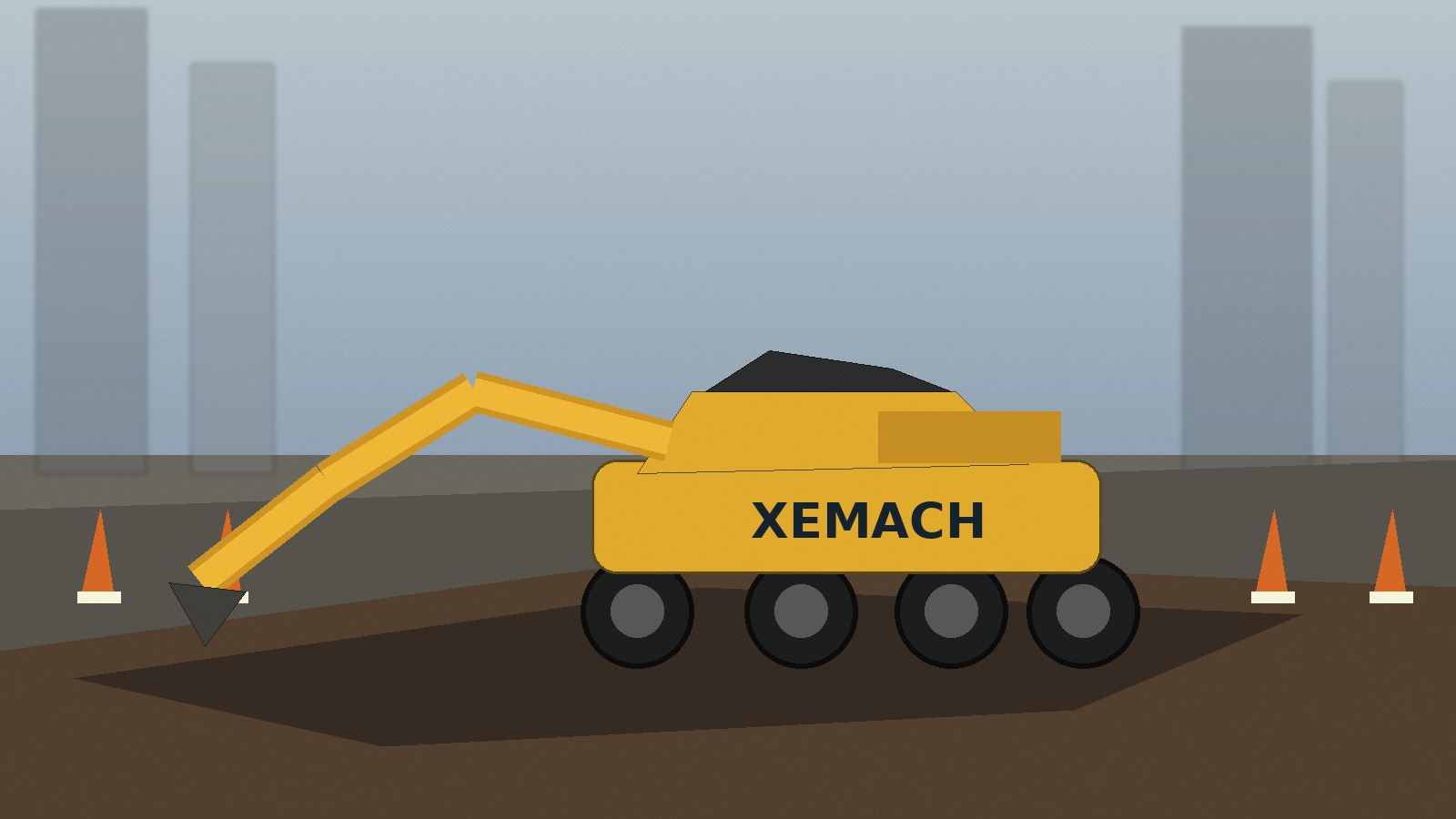
A utility crew finishes a drainage repair before lunch, but the next call is six miles away on a paved road with traffic already building. A crawler excavator can do the digging, but it needs a trailer, a driver, loading time, tie-down checks, and somewhere to unload. That is the moment when a wheeled excavator starts to make sense.
Wheeled excavators are not replacing crawler machines across the board. Tracks still win on soft ground, heavy digging, and sites where maximum traction matters more than travel speed. But recent industry coverage points to a clearer role for wheeled excavators: jobs that combine digging, lifting, attachment work, and frequent movement between nearby work areas.
Where a wheel excavator saves time before it even starts digging
The main argument is simple: mobility changes the daily plan. A modern wheeled excavator can road between local jobs at roughly highway-shoulder speeds instead of crawling across a site or waiting for a lowboy. For municipal maintenance, roadside drainage, bridge work, urban utilities, recycling yards, and agricultural loading, that can remove a surprising amount of non-productive time.
The advantage is not only speed. Rubber tires also reduce the surface damage that steel tracks can leave on asphalt, concrete, finished yards, and landscaped areas. On short-duration jobs, less surface repair at the end can matter as much as faster movement at the start.
This is why many buyers should stop asking whether a wheeled excavator digs exactly like a crawler. A better question is: how many times each week will the machine need to move, reposition, change tools, or work on pavement?
Tires change the stability conversation, not the need for stability
A wheeled undercarriage behaves differently from tracks. The footprint is smaller, and the machine can feel less planted if the operator works only on tires. That does not make the concept weak; it means the specification and operating method matter.
Buyers should look closely at axle locks, dozer blades, outriggers, tire setup, counterweight options, lift charts, and the type of boom. A four-outrigger setup may suit lifting and tool work. A blade plus rear outriggers may suit trenching and backfilling. Dual tires can improve flotation and stability, while single tires help keep the machine narrow and agile.
For XeMach customers, this is where early application mapping pays off. The same base machine can feel very different in roadside maintenance, sugarcane loading, forestry handling, and industrial yard work. The best configuration is rarely the one with the longest option list; it is the one that matches the machine's most common working posture.
Attachments are pushing wheel excavators beyond simple digging
The second reason for renewed interest is attachment use. Buckets are only the beginning. Hydraulic breakers, grapples, mowers, compactors, tiltrotators, sorting grabs, and quick couplers can turn a wheeled excavator into a mobile tool carrier.
That changes the return-on-investment calculation. A contractor who uses one machine for trenching in the morning, lifting pipe at noon, cleaning a ditch in the afternoon, and carrying a breaker for repair work the next day may not care only about breakout force. Hydraulic flow, auxiliary presets, coupler safety, tool visibility, and operator comfort become buying factors.
The quick-change system deserves special attention. If tool changes are slow, awkward, or unsafe, the machine loses much of its value as a multi-purpose carrier. A good coupler and clear hydraulic setup can be as important as engine output.
What long-shift field reports tell buyers to check
Recent Chinese field reports on wheeled excavator use in sugarcane and forestry work describe a demanding pattern: mountain roads, uneven ground, loading work, long arms, heavy-duty axles, and machines working for years with high accumulated hours. Those reports are brand-specific, but the underlying lesson is broader.
Wheeled excavators that look similar on paper can perform very differently once the job shifts from flat municipal roads to rural slopes, forest tracks, and rough loading areas. Buyers should check the drivetrain, axle capacity, transmission match, brake performance, cooling, hydraulic temperature control, and service response before they sign.
Operator feedback also matters. Long working days expose small problems quickly: poor cab sealing in dusty sites, tiring controls, weak air conditioning, vibration, poor visibility to the attachment, or unstable behavior during lifting. These details do not look dramatic in a brochure, but they decide whether a machine stays productive after 2,000, 5,000, or 8,000 hours.
How to choose the right specification
Before buying a wheeled excavator, fleet owners should answer a short list of practical questions:
- Will the machine road between jobs daily, weekly, or rarely?
- What percentage of work happens on pavement, compacted yard, soft soil, slopes, or forest tracks?
- Which attachments will be used in the first year, and what hydraulic flow do they need?
- Is the priority trenching, lifting, loading, mowing, breaking, grading, or mixed work?
- Does the site need a narrow machine, or is a wider tire setup acceptable for stability?
- How fast can local service handle hoses, tires, brakes, electronics, and coupler issues?
- Can operators be trained on stabilizer use, roading mode, attachment presets, and safe lifting?
The answers will usually point to one of two directions. Urban and roadside fleets often need compact swing, visibility, road equipment, clean attachment management, and surface-friendly tires. Rural and forestry users may care more about axle strength, ground clearance, cooling, grip, and long-arm stability.
The takeaway for construction fleets
The wheel excavator's strongest case is not that it is a crawler with tires. It is a different planning tool. It reduces transport friction, protects finished surfaces, carries more attachments, and can cover scattered jobs without turning every move into a logistics event.
For XeMach, the opportunity is to treat wheeled excavator selection less like a single-machine purchase and more like a job-route design problem. Map the travel, surfaces, tools, lifting needs, and service realities first. Then pick the machine. That order prevents expensive mismatches and gives owners a better chance of earning back the mobility they paid for.
Sources reviewed:
- Construction Equipment: Wheeled Excavators Explained: Benefits, Buying Tips, and New Machines, https://www.constructionequipment.com/earthmoving/wheeled-excavators/article/55401391/wheeled-excavators-benefits-buying-tips-and-models-for-2026
- D1CM: 8000 hours without major repair field report on a wheeled excavator in Guangxi sugarcane and forestry work, https://news.d1cm.com/20260907192379.shtml
- Construction Equipment: Grade Control for Excavators guide, https://www.constructionequipment.com/technology/electronic-grade-controls-gps-and-laser/article/55398528/excavator-grade-control-guide-2d-3d-machine-control-and-buying-advice