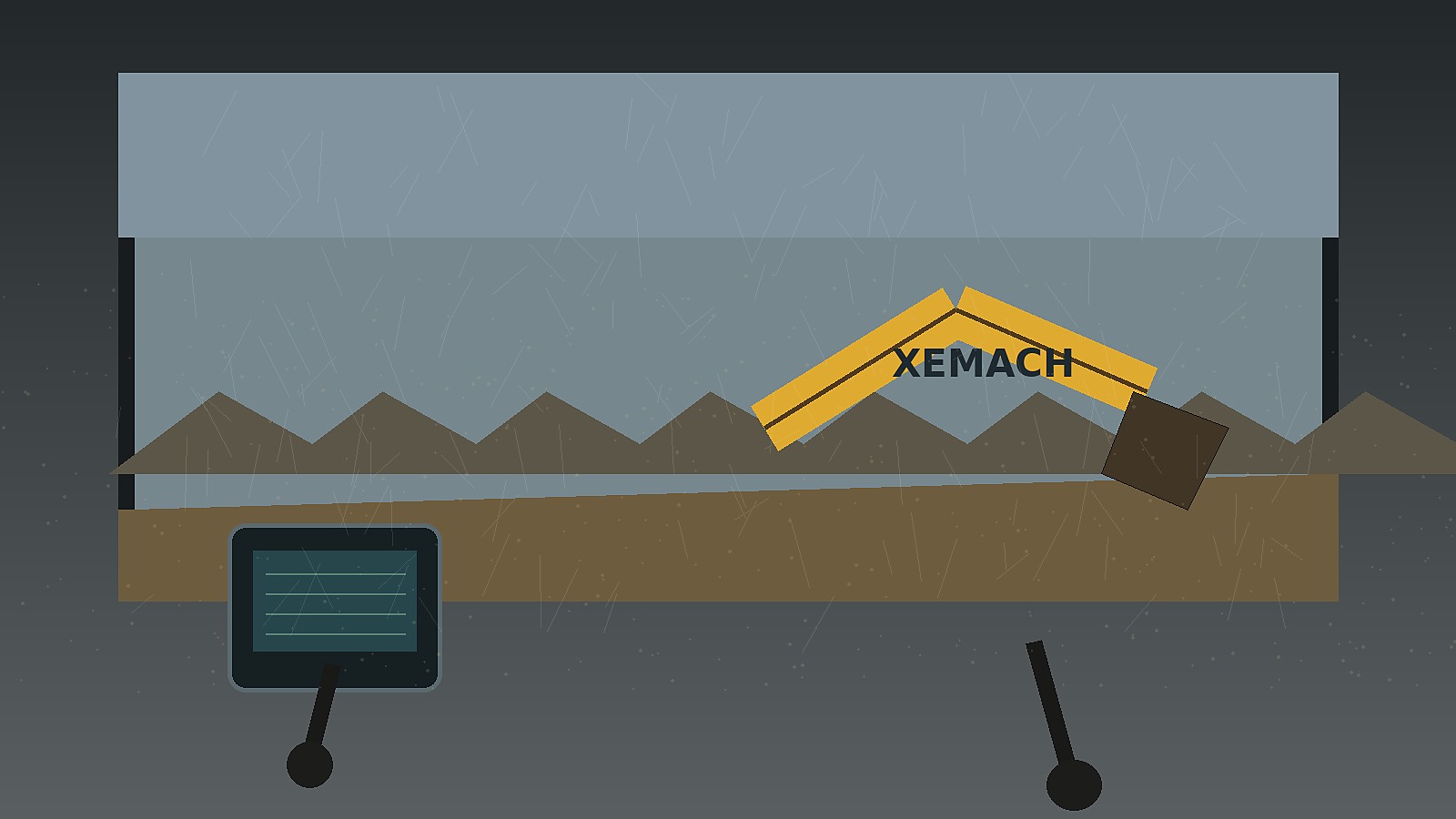
A night-shift excavator is working along the edge of a quarry bench. The haul trucks are waiting, the survey marks are hard to see under dust and work lights, and the operator has to decide how close to dig to the design line without overcutting the face. One wrong pass is not dramatic on its own. Repeated all week, it becomes extra fuel, extra truck time, extra rework, and a harder handover for the next crew.
That is why real-time excavator guidance is worth watching. Recent industry coverage points to guidance technology being tested in live mining production, not just in controlled demonstrations. At the same time, connected-equipment platforms are becoming more practical across construction fleets, with machine health, work-hour data, maintenance alerts, security, and software connections all moving beyond simple GPS tracking.
For mining excavators and large crawler excavators, the interesting part is not the screen in the cab. It is the feedback loop between the mine plan, the operator, the bucket, and the maintenance team.
Why guidance is moving onto larger excavators
Excavator guidance started as a way to help operators dig to grade. That still matters, but mining changes the scale of the problem. A large excavator may be loading trucks for long shifts, cutting benches, stripping overburden, or cleaning up around a face where precision affects the next step in production.
In that setting, guidance is less about making a machine look high-tech and more about reducing avoidable variation. The system gives the operator a clearer view of where the bucket is relative to the target surface. It can help a less experienced operator get closer to the intended cut, and it can help a skilled operator stay consistent when visibility, fatigue, or pressure from waiting trucks starts to affect judgment.
The broader telematics trend matters here too. Machine data is becoming easier to collect and share. Hours, fault codes, location, fuel burn, idle time, and maintenance alerts already shape fleet decisions. Guidance adds another layer: production accuracy. If the excavation data can be tied back to planning and maintenance, the excavator becomes part of a measured workflow instead of a powerful machine working from instructions that may already be out of date.
What changes at the bench face
The first gain is usually fewer surprises. Operators can see whether they are above, below, or on the target surface. Supervisors can compare planned work with actual progress. Survey teams spend less time chasing corrections after the fact.
The second gain is steadier truck loading. A guidance system will not fix a poor haul-road layout or a mismatched fleet, but it can reduce the small errors that slow a cycle. Cleaner cuts and more predictable bucket placement make it easier to keep trucks moving without asking the excavator to redo work.
The third gain is training. Mining operations often rely on a small number of highly experienced operators. Guidance can help newer operators learn the shape of the job faster. It does not replace judgment, and it should not be sold that way. It gives the operator better information at the moment the bucket is moving.
What buyers should ask before specifying guidance
A guidance package should not be treated as a bolt-on gadget. It touches the machine, the jobsite, and the people who maintain both.
Useful questions include:
- Can the display be seen clearly in dust, glare, night work, and vibration?
- Are sensors, cables, antennas, and brackets protected from rock, debris, and pressure washing?
- How is the guidance data updated when the mine plan changes during the shift?
- Can the system export useful production data, or does it stay locked inside one platform?
- Who trains the operator, the site engineer, and the service technician?
- What happens when the system is down? Can the excavator keep working safely?
- Will attachments, long fronts, couplers, or custom booms change the calibration work?
The last question matters for specialized machines. A long arm excavator, mining excavator, amphibious excavator, or tailor-made excavator may need different mounting points, cable routes, guard design, and calibration checks. The guidance system is only as useful as the installation that lets it survive real work.
Where connected machines still fall short
The industry likes to talk about data, but jobsite data can be messy. Cellular coverage may be weak. Operators may ignore alerts if the screen is crowded. Maintenance teams may not trust a report unless it matches what they see during inspection. Site engineers may not have time to clean up files between shifts.
That is the uncomfortable part of connected equipment: the machine may be ready before the workflow is ready.
A practical rollout should start small. Put guidance on one excavator working a known area. Measure pass count, rework, idle time, truck waiting time, and how often the plan has to be corrected. Ask operators what information helped and what got in the way. Then decide whether the next machine needs the same setup, a lighter package, or a different installation.
The XeMach read: design the excavator around the job, not the gadget
For XeMach, the useful lesson is straightforward. Buyers are not only asking for stronger mining excavators or smarter crawler excavators. They are asking for machines that can accept the tools around modern production: guidance displays, protected sensors, hydraulic couplers, heavy attachments, telematics hardware, and custom working equipment.
That pushes specification work earlier in the buying process. If a customer expects guidance or connected maintenance data, the discussion should include bracket positions, power supply, cab visibility, wiring protection, attachment geometry, and service access before the excavator leaves the factory.
Real-time guidance will not turn a poor site plan into a good one. But on the right excavator, in the right work pattern, it can cut guesswork out of the bucket cycle. That is enough to make it a serious production tool rather than a dashboard accessory.
Sources reviewed:
- Aggregates Business: https://www.aggbusiness.com/dig-robotics-partners-with-turner-mining-group/
- Construction Equipment telematics guide: https://www.constructionequipment.com/technology/construction-telematics/article/55394590/construction-equipment-telematics-guide-compare-fleet-management-platforms-2026