At 6:40 a.m., a fleet manager can get three calls before the coffee cools. A rental customer wants a simple 20-ton crawler excavator that any competent operator can get comfortable with in an hour. A quarry supervisor wants a much larger machine that can keep trucks moving without choking cycle time. A debris-removal contractor wants to know how to keep operators farther away from dust, unstable material, and labor bottlenecks. Those are all excavator jobs, but they no longer point to the same machine strategy.
That is the clearest message coming out of several June equipment announcements. The excavator market is not moving in one direction. It is splitting. One lane is focused on simpler, sharper-value machines in the core 20-ton class. Another is pushing large production excavators deeper into quarry and heavy civil work. A third lane is pulling control systems away from the cab and toward remote operation for hazardous or labor-constrained sites.
The 20-ton class is being simplified on purpose
The 20- to 25-ton crawler excavator remains the volume class for many contractors, rental fleets, and mixed-use earthmoving jobs. What is changing is the definition of value.
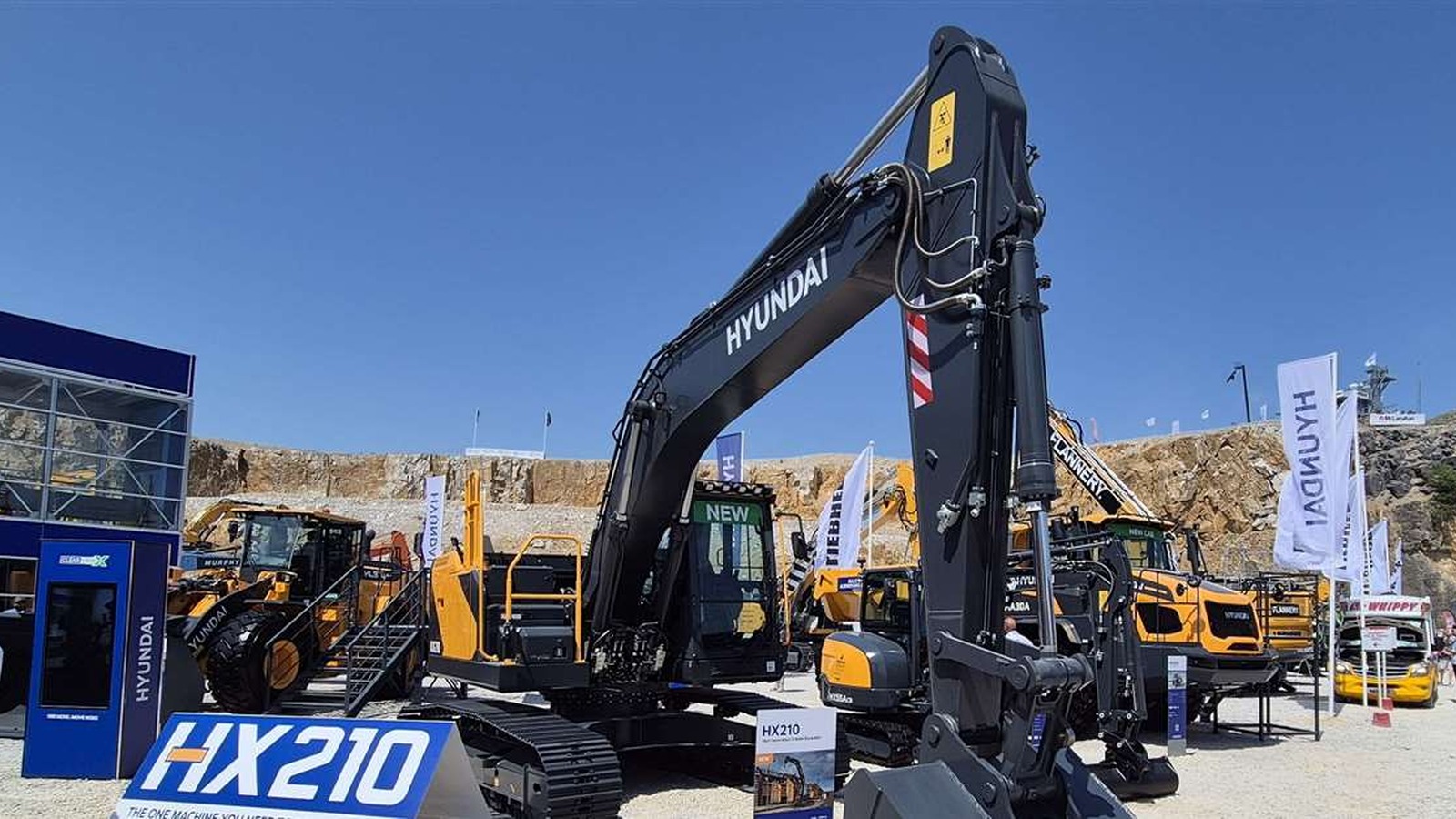
One new machine shown at Hillhead this week makes that point clearly. Instead of adding every possible feature, the package was trimmed to fit rental-market economics more closely. The basic engine platform stayed in place, but the configuration was simplified to hit a friendlier purchase price. Even with that reset, the machine still claims a 7% fuel-use improvement versus the earlier series, 30% lower AdBlue consumption, and long service intervals, including 1,000-hour engine-oil changes and 8,000-hour DPF ash cleaning.
That matters because buyers in this class are not asking for the most complicated excavator on the lot. They are asking for a machine that starts every morning, keeps fuel burn predictable, and does not punish the owner when it rotates between operators or short-term jobs. In other words, the mainstream crawler excavator is getting more commercially disciplined.
Bigger excavators now have to earn their transport and fuel bill
At the other end of the market, large excavators are being asked to do the opposite. Nobody buys an 85-ton class machine to save a little money on sticker price. The argument has to be output.
That is why recent large-machine launches are arriving with more than raw horsepower. One newly released 85-ton excavator for quarry and heavy civil work brings 512 hp, roughly 90,600 lbf of bucket digging force, independent travel hydraulics, onboard weighing, multi-camera visibility, and telematics as standard equipment. Those details matter more than brochure drama. They show where the market is going: large excavators are being sold as production systems, not just bigger iron.
For quarry loading, mass excavation, and mining support, the real question is not whether the machine is huge. The question is whether it shortens the full cycle around it. Can it keep trucks matched? Can it reduce idle waiting? Can it help the site measure payload more accurately without extra steps? Can it stay serviceable through long shifts? That is the level where large-excavator competition is moving.
Hazardous jobs are pushing excavator control away from the seat
The third shift is less visible in spec sheets, but it may matter just as much over the next few years. Remote operation is moving out of the demo stage and into actual reconstruction work.
A late-June agreement tied to debris removal in Ukraine points to why. The use case is not novelty. It is operator protection and labor efficiency. Remote operation can reduce direct exposure to contaminated demolition debris, including asbestos risk, while letting experienced operators work from a safer station outside the machine. It also creates another option for jobs where labor supply is thin and the site itself is the problem.
This does not mean every excavator buyer suddenly needs remote operation tomorrow. It does mean the control architecture conversation is changing. Buyers will increasingly ask whether wiring, cameras, data links, and machine logic are ready for future upgrades, even if the first machine still runs with a conventional operator in the cab every day.
What buyers should ask before the next excavator purchase
- Is this machine meant for operator flexibility, maximum output, or hazardous-site readiness? One machine rarely leads all three.
- Which costs matter most on this job mix: fuel, AdBlue, transport, wear parts, or downtime between shifts?
- Does the hydraulic package help real cycle time, or does it only look impressive on paper?
- Are visibility, payload feedback, and telematics standard, optional, or missing?
- If remote operation is not needed today, is the machine platform at least compatible with that direction later?
The XeMach takeaway
From a XeMach viewpoint, the lesson is practical. The excavator market is not asking for one universal answer anymore. Core-class buyers want simpler machines that protect ownership cost. High-production sites want integrated output tools and easier service access. More complex jobs are beginning to reward machines that can support remote or semi-remote workflows down the line.
That is where product planning gets sharper. Instead of chasing the broadest possible spec list, manufacturers and buyers both gain more by matching excavator design to the actual job logic behind the purchase. In 2026, the better question is no longer, "What is the best excavator?" It is, "Best for which kind of day?"