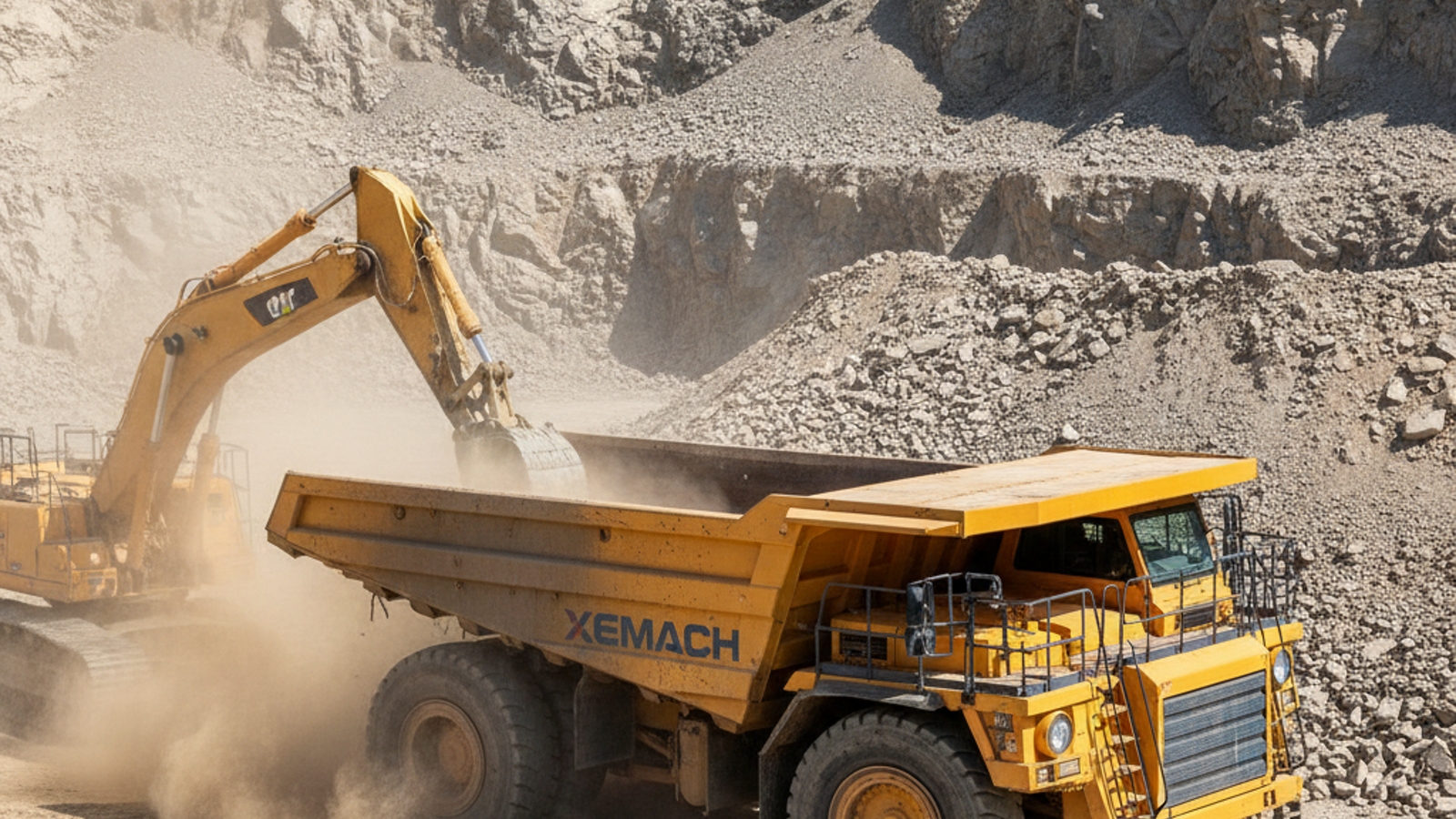
A mine can put one battery-electric haul truck on a short loop and call it progress. Running a full production shift is a different problem. Once the truck count goes up, the hard questions stop being about brochure range and start being about power distribution, charger placement, queue time, and what happens when the haul circuit cannot wait.
The latest signal from the field is not the truck alone
One of the clearest signs this week came from Australia, where a battery-electric haul truck test is being pushed into harsh mining conditions rather than a controlled demo route. That matters. Heat, distance, slope, and continuous shift pressure expose the real weak points much faster than a staged launch event ever will.
The important takeaway is not that another trial has started. It is where the trial is happening and what that implies. If electric haulage is going to work in remote production environments, the machine has to perform under the same uptime expectations as a conventional dump truck, while the site also has to support fast, repeatable charging without disrupting the loading cycle.
Why the power plan now belongs in the machine purchase
A separate June industry report made the same point from a different angle: electrified equipment deployment is becoming a system-integration job. Power supply, charging hardware, energy management, and operational coordination are no longer side topics for the facilities team. They sit right in the middle of fleet planning.
That shift changes how buyers should look at electric dump trucks. The machine itself is only one part of the package. The real question is whether the site can deliver power where the trucks need it, at the time they need it, without creating a new bottleneck. On many sites, that answer depends on cable routing, substation capacity, charger redundancy, and the discipline to match dispatch patterns with charging windows.
What fleet managers should ask before they chase range numbers
The wrong first question is, “How far can the truck travel on one charge?” The better questions are more operational:
- Where does the truck naturally stop long enough to charge?
- How much production do you lose if two trucks arrive at the charger at the same time?
- Can the loading tool and the haul fleet stay balanced when charging windows shift with weather, traffic, or ramp conditions?
- What is the backup plan if a charger, switchgear cabinet, or local power feed trips during the busiest part of the shift?
These are not details to clean up after delivery. They decide whether an electric dump truck pilot becomes a fleet plan or stalls as a demonstration project.
The near-term winners will be the sites that simplify first
For most buyers, the practical path is not full electrification overnight. It is starting with a route that has predictable dwell time, manageable grades, and power access that does not require heroic infrastructure work. That can mean a shorter haul circuit, a smaller initial truck group, or a charging layout designed around one repeatable loading zone instead of the whole site.
This is where disciplined planning beats headline chasing. A site that understands its duty cycle, queue behavior, and usable power capacity will usually learn faster than a site that buys around the biggest headline specification.
At XeMach, the clearest market shift is this: electric dump truck adoption is no longer just a vehicle conversation. It is a jobsite energy conversation. Buyers who treat charging layout, service access, and daily dispatch rhythm as part of the equipment decision will move sooner and with less pain than those who treat power as a late-stage add-on.