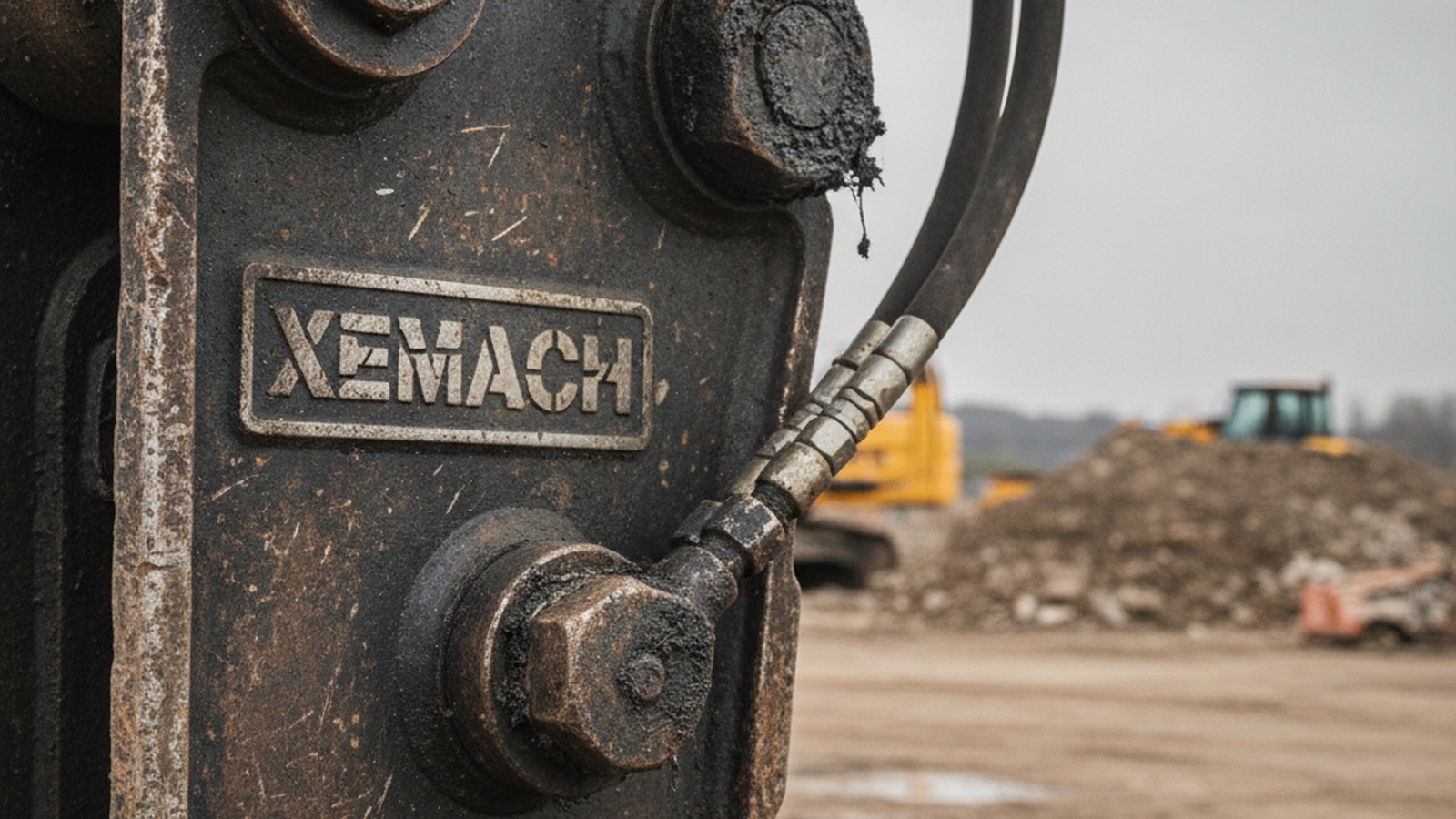
A crew has a breaker on the truck, a 20-ton excavator on site, and a trench that needs to be opened before noon. The pins line up, the coupler locks, and everyone assumes the machine is ready. Ten minutes later, oil temperature climbs, impact power feels weak, and the whole job slows down. On many sites, that kind of delay is not caused by a bad attachment. It starts with a bad assumption.
Recent industry coverage points to the same shift: attachment management is no longer a side issue for the workshop. In mixed excavator fleets, compatibility and maintenance are becoming front-line uptime decisions. Physical fit still matters, of course, but it is only one piece of the picture. Hydraulic flow, pressure range, coupler geometry, electrical connections, hose condition, and wear-part discipline now decide whether an attachment earns money or creates downtime.
Pin fit is only the first test
One of the easiest mistakes in a mixed fleet is treating a successful hookup as proof of full compatibility. It is not. A hydraulic breaker, coupler, bucket, or other excavator attachment may connect to the carrier and still be the wrong match for the job.
The real questions start after the attachment is mounted. Does the excavator deliver the hydraulic flow and pressure the tool needs? Is the attachment weight appropriate for the machine's operating envelope? Will the coupler geometry keep breakout force, reach, and visibility within a sensible range? If the tool has electrical functions or advanced controls, can the carrier support them without improvisation in the field?
That is why more fleet managers are moving compatibility checks upstream. Instead of leaving the decision to whoever is standing next to the machine that morning, they are building approved machine-attachment pairings before the attachment reaches the site.
Why couplers now sit in the middle of the uptime conversation
Quick changes used to be sold mainly as a convenience feature. In practice, the coupler is becoming an operating discipline.
The more often crews swap tools, the more the coupler becomes a reliability checkpoint. Dirty hydraulic connections, worn locking components, hose abrasion, and small leaks can turn a five-minute tool change into an unplanned repair. Even when the attachment itself is sound, weak coupler maintenance can drag down performance.
This matters more in 2026 because excavators are increasingly asked to do several jobs in the same week. A machine might trench on Monday, run a breaker on Tuesday, load spoil on Wednesday, and return to utility work by the weekend. That kind of use looks efficient on paper, but it only works when the coupler, hoses, and attachment setup are treated as part of the machine system, not as accessories.
The hidden cost is not the part — it is the stalled crew
Most attachment mistakes do not show up first on the purchase order. They show up in crew idle time, missed windows, and extra machine movement.
A breaker that runs below its intended hydraulic range may not fail immediately, but it can extend cycle times enough to throw off trucking, concrete, or backfill sequencing. A bucket or grapple that is technically mountable but poorly matched in weight can reduce control and visibility once real material is in the tool. A coupler connection contaminated with dirt may not look dramatic at startup, yet it can lead to leakage, poor performance, and a mid-shift stop that affects more than one crew.
This is where attachment policy starts to look less like procurement and more like operations management. The fleets getting better use are usually the ones that standardize verification, keep coupler inspections boring and consistent, and replace wear components before the surrounding structure pays the price.
What buyers should standardize before the next rental arrives
For contractors running mixed excavator fleets, a few rules are becoming hard to ignore.
- Keep an approved pairing list for carriers, couplers, and powered attachments.
- Verify hydraulic flow, pressure, and return-line requirements before dispatch, not after hookup.
- Record attachment weight and working geometry alongside machine size class.
- Inspect hoses, couplers, pins, and wear parts as routine pre-job checks.
- Give operators a simple field reference so maintenance steps are not left to memory.
None of this is glamorous. That is the point. Good attachment management is supposed to feel uneventful. When it is done well, crews stop talking about it because the machine just works.
Where the market is heading
The direction is fairly clear. Buyers are putting more value on attachment ecosystems that reduce guesswork: clearer hydraulic specifications, better service access, cleaner hose routing, safer and faster coupler changes, and more disciplined machine-attachment matching across the fleet.
That also changes what manufacturers and suppliers need to prove. Selling a breaker, coupler, or bucket is not enough. The better offering is a package that is easier to verify, easier to maintain, and harder to misuse in the field.
For XeMach, the useful takeaway is practical rather than promotional. Customers are not just shopping for an excavator attachment anymore. They are trying to remove friction from the whole handoff between carrier, coupler, and tool. The suppliers that make that handoff simpler will have the stronger position.
Sources referenced
- https://www.constructionequipment.com/equipment-attachments/article/55382615/how-to-manage-attachment-compatibility-across-mixed-construction-equipment-fleets
- https://www.constructionequipment.com/equipment-attachments/article/55381018/attachment-maintenance-tips-5-common-mistakes-fleet-managers-should-avoid