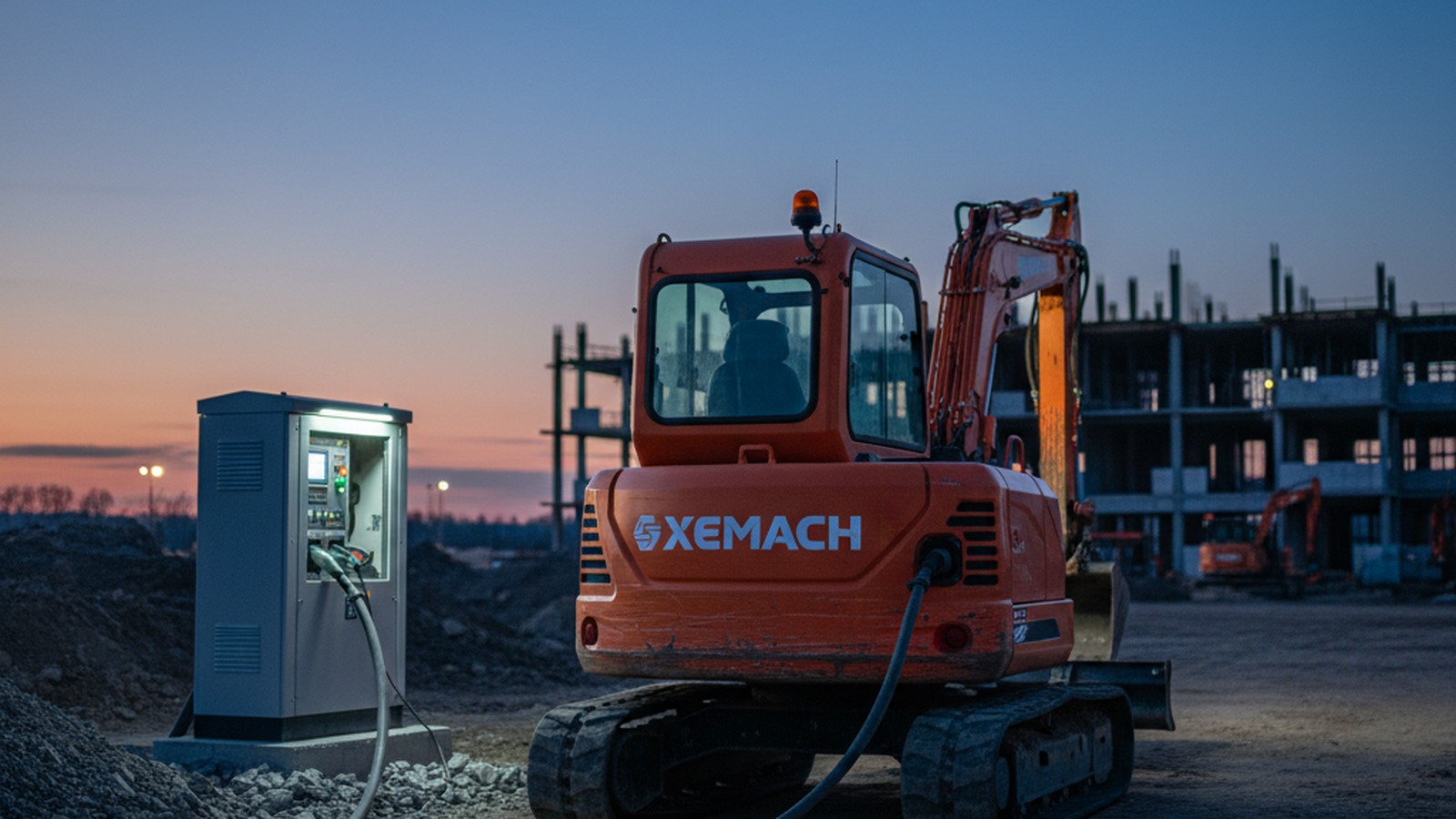
At 6:30 in the morning, a utility crew is cutting a short trench beside a hospital loading bay. The access lane is tight, the neighbors are awake, and the site manager has one non-negotiable rule: keep noise and exhaust down. Five years ago, that usually meant delaying the work, overcomplicating ventilation, or accepting complaints. In 2026, it increasingly means sending in an electric mini excavator.
The market is still small, but the use case is getting sharper
Battery-powered construction equipment is still a small part of the earthmoving business. A recent April 2026 market guide put electric earthmoving at roughly 1% of U.S. unit sales. That is not mass adoption. It is still early.
But that headline can hide the more important shift: buyers are getting clearer about where electric machines actually make sense. The strongest fit today is not every jobsite. It is compact, repeatable work in places where noise, ventilation, emissions rules, or public sensitivity change the economics.
That is why mini excavators matter so much in this phase of the market. They work in utility trenches, indoor demolition, school retrofits, municipal repairs, hospital campuses, and dense urban projects where diesel restrictions are not theoretical. They are already part of the work mix. Electric power is starting to solve a real problem there instead of trying to force a solution into the wrong application.
Why compact excavators are leading the electric conversation
Another recent industry survey found that electric excavator adoption is still largely concentrated in mini excavators. That is not surprising.
Mini excavators usually have lower energy demand than larger crawler machines, and their duty cycles are more forgiving. They dig, reposition, pause, and move again. That pattern suits battery systems much better than long, uninterrupted heavy-load work. It also makes overnight charging more realistic for contractors that return machines to a yard or work from a site with reliable power access.
In plain terms, compact excavators are the first segment where electric can do useful work without asking the customer to redesign the entire operation around the machine.
The buying question is no longer "Does electric exist?"
That question is settled. The better question now is whether a specific machine can finish the actual shift you have in mind.
A newly launched 2.5-ton battery mini excavator this spring gives a useful snapshot of where the segment stands. Its published runtime is four to eight hours depending on task, with a 32.2 kWh battery, overnight full charging, and a shorter partial-charge window for the next day. Those numbers will not fit every contractor. They do not need to.
What matters is that the machine is clearly aimed at real jobs rather than demo-stage symbolism: confined access, retractable undercarriage, attachment compatibility, grading utility, and practical charging from familiar site power. That says a lot about where the market is heading. Product planning is becoming less about proving that an electric excavator can move, and more about fitting the actual work pattern of small crews.
Where electric mini excavators already make business sense
The best applications are not mysterious:
- urban utility trenching near homes, schools, and hospitals
- indoor or enclosed-site demolition and renovation
- municipal maintenance work with noise restrictions
- overnight or early-morning jobs where diesel complaints can stop production
- contractors who can charge at the yard and deploy on predictable daily cycles
In those cases, the value is not only lower emissions. It is also easier access, fewer interruptions, less operator fatigue from noise and vibration, and a simpler maintenance picture.
That last point matters more than many first discussions admit. Fewer engine-related service items will not rescue a bad application fit, but for the right customer it can improve uptime planning and reduce day-to-day service friction.
What is still holding the segment back
The obstacles are real, and pretending otherwise does not help buyers.
Runtime is still application-dependent. Charging access still decides whether the machine feels smart or inconvenient. Purchase price is still higher than diesel in many cases. And once the job gets remote, power-hungry, or unpredictable, diesel usually keeps the advantage.
There is also a product strategy split inside the industry. Some manufacturers are still adapting diesel platforms into electric versions, while others are moving toward purpose-built battery machines. Over time, purpose-built designs should have an edge in packaging, weight balance, system efficiency, and serviceability. That will matter more as the category matures.
For now, buyers should be careful about broad claims. Electric mini excavators are not replacing diesel minis across the board. They are taking a growing share of the jobs that reward quiet operation, clean use, and predictable cycles.
What this means for the next wave of product demand
The next phase of competition will not be won by the loudest electrification message. It will be won by machine fit.
Buyers will look harder at five things: usable runtime, charging practicality, attachment performance, transport convenience, and whether the machine can work a real day without special treatment. The brands that answer those questions honestly will have a better chance than the ones that treat electrification as a marketing checkbox.
For suppliers and manufacturers, that also means the opportunity is broader than the battery itself. Quick coupler compatibility, compact transport dimensions, simple charging workflows, telematics that track true energy use, and better operator visibility all become part of the value story.
From XeMach's side of the table, the takeaway is straightforward: electric mini excavators do not need to win every job. They need to win the jobs where diesel creates friction. That is where adoption starts to stick, and where product refinement matters more than hype.