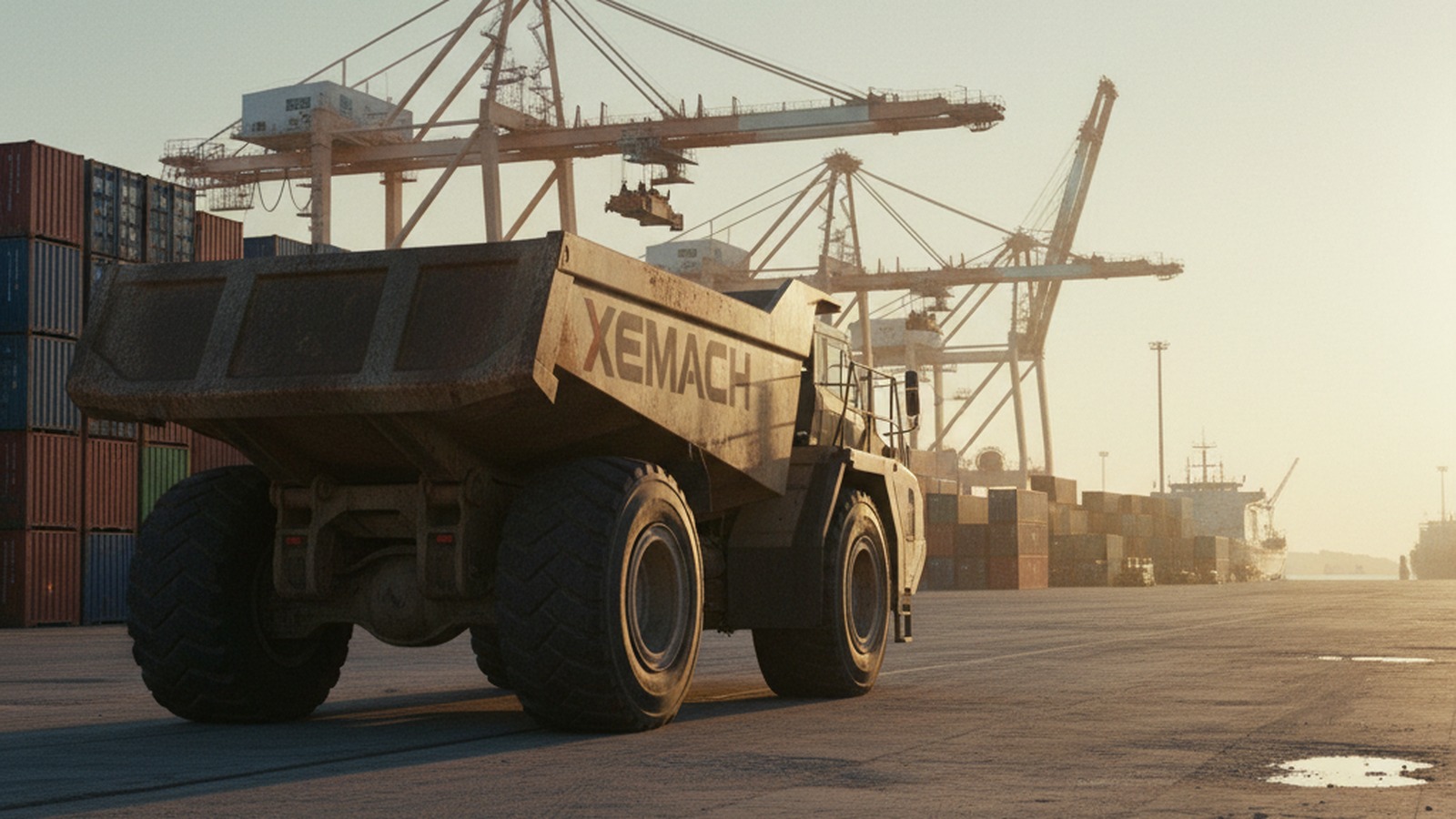
At 5:45 a.m., a quarry manager is looking at the same short haul route crews run all day: load at the face, climb out, dump at the crusher, repeat. The loop is predictable, the fuel bill is not, and pressure around emissions keeps getting tighter. That is why this week's news around electric articulated dump trucks matters. It is no longer just a concept story. It is becoming an operating question.
Two recent industry updates make that shift hard to ignore. *Construction Equipment* reports that 30- and 40-ton electric articulated dump trucks have now moved into serial production, with the first customer deliveries planned in Europe this year. A separate market survey summarized by the same publication says electric construction equipment adoption is still mixed overall, but it also makes a useful distinction: electrification moves first where duty cycles, infrastructure, and economics line up. Another April industry guide adds the practical lens. Battery-powered construction equipment remains niche, yet adoption becomes far more believable when the machine works in a controlled environment with predictable cycles and charging windows.
That combination is exactly why ADTs deserve attention now. They are not easy machines to electrify, but in the right haul application they may be among the first larger earthmoving products to justify it commercially.
Why electric ADTs matter more than another prototype launch
The interesting part is not simply that an electric dump truck exists. The interesting part is that a large off-highway hauler is entering production in a segment known for punishing use. Articulated dump trucks spend their lives moving material over repeated routes, often on private sites where operating conditions are more controlled than on open-road transport. That makes them different from machines that roam from site to site with uncertain charging access.
In quarrying, aggregates, and some mining-adjacent applications, the haul road is known, the shift pattern is known, and the loading and dumping points are known. Once those variables are stable, an electric powertrain becomes easier to model. Fleet managers can estimate cycle time, battery draw, charging opportunity, and daily production with more confidence than they can on a highly fragmented construction site.
That does not mean the answer is automatically yes. It means the conversation has become real enough for serious evaluation.
The first winners will be sites with repeatable haul loops
Electric ADTs are most compelling where the work looks repetitive rather than chaotic. Short to medium haul distances, managed site traffic, and predictable elevation changes give planners a better shot at matching battery capacity to production needs. Sites running fixed shifts may also be able to organize overnight or scheduled charging without tearing up the rest of the operation.
This is the broader lesson from the latest electrification reporting. The market is not moving evenly across all machine classes. Some equipment types can absorb current battery limits better than others. High-power equipment with random duty cycles still faces a harder economic case. But when a machine runs a disciplined loop with measurable idle time and known return points, electrification starts to look less like a marketing statement and more like fleet engineering.
That is why quarry fleets should pay attention even if they are not ready to place an order this quarter. The first workable business cases are usually narrow before they expand.
What quarry operators need to check before they get excited
The core question is not whether an electric ADT can move material. It can. The harder question is whether it can do the required work without creating a bottleneck somewhere else in the site.
Buyers should look carefully at:
- Average haul distance and elevation profile, not just headline payload
- Actual cycle time, including loading, queuing, travel, dumping, and return
- Charging strategy: overnight only, shift-change charging, or opportunity charging during planned stops
- Available site power and the real cost of upgrading it
- Weather and temperature impact on battery performance across the full working year
- Maintenance capability, technician training, and safety procedures for high-voltage systems
- Whether the machine will be used in a stable production loop or pushed into unpredictable mixed duties
These checks sound obvious, but they separate a valid electrification case from an expensive pilot that never scales.
The next competitive gap is system design, not just truck design
One takeaway from the current market is that electric heavy equipment will not be won by hardware alone. Battery size matters, but site integration matters just as much. A truck that looks impressive on a spec sheet can still disappoint if charging, route planning, thermal performance, or shift scheduling were treated as afterthoughts.
For ADTs, this means suppliers will increasingly be judged on the full operating package: power options, charging layout, telematics, cycle analysis, service response, and how well the machine fits the customer's actual haul pattern. In other words, the best electric dump truck offer may be the one that reduces uncertainty for the site manager, not the one that makes the biggest headline.
What this means from a XeMach angle
For XeMach, the signal is straightforward. Electric articulated dump trucks are entering the stage where buyers will stop asking, "Is this real?" and start asking, "Where does this work first, and what has to be true on my site?" The near-term market will likely stay selective, with the best fit in quarry and controlled earthmoving operations that can plan energy and cycle time with discipline.
That is a healthy stage for the segment. It pushes the market away from broad electrification slogans and toward practical machine planning. Over the next 12 to 24 months, the companies that translate electric ADTs into dependable production tools for repeatable haul routes will be in a much stronger position than those still treating them as exhibition pieces.