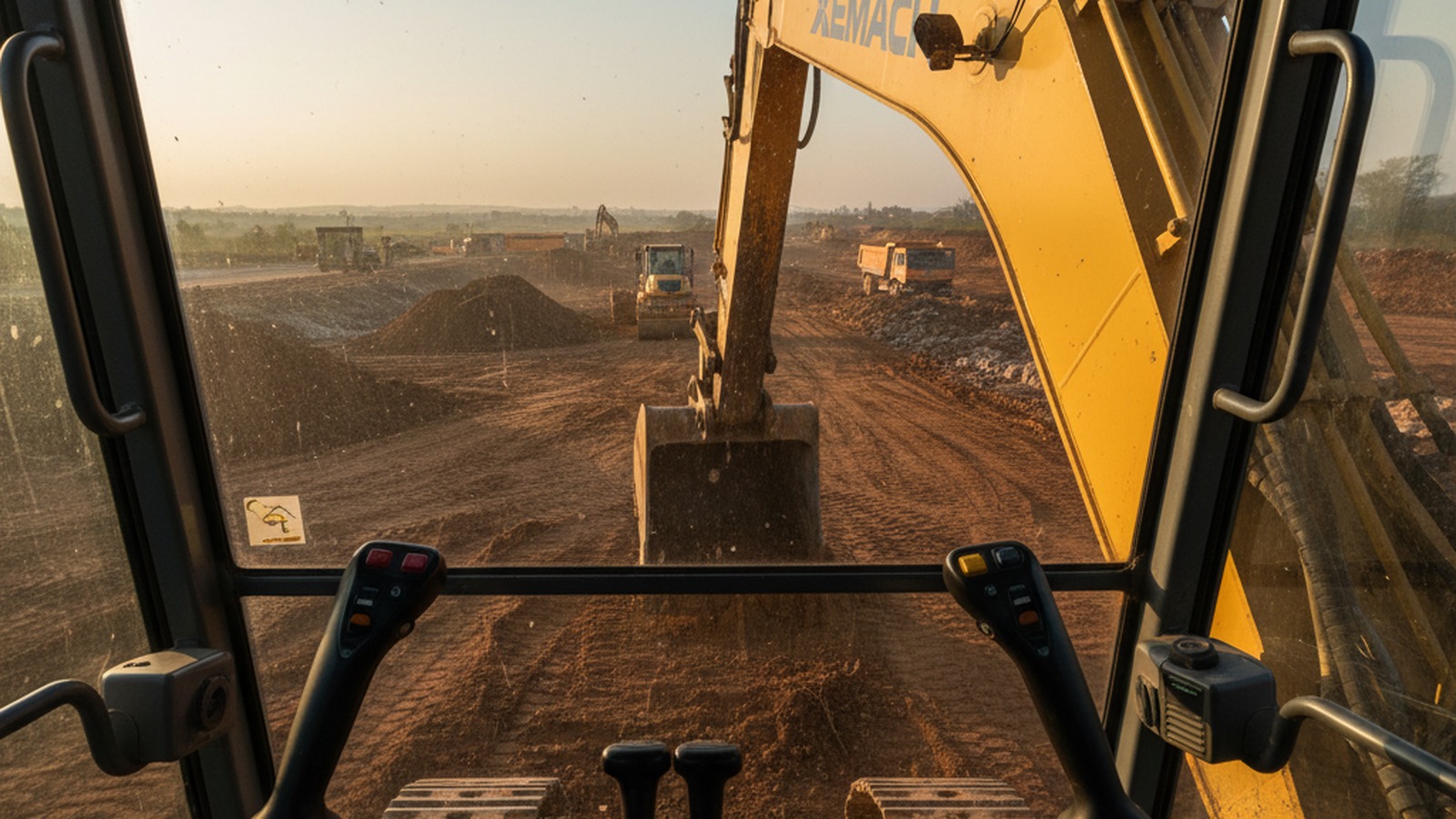
At 6:30 on a Monday morning, a fleet manager has one question to settle before the crews roll out: do you wait for a new 20-ton crawler excavator, or do you buy a seven-year-old machine that can start work next week? That is not a theoretical debate anymore. The latest U.S. market data shows buyers are making that tradeoff in much larger numbers.
Full-size excavator demand did not disappear in 2025. It split. New financed excavator sales fell 4.1% year over year to 15,672 units, while used financed sales rose 5.3% to 12,548 units. At the same time, the average age of used excavators on the market moved up from 7.1 years to 7.7 years. In plain terms, buyers still need digging capacity, but more of them are willing to accept older iron if it solves the job faster and with less cash pressure.
The used market is winning on speed, not romance
There is nothing glamorous about buying an older excavator. Most contractors do it because the machine can be inspected, financed, and moved to site faster than a factory order can be delivered. When project timing is uncertain, that matters more than brochure specs.
The pricing trend tells the same story. Used excavator values strengthened into mid-2025, peaked at roughly US$159,000 in July, and then eased back toward the US$155,000 range during the slower winter months. That is not a collapse. It suggests a market that stayed active, but selective. Buyers were still writing checks, just with a sharper eye on age, hours, and near-term repair risk.
Why new machines still make sense in the right application
The shift toward used equipment does not mean new crawler excavators lost their place. It means the buying case has to be clearer.
A new machine still earns its keep when uptime matters more than acquisition price, when attachment work is intense, or when fleets want to standardize controls, telematics, and service intervals. On utility, quarry, and heavy earthmoving jobs, a machine that starts every day, runs cooler under load, and arrives with predictable support can save more money than it costs.
That is especially true when buyers look beyond the sticker price. Fuel burn, bucket-fill efficiency, coupler compatibility, operator familiarity, and downtime exposure all shape the real cost per productive hour. In a tighter market, buyers are less willing to pay extra for vague promises. They will pay for measurable operating value.
The real risk is paying new-machine money for old-machine uncertainty
A hotter used market creates its own trap. As average machine age rises, inspection quality matters more. A seven-year-old excavator can still be a smart buy, but only if the buyer understands undercarriage wear, hydraulic response, boom and arm play, attachment history, cooling performance, and parts availability.
This is where many purchase decisions go wrong. Buyers focus on hour meter readings and ignore the question that matters more: what kind of life did this machine actually live? A unit that spent its years on light utility work is not the same as one that lived on a hammer application or constant rock loading.
That makes transparency more valuable than ever. Clean service records, honest condition reports, and clear attachment readiness are no longer nice extras. In 2026, they are part of the product.
What buyers should ask before they commit
Before signing for either a new or used crawler excavator, buyers should press on a few practical points:
- How quickly can the machine start revenue work?
- What attachments will it run on day one, and is the hydraulic setup already matched?
- What are the likely wear-item costs in the first 12 months?
- Is the support plan built around real jobsite uptime, or just warranty language?
- If the market softens again, how exposed is the buyer on residual value?
Those questions sound basic, but they separate a good purchase from an expensive compromise.
Where XeMach sees the market going
From where XeMach sits, the excavator market is not moving toward a simple “new versus used” answer. It is moving toward application-fit purchasing. Buyers want the machine that can enter the job quickly, run the right attachments without drama, and stay supportable through the first hard year of ownership.
That creates room for suppliers who can be specific: clearer machine matching, honest configuration advice, faster delivery where possible, and fewer surprises after handover. In this kind of market, the winners will not be the loudest sellers. They will be the ones who help customers buy with fewer blind spots.