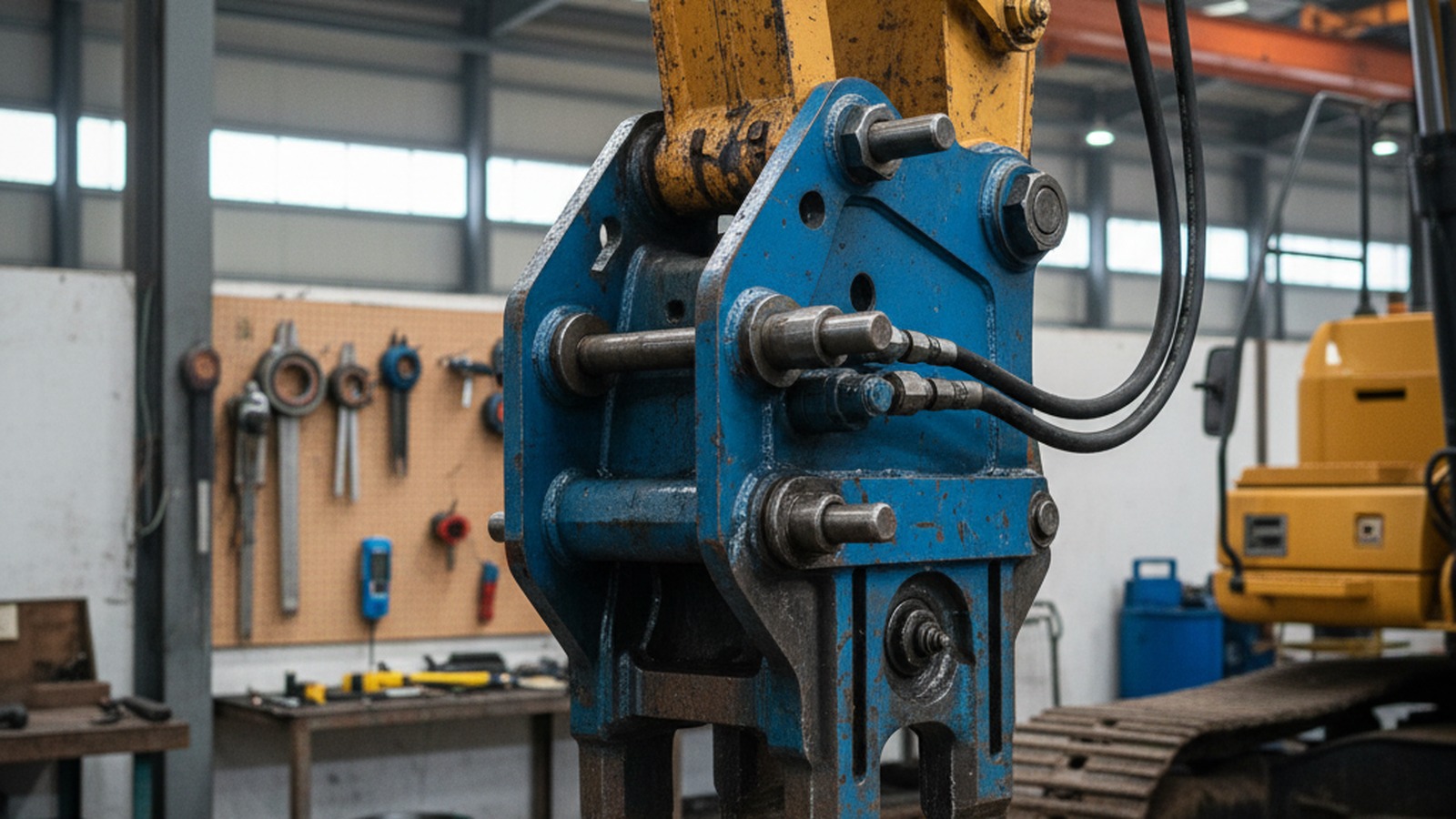
Why hydraulic couplers are becoming a 2026 excavator buying question
A city utility crew is midway through a trench repair when the work order changes again: break a short run of old concrete, swap back to a bucket, then set a compaction attachment before the lane reopens. On paper, that sounds like a routine excavator job. In practice, the speed and reliability of those attachment changes can decide whether one machine keeps the crew moving or the site starts waiting on extra iron and extra labor.
Recent industry coverage points to the same direction from different angles. A ConExpo demonstration highlighted how in-cab hydraulic attachment changes are moving from a niche talking point toward a practical uptime tool. At the same time, 2026 fleet purchasing data shows buyers are still cautious on new tech overall, but they are willing to spend where productivity and labor efficiency are obvious. Add the renewed focus on breaker matching, hydraulic flow discipline, and maintenance, and hydraulic couplers now look less like a convenience feature and more like a buying question for excavator fleets.
When changeover time starts shaping the whole job
The strongest argument for a hydraulic coupler is not that it looks advanced. It is that attachment change time compounds across a week. If a crew switches between bucket, hydraulic breaker, compaction tool, or processor several times a day, every manual intervention creates delay, safety exposure, and sometimes the need for another machine or another worker on the ground.
Equipment World recently showed an excavator changing tools without the operator leaving the cab. The point is bigger than the demo itself. Contractors are trying to do more work with tighter crews, shorter possession windows, and less tolerance for idle equipment. In that environment, the coupler becomes part of the job plan, not an accessory added after the machine spec is settled.
Breaker performance still depends on the carrier setup
Fast attachment changes only help if the attachment actually performs when it goes to work. That is where many fleets get caught. Construction Equipment’s recent breaker guide makes the familiar point clearly: matching flow, pressure, carrier weight, boom geometry, and coupler compatibility still matters more than the headline spec on the attachment brochure.
That matters because hydraulic couplers are pushing fleets toward more frequent tool changes across a single excavator. Once that happens, the machine’s hydraulic discipline becomes more visible. A carrier that is slightly off on flow, runs hot oil, or uses a poorly matched breaker may look acceptable in occasional use, but the weaknesses show up quickly when attachment changes become part of normal production.
The real market signal is selective tech adoption
A useful clue comes from Equipment World’s 2026 purchase-plan reporting. Most surveyed contractors said they expect to buy equipment this year, but adoption of 2D/3D machine control and fleet software remains relatively modest. That does not read like a market chasing technology for its own sake. It reads like a market that still filters every option through payback.
That is why hydraulic couplers deserve attention now. Their value is easier to explain than many digital systems: fewer stoppages, fewer manual connection steps, lower need to reposition additional support equipment, and better use of one excavator across several tasks. In a year when contractors are financing purchases carefully and keeping more service work in-house, straightforward uptime gains carry more weight than fashionable features.
Maintenance becomes part of the coupler decision
The other reason this topic matters in 2026 is that a faster attachment workflow raises the cost of poor maintenance habits. Breakers and other hydraulic attachments do not forgive dirty oil, neglected lubrication, worn interfaces, or drift in pressure settings. A fleet that wants quick-change productivity also needs cleaner hydraulic practices and more disciplined inspections.
That changes the buying conversation. Instead of asking only whether a coupler can connect to multiple tools, buyers should ask whether the full machine-and-attachment package is easy to inspect, easy to keep sealed, and realistic for their service routines. A quick-change setup that saves minutes but adds avoidable hydraulic failures is not a productivity upgrade.
What buyers should ask before they sign off
For excavator buyers reviewing a coupler or attachment package this year, the practical questions are pretty direct:
- How many tool changes per shift does the target application actually require?
- Which attachments will be used most often, and are flow and pressure settings validated for each one?
- Does the coupler add meaningful uptime on this job mix, or just theoretical versatility?
- Can the fleet keep hydraulic cleanliness high enough and inspection routines consistent enough for the system to stay reliable?
- Will the setup reduce support equipment and labor on site, or simply add another subsystem to manage?
Those questions matter on urban utility work, demolition, road repair, and small site-prep jobs in particular, because those are the places where crews lose time in short bursts all day long.
Where the opportunity sits for suppliers and buyers
The interesting shift is not that excavator couplers suddenly became new. It is that jobsite conditions are making their economic case easier to see. When labor remains tight and contractors keep asking one machine to cover more tasks, attachment change time turns into a measurable operating cost.
For manufacturers and fleet buyers alike, the smarter move is to treat couplers, breakers, and auxiliary hydraulics as one productivity system. From the XeMach side, the practical takeaway is simple: a coupler package only earns its place if it shortens the task cycle without creating hydraulic headaches later. The fleets that benefit most will be the ones that spec the package carefully, train around it, and keep maintenance standards high enough to protect the uptime they are buying.