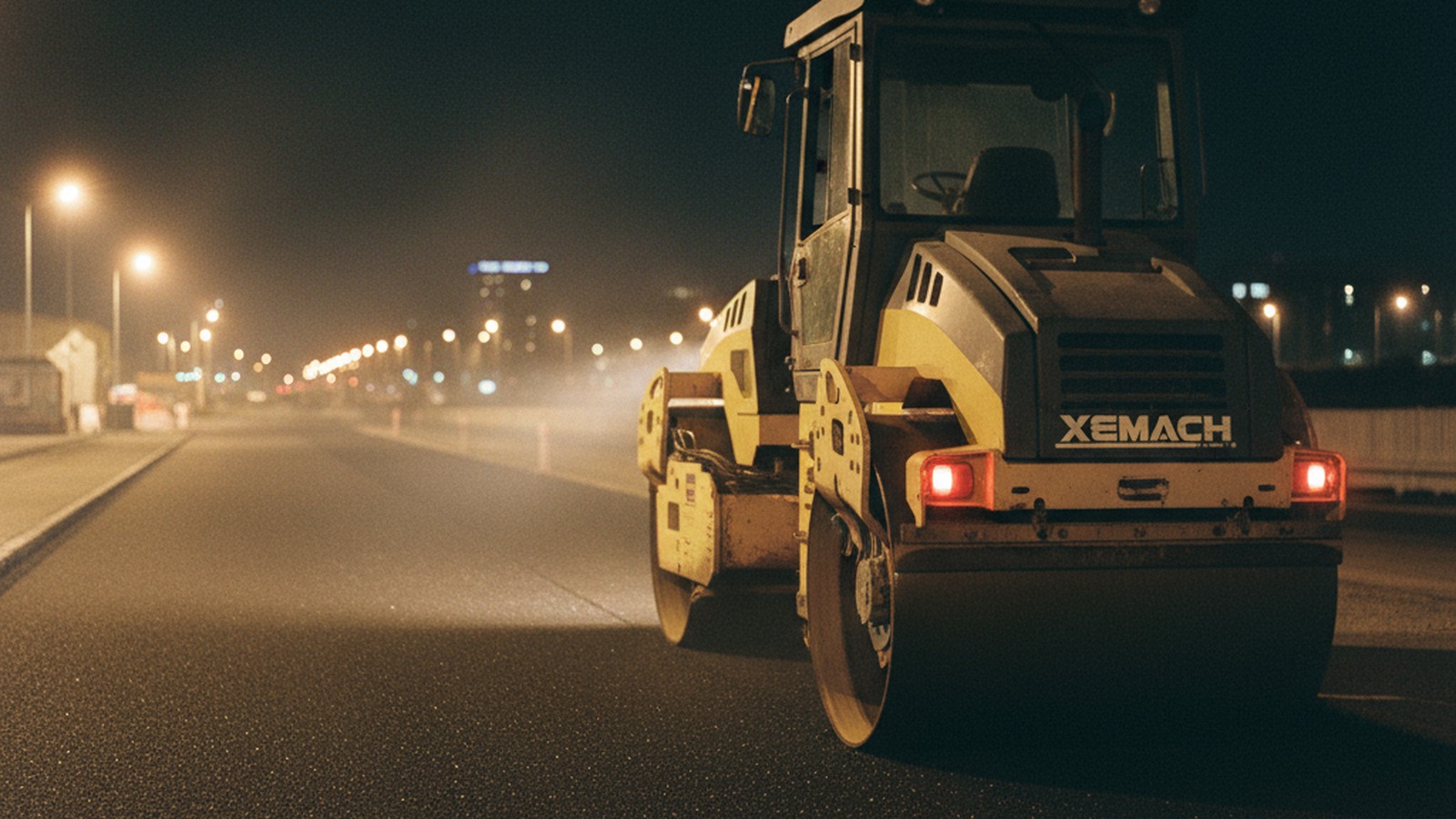
At 2:10 a.m., a paving crew has one lane left before reopening traffic. The mat looks fine under the lights, the roller pattern is complete, and everybody wants to move on. Then the next-day cores come back uneven, and the crew is stuck explaining rework, delay, and avoidable exposure beside live traffic. That gap between “it looked good” and “it actually met spec” is becoming one of the most important buying questions in road machinery for 2026.
Recent industry updates point in the same direction. Roadbuilding demand is staying active in major U.S. markets, compaction workflows are starting to get live density feedback instead of delayed sampling, and paver design improvements are increasingly focused on uptime, service access, and more consistent mat quality. Put together, that suggests a meaningful shift for buyers of tandem rollers, drum rollers, and highway-class pavers: the next productivity gain may come less from headline horsepower and more from tighter process control.
The compaction conversation is moving from pass counts to proof
One of the more notable recent developments in road machinery is the addition of under-roller radar-based density sensing to asphalt compaction workflows. The practical significance is straightforward: crews can identify low-density areas while the asphalt is still workable, rather than discovering trouble after the lane is cold and traffic control has to come back.
That matters because pass counts and operator feel still have limits. They remain useful, but they do not always tell the full story when mix temperature, lift thickness, haul timing, or edge conditions start drifting. Real-time density visibility changes the job from “follow the pattern and hope the samples agree” to “see the weak spots, correct them now, and leave with fewer surprises.”
For owners and contractors, the value is not only quality control. It is also risk reduction. Fewer return visits, fewer disputes about whether compaction met target, and less need for crews to spend extra time near traffic all affect job cost in ways that are easy to underestimate when equipment decisions are made only on purchase price.
Bigger paving programs make consistency more valuable than ever
This shift is arriving at a useful moment. Public road programs are still feeding a steady project pipeline in several regions. Utah alone has announced 176 new roadbuilding projects worth about $2.8 billion for 2026, on top of work already underway. When that kind of volume is moving through the market, contractors do not just need rollers and pavers that can work hard. They need fleets that can hold a repeatable standard across long schedules, different crews, and tighter delivery windows.
In that environment, a roller that helps confirm density earlier becomes more than a technology story. It becomes a scheduling tool. If crews can reduce rework and avoid late-stage testing surprises, they protect both lane-closure windows and asphalt quality. For pavers, the same logic applies in a different form: easier maintenance access, better cooling protection, and more predictable screed wear are no longer small convenience upgrades. They are uptime insurance.
Buyers are still cautious, but the pressure is building
Contractors are still buying equipment with a conservative eye. A recent 2026 contractor survey found that 83% of respondents plan to buy at least one machine this year, yet adoption of 2D and 3D machine control remains well below majority use. That tells us something important. Many buyers are interested in technology, but they still want a clear, jobsite-level reason to pay for it.
Road rollers may now have one of the clearest business cases. Real-time compaction feedback speaks directly to three pain points buyers already understand: rework, specification compliance, and crew safety. That is a much easier conversation than selling technology as a vague future advantage.
The same pattern is visible in recent paver updates across the market. Improvements around screed life, service access, cooling durability, and thermal visibility all point to a common buyer concern: keeping mat quality steady without creating extra downtime. In other words, the market is rewarding machines that help crews make fewer avoidable mistakes.
What fleet managers should ask before choosing the next roller or paver
For 2026, the smart buying question is no longer just “How fast can this machine work?” It is also “How early can this machine help my crew catch a costly problem?”
- Can the roller help verify density or stiffness during the shift, not after it?
- How easily can site teams use the data without slowing production?
- Does the paver reduce routine service friction in hot, dusty, stop-start paving conditions?
- Will the machine help a mixed-experience crew produce a more repeatable surface?
- Can the equipment reduce exposure to rework, traffic-side testing, and unplanned callbacks?
Those are buying questions grounded in actual operating pressure, not brochure language.
The XeMach takeaway
From the XeMach side, the interesting part is not that road machinery is becoming more digital. That story has been around for years. The more useful takeaway is that buyers now have a narrower filter: if a feature cannot help a paving crew protect density, uptime, or safety in the same shift, it is harder to justify.
That is where the next round of competition in rollers and pavers is likely to sit. Not in louder spec-sheet battles, but in quieter gains that help crews finish the night with fewer doubts about what the road will look like the next morning.