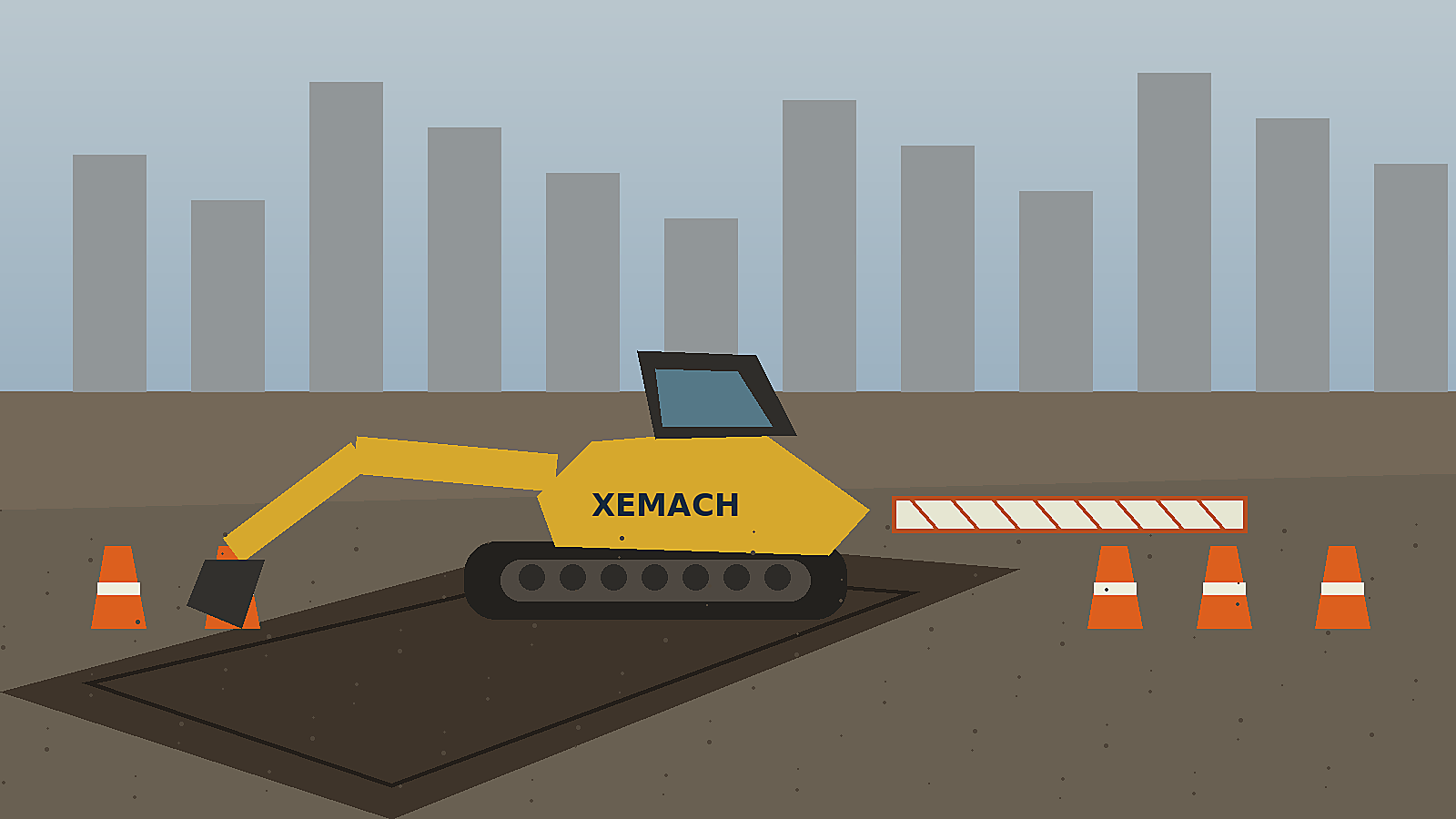
A utility crew arrives at a narrow residential street after rain. There is a trench to open, a pipe repair to finish, spoil to move, and a driveway that cannot be cracked. A large excavator is too much machine. A skid steer can carry material, but it cannot dig, lift, and run a breaker from the same position. This is exactly where the 3- to 4-metric-ton mini excavator has become the practical default.
Recent coverage from Construction Equipment points to a familiar pattern in compact excavators: demand is still strong, the 3- to 4-ton class remains the sweet spot, and buyers are paying more attention to hydraulics, attachments, grade control, telematics, and transportability than to digging depth alone. For contractors and dealers, that shift matters. A mini excavator is no longer just a small digging machine. It is increasingly bought as a compact tool carrier that has to earn money across many short jobs.
The real buying question is job coverage, not just machine size
Mini excavators typically sit in the 1- to 8-metric-ton range. The smaller end is attractive for garden work, indoor demolition, and jobs where access is extremely limited. Larger compact models bring more reach and lifting ability, but they also need bigger transport, more room, and higher ownership cost.
The 3- to 4-ton range works because it sits in the middle. It is still compact enough for residential utilities, landscaping, light demolition, drainage, and municipal repair work, but it has enough hydraulic power and stability to handle more than a bucket. That balance explains why rental fleets like the class: one machine can go out with a bucket, breaker, auger, grapple, or tilt coupler and cover a wide spread of customer needs.
For buyers, the key is not whether the machine looks compact on paper. The better question is: how many paid tasks can it complete in a week without becoming slow, unstable, or hard to move?
Attachments are changing the spec sheet
The most useful mini excavators are being specified around attachments first. A contractor may start with trenching, but the same machine may later need to break concrete, cut brush, set stones, clean ditches, or handle pipe. That makes auxiliary flow, pressure, coupler compatibility, return-line routing, and control settings much more important than buyers sometimes expect.
A low purchase price can become expensive if the machine cannot run the attachment mix the fleet actually uses. Breakers need reliable hydraulic flow and cooling. Grapples need smooth control. Tilt or quick couplers need clean geometry and safe locking. Mowers and specialty tools need oil capacity and heat management. If those details are not checked before buying, the machine may still dig well but fail at the jobs that create margin.
This is also where dealers and exporters can add value. A well-matched machine-and-attachment package is easier to sell than a bare excavator because it solves a work problem, not just a size requirement.
Transportability is part of productivity
Compact excavator buyers often talk about digging force, but transport can decide whether a machine is profitable. The 3- to 4-ton class is popular partly because it can move between small jobs without turning every mobilization into a heavy-haul plan. For utility crews, landscapers, and rental customers, that matters as much as bucket breakout force.
Before choosing a model, buyers should check trailer limits, local road rules, attachment weight, bucket set weight, and whether the towing vehicle is already in the fleet. A machine that needs a different trailer, driver license, or support truck may still be technically compact, but it can lose the daily flexibility that made the class attractive in the first place.
Technology is useful only when it fits the crew
Grade control, telematics, improved monitors, and electric variants are becoming more visible in compact machines. These are useful tools, especially for rental monitoring, fleet use, and trench accuracy. But technology should reduce operator friction. If it adds menus, training time, or service complexity without improving the task, crews will bypass it.
For many markets, the best specification is not the most digital one. It is the one that gives a new operator confidence quickly, gives the owner basic machine visibility, and keeps service straightforward. In export markets, parts supply, diagnostics access, language settings, and local technician training can matter more than the feature list in the brochure.
What buyers should ask before committing
A practical mini excavator buying discussion should include a few direct questions:
- Which three jobs will this machine do most often?
- What attachments will be used in the first year?
- Can the hydraulic system support those tools without overheating?
- Will the machine, bucket, coupler, and attachment stay within transport limits?
- Is zero-tail swing, reduced-tail swing, or conventional tail swing best for the actual site?
- Can local service teams diagnose and repair the machine quickly?
Those questions sound simple, but they prevent a common mistake: buying a compact excavator for one attractive specification while ignoring the work cycle around it.
The XeMach takeaway
The mini excavator market is maturing. Buyers already know the category is useful; now they are asking for cleaner matching between machine weight, hydraulic performance, attachment packages, transport plan, and after-sales support. For suppliers, that is a healthy change. It rewards practical engineering and honest configuration work.
For contractors looking at the next purchase, the smartest move is to start with the week of work, not the product sheet. If a 3- to 4-ton mini excavator can dig, lift, switch tools safely, travel to the next site without drama, and stay serviceable in the local market, it is not just a small excavator. It is one of the most flexible machines in the compact fleet.
Source reviewed: Construction Equipment, "Meet the Most Popular Compact Excavators on the Market: Models, Trends, and Buying Tips" (June 25, 2026): https://www.constructionequipment.com/earthmoving/crawler-excavators/article/55386627/mini-excavator-buying-guide-features-costs-and-top-compact-excavator-models