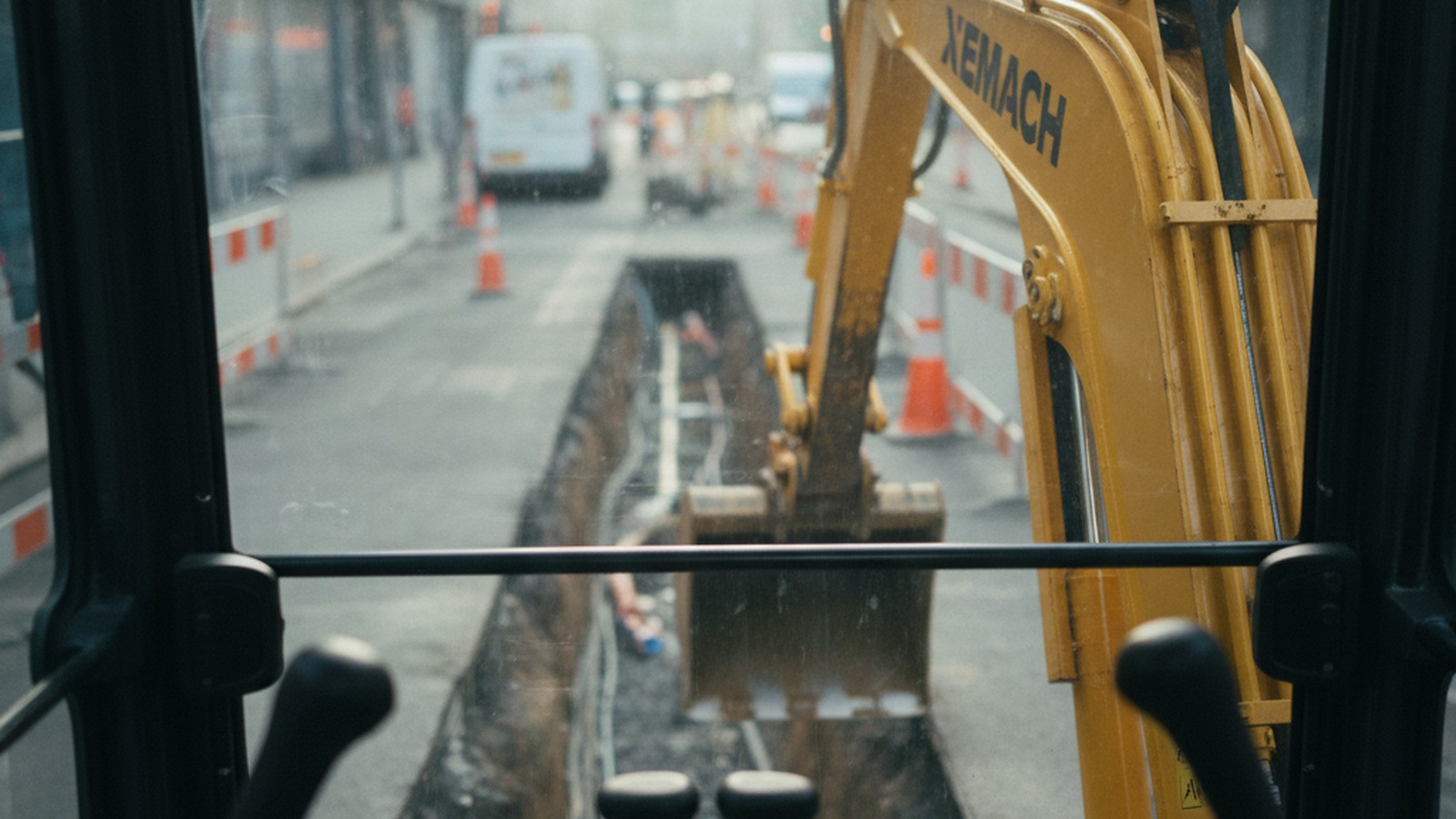
Before the lane closure opens, a utility crew has maybe six hours to expose an old line, trim the trench, load spoil, and hand the road back to traffic. In that kind of job, the wrong excavator size hurts twice: once in cycle time, and again in setup, transport, and jobsite congestion. That pressure is one reason the excavator conversation in 2026 is shifting away from raw machine size and toward the practical overlap between advanced mini excavators and tight-tail mid-size models.
Recent launches and fleet trend data point to the same conclusion: buyers are no longer asking only, “How much can this machine dig?” They are asking, “How much productive work can it finish in a constrained job window, with fewer operators, less rework, and less idle time?”
Why the 4-ton to 15-ton band matters more now
A lot of real-world utility, municipal, and roadside work happens in the gap between very small minis and full-size crawler excavators. That is where contractors need enough digging force and hydraulic performance to do meaningful production work, but still need a machine that can move through narrow streets, work around traffic control, and avoid overcommitting transport costs.
What stands out in recent product news is how much more capability is being packed into this band. On the compact end, new 4-ton mini excavators are arriving with better cab ergonomics, integrated touchscreens, cleaner hose routing, easier service access, and attachment-ready hydraulic options. On the larger side, 15-ton tight-tail excavators are gaining factory machine control, boundary management, payload monitoring, improved visibility, and more refined operator interfaces.
That creates a more interesting buying decision than the old “mini versus full-size” debate. For many fleets, the real question is whether to stay light and mobile, or step up to a smarter tight-tail machine that can carry more of the workload without becoming a burden in crowded jobsites.
What buyers want from a city machine now
Urban and roadside jobs have changed. Schedules are tighter. Utility strikes are more costly. Crews are thinner. And clients expect cleaner handoffs, especially on municipal and infrastructure work.
That is why several features that once felt optional are moving closer to the core spec:
- better visibility around the machine
- simpler control layouts that shorten operator learning time
- built-in camera coverage and boundary awareness
- cleaner attachment integration for thumbs, couplers, and auxiliary tools
- easier daily service access
- payload or grade-related assistance that reduces rework
This is a meaningful shift. Buyers are putting a higher value on machines that lower friction across the whole workday, not just during the digging portion. If a machine is easier to transport, quicker to set up, easier to hand from one operator to another, and less likely to need a second cleanup pass, its effective productivity rises even if headline specs only move modestly.
Why mini excavators are still hard to beat
Mini excavators still own a huge part of the urban jobsite for good reason. They fit tight access conditions, are easier to trailer, and make financial sense for landscapers, utility contractors, municipalities, and rental fleets. In the 3- to 4-ton class especially, buyers can cover a wide range of trenching, repair, and light site-prep work without stepping into the logistics burden of a larger carrier.
For many fleets, that matters more than maximum breakout force. A mini excavator that is available, easy to move, and simple to maintain often produces more value than a larger machine that sits waiting for the right transport window or the right operator.
This is also why the compact class keeps expanding instead of flattening out. Buyers want more comfort, more attachment flexibility, and more hydraulic control, but they still want to stay inside a machine size that works across many small jobs in one week.
Where tight-tail mid-size excavators are gaining ground
At the same time, mid-size tight-tail excavators are becoming much more persuasive in utility and roadwork applications. The argument is not just extra mass or reach. The stronger case is that these machines can now bring more digital help into a footprint that still suits constrained jobsites.
Factory-integrated grade assistance, boundary control, swing guidance, payload visibility, and 360-degree awareness features are changing what contractors expect from this class. Machines in this range can reduce over-digging, improve truck loading consistency, and help less experienced operators work more confidently in traffic-sensitive environments.
That matters because many fleets are dealing with labor reality, not textbook fleet planning. They may not have a deep bench of highly seasoned operators available every shift. A machine that reduces mental load and repeat corrections has real commercial value.
The hidden issue is not horsepower. It is utilization.
The broader fleet data is a useful reality check here. Telematics reporting this year suggests many fleets still have heavy equipment sitting idle or being tracked through manual processes. In other words, the industry is not just trying to buy better excavators. It is trying to use the excavators it already owns more effectively.
That changes the purchase lens. If a contractor adds a machine that overlaps poorly with the rest of the fleet, it may become another underused asset. But if the machine fills a genuine operating gap — for example, replacing repeated subcontracted trench work, reducing rework on utility cuts, or taking over jobs that are too big for a mini but too awkward for a standard full-size excavator — then the return profile improves.
In 2026, the winning fleet mix will probably not come from choosing the single “best” excavator. It will come from choosing the band where the machine gets dispatched often, finishes work cleanly, and does not create transport or training headaches.
What this means for excavator buyers in 2026
- If the fleet spends most of its time on short-duration urban jobs, compact excavators remain the safest volume buy.
- If crews are hitting the ceiling of mini excavator productivity but still work in tight streets, a tight-tail 12- to 15-ton machine deserves a hard look.
- If attachments are central to the workflow, hydraulic setup, coupler compatibility, and operator interface matter as much as engine output.
- If the business struggles with rework or operator turnover, integrated control and visibility features can be more valuable than chasing a bigger machine.
From XeMach’s side of the market, the takeaway is straightforward: customers are becoming less tolerant of machines that look good on a spec sheet but create friction in daily use. The excavators that will stand out are the ones that match urban workflow reality — fast setup, predictable control, attachment readiness, visibility, and enough intelligence to keep the job moving without overcomplicating ownership.
For suppliers and buyers alike, that means the next sales conversation should start with the job window, the street width, the trailer plan, and the operator mix — not just the dig depth chart.