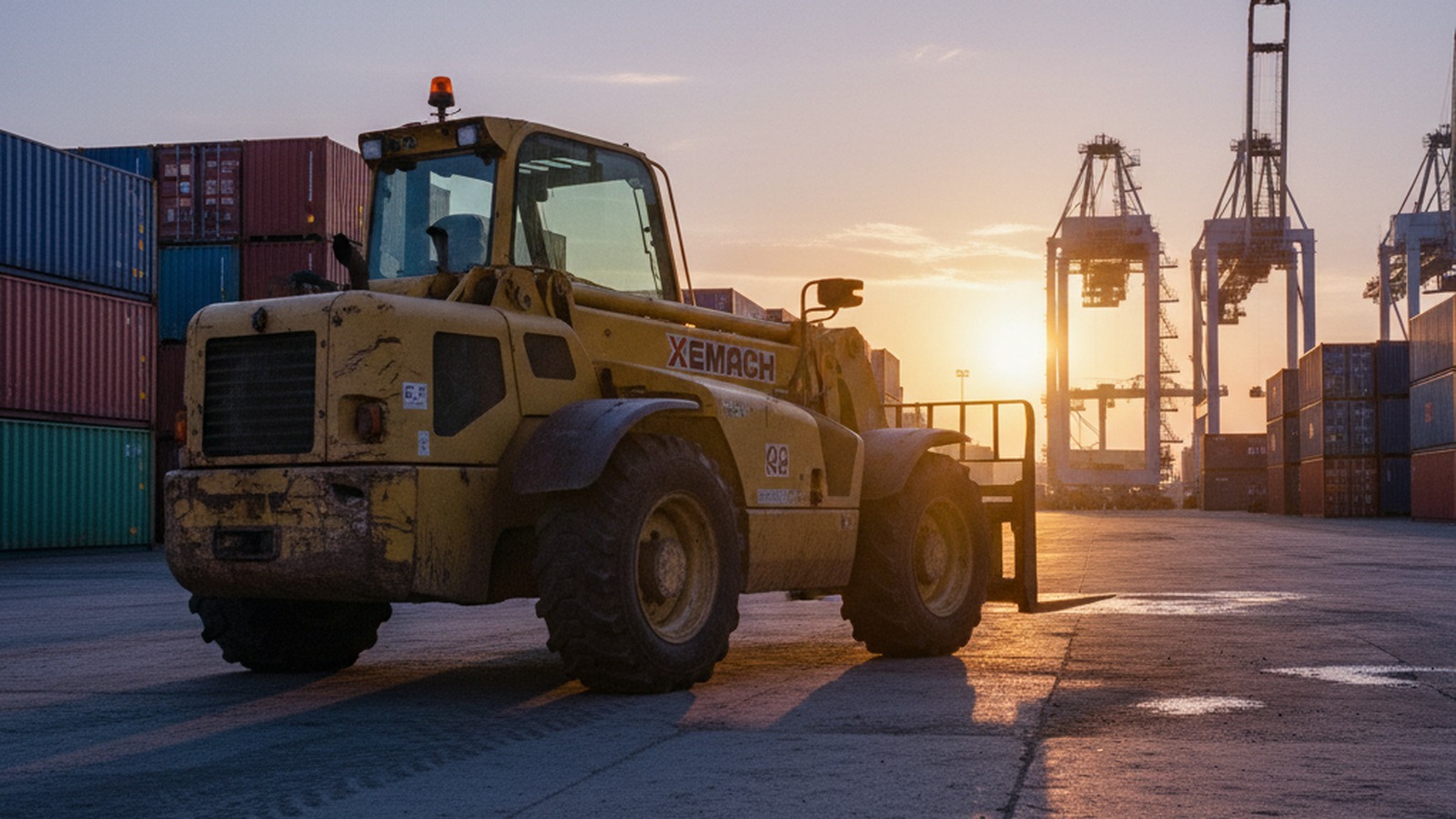
A masonry crew is waiting on the second floor, pallets are staged at the edge of the slab, and the telehandler has already been handed from one operator to another twice this week. When that machine loses a hose, a coupler, or a tire at 9:30 a.m., the problem is not a repair bill. The problem is that the whole jobsite suddenly starts standing around.
That is why telehandler maintenance is moving closer to center stage in 2026. Recent industry reporting shows that fleet owners are looking past simple service intervals and focusing on a bigger question: how do you keep a telehandler productive when it lives a hard life, swaps attachments often, and may spend part of its career in rental or mixed-operator service?
The weak point is often not the boom – it is the handoff between jobs
Telehandlers do not fail only because they work hard. They fail because they change context constantly. One week the machine is on forks, the next it is on a bucket, then a broom, then back into a lift-and-carry routine on rough ground. That creates stress at the attachment interface, in auxiliary hydraulic lines, and in the habits of whoever connects the next tool.
This is why attachment pins, locking systems, quick-connects, hose routing, and cylinder rods deserve more attention than they often get. A coupler that is dirty, slightly loose, or leaking does not stay a small issue for long. It turns into contamination, wear, and eventually downtime that looks bigger than the part that caused it.
Clean hydraulics are turning into a fleet discipline
The telehandler maintenance conversation is getting more specific. It is not only about checking oil and greasing on schedule. It is about protecting hydraulic cleanliness every time an attachment is connected, disconnected, or swapped in the yard.
That means wiping couplers before every connection, capping lines after disconnect, keeping boom heads clean, and matching attachment flow and pressure to what the machine can actually supply. On paper, those steps sound basic. In a busy fleet, they are the difference between a machine that runs all month and one that starts shedding uptime in small, expensive ways.
Pre-start inspections matter more when machines are shared
On owner-operated fleets, small warning signs often get caught by the same person who felt the machine change yesterday. In rental fleets or multi-operator crews, that memory disappears. The walk-around becomes more important because it replaces tribal knowledge.
Fluid levels, tire condition, cracks, dents, worn wear pads, axle issues, loose mirrors, sensor damage, and missing safety decals are not glamorous inspection items, but they are the things that stop a lift plan from staying a plan. Shared machines need repeatable routines more than heroic mechanics.
Tire health and stability still decide real-world performance
Telehandler discussions often drift toward lift height, reach, and auxiliary hydraulics. Those are important, but tire condition still has an outsize effect on stability and handling, especially under load and on uneven ground. Daily tire checks, proper cold inflation, and avoiding mismatched replacements sound old-school because they are. They are also still some of the cheapest insurance in the fleet.
For telehandlers, maintenance and safety are tightly linked. A machine that tracks poorly or sits on the wrong tire setup is not just costing uptime. It is changing how confidently the operator can place a load.
Telematics and service-friendly design are changing the maintenance math
The bigger shift in 2026 is that maintenance is becoming easier to manage when the machine itself helps. Industry coverage this spring points to more telematics, easier service access, better cooling layouts, and machine designs that reduce the time required for routine checks.
That matters because uptime is no longer just a workshop problem. Fleet managers want earlier warnings, cleaner service scheduling, and fewer missed issues between operators. A telehandler that is easier to inspect, easier to clean, and easier to service usually ends up being easier to own.
What buyers should ask before adding telehandlers to the fleet
A better buying conversation now sounds like this:
- How exposed are the attachment couplers and auxiliary lines in daily use?
- How easy is it to inspect boom wear points, cooling packages, filters, and tires?
- What telematics or alerts help catch service issues before the machine goes down?
- How fast can a mixed-experience crew learn the inspection routine and do it consistently?
- Does the machine stay stable and predictable when attachments and operators change frequently?
Those questions get closer to real ownership cost than lift charts alone.
The XeMach view
From XeMach's side of the table, the telehandler market is rewarding machines that are easy to keep honest. Not just powerful enough. Not just tall enough. Honest enough that a fleet can inspect them quickly, service them cleanly, and hand them to the next operator without gambling on hidden wear.
In 2026, telehandler competitiveness is being shaped as much by maintenance discipline and serviceability as by headline specs. The fleets that understand that early will spend more time lifting and less time troubleshooting.