What contractors are really paying for in 2026 excavators: visibility, lift awareness, and grade-ready control
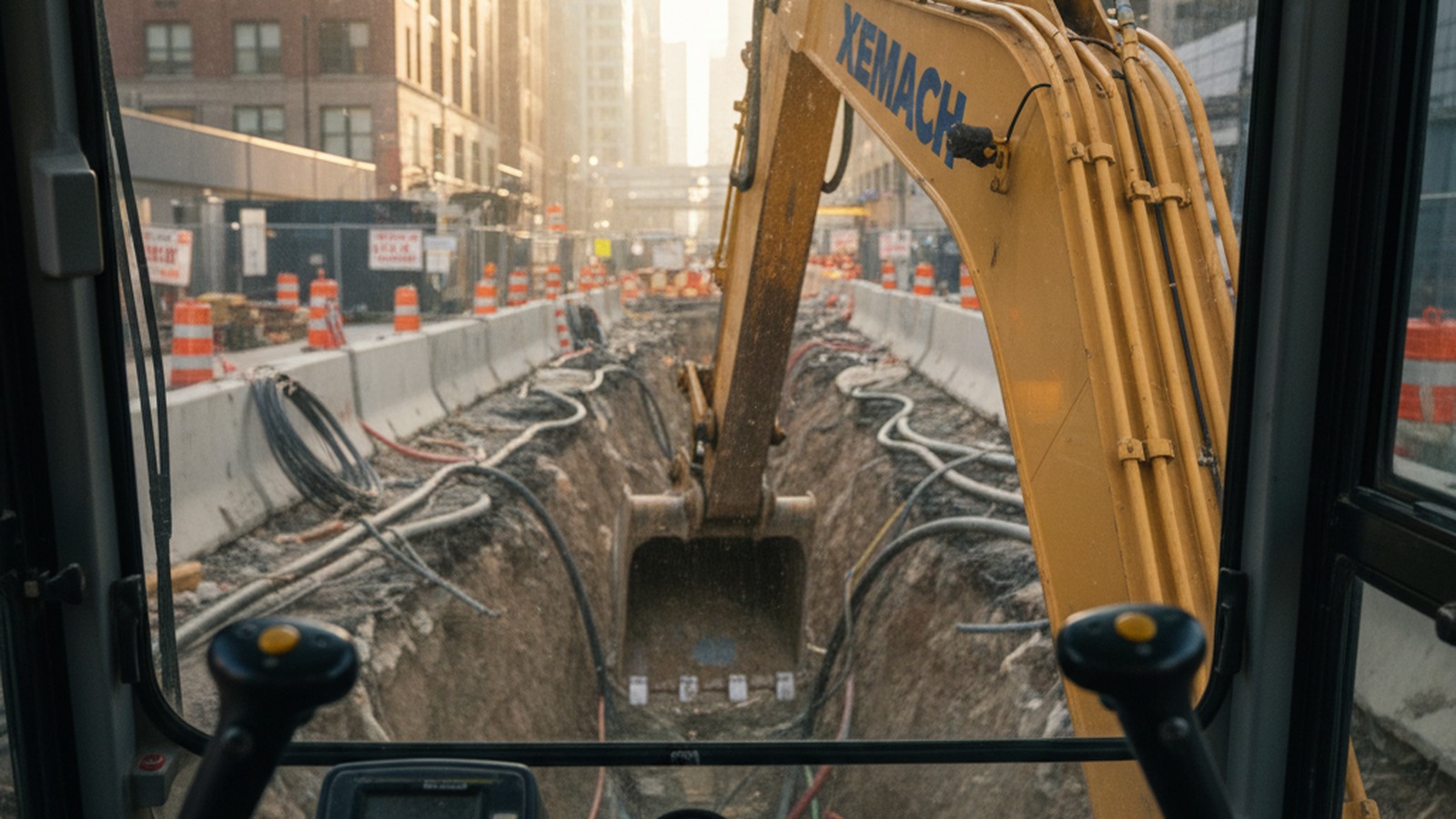
At 7:15 in the morning, a crew is trenching beside a live city street. The lane closure is narrow, utilities are crowded, and the operator has to swing, track, and grade without clipping barriers, traffic, or buried risk. In that kind of job, another small bump in engine output is nice. Better visibility and better machine awareness are what actually keep the day moving.
That is the more interesting excavator story right now. Recent product releases across compact and mid-size crawler excavators suggest the market is shifting away from headline horsepower and toward practical control technology: better camera coverage, lift-assist feedback, grade-ready packages, simpler operator interfaces, and layouts that cut training time for mixed fleets.
Blind spots cost more than most spec sheets admit
In busy urban work, utility jobs, road closures, and compact commercial sites, the hardest part is often not digging force. It is managing space. Tail swing, sight lines, overhead limits, trench depth, and nearby people all shape how productive a machine can really be.
That is why more new excavators are arriving with stronger camera packages, larger in-cab displays, and digital boundary tools. These features do not just add convenience. They reduce hesitation. An operator who can see more and trust the machine’s warnings usually works faster, especially in repetitive trenching, truck loading, and close-quarters rotation.
The practical point for buyers is simple: if a machine will spend most of its life in crowded jobsites, visibility tech is no longer a premium extra. It is part of the production package.
Lift awareness is moving from specialist need to mainstream feature
Another clear shift is how manufacturers are treating lifting support. Excavators have always done more than digging. They place pipe, set structures, handle attachments, and load trucks under changing ground conditions. That makes lift confidence a daily issue, not a niche one.
New lift-assist and load-monitoring features matter because they bring more real-time judgment into the cab. Instead of relying only on paper charts, operators get live feedback about capacity, balance, and operating limits. That helps crews work more confidently on slopes, in uneven ground, or when handling awkward loads.
For fleet owners, this trend matters for two reasons. First, it supports safer operation without slowing down production. Second, it reduces the performance gap between a very experienced operator and a newer one. In a labor market where skilled operators are hard to replace, that is a serious buying argument.
Grade-ready machines are winning because retrofits waste time
Machine control in excavators is becoming less about flashy autonomy and more about reducing setup friction. Grade-ready configurations, digital level tools, depth alarms, and easier sensor integration all point to the same buyer demand: make the machine easier to deploy on Monday morning.
Retrofits still have a place, but contractors increasingly prefer machines that arrive ready for guidance upgrades. It saves labor in the shop, shortens installation downtime, and makes it easier to standardize fleets across crews and branches. Even when buyers do not order full 3D systems on day one, they want a cleaner path to add them later.
This is especially relevant for excavators working in roadwork, utility installation, and municipal packages where accuracy affects both rework and billing. A machine that can help control depth, confirm level, or support payload tracking is easier to justify than one that simply advertises more output.
Compact and mid-size excavators are becoming easier to train across fleets
One quieter trend is platform commonality. More manufacturers are designing compact and mid-size excavators with shared interfaces, shared cab logic, and more predictable control layouts. That sounds less exciting than battery talk or autonomous headlines, but for real fleets it may be more important.
Standardized displays, keyless start, simpler hydraulic setup, and common service points reduce onboarding time. They also help rental fleets and multi-crew contractors move operators between machines without losing too much efficiency in the first few hours.
In plain terms, the next competitive edge in excavators may not be one breakthrough component. It may be how fast an average operator can become a productive operator.
What buyers should ask before signing for the next excavator
Before comparing only price, digging depth, and engine power, buyers should ask a few harder questions:
- How often will this machine work in a tight or high-risk environment?
- Does the operator get meaningful camera coverage or just a checkbox feature?
- Is lift feedback actually usable during normal work?
- Can the machine be upgraded to 2D or 3D guidance without a messy retrofit?
- How much training time will this machine save across the fleet?
- Will the hydraulic and attachment setup support the jobs that make the best margin?
Those questions get closer to real ownership value than headline spec wars.
XeMach’s take
The excavator market still cares about power, fuel use, and durability. That will not change. But the better signal in 2026 is that buyers are rewarding machines that reduce uncertainty in the cab. Better visibility, clearer lift awareness, and easier paths into grade control are becoming real commercial features, not brochure filler.
For manufacturers and suppliers, that points to a practical next step: build excavators that help crews make fewer small mistakes during normal work. On actual jobsites, that is where uptime, safety, and margin usually leak away first.