Background:
The client required two amphibious excavators—one for silt removal in a pond and another for clearing aquatic weeds in a river. Both machines needed to be around 20 tons, with a lead time of 40 days.
We immediately analyzed the client’s needs and, considering their limited budget, recommended the mid-end XY260 model with an operating weight of 24.5 tons. Cummins engine with KAWASAKI hydraulic pump, very high configuration.
Determining the length of the extended arm
Options were 12m and 16m. Initially, to save costs, the client chose the 12m arm.
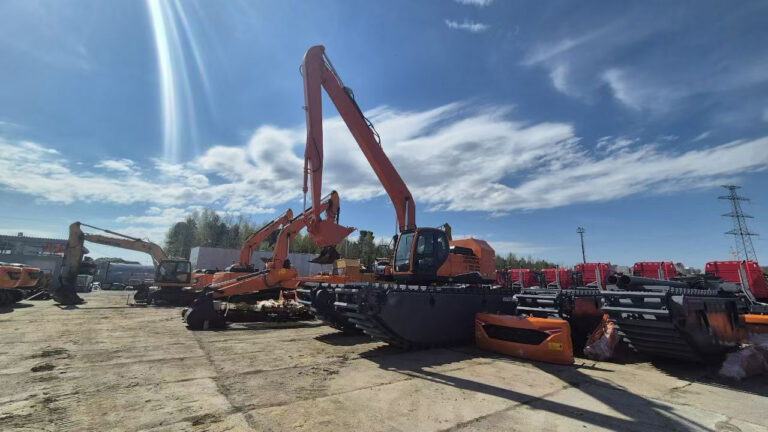
a) We analyzed the actual working conditions—removing silt from a pond and weeds from a river—and advised that the 16m arm would be more efficient. A longer arm reduces the need to frequently reposition the excavator, shortening project time and ultimately saving costs.
b) The client followed our advice and selected the 16m extended arm, paired with a standard 0.6m³ bucket.
Designing the main and side pontoons
a) For silt removal in the pond: We replaced the standard undercarriage with a main pontoon, integrated with two travel motors. This widened the chassis from 3200mm to 4800mm, increasing ground pressure distribution and providing a buoyancy of 34.5 tons for more reliable operation.
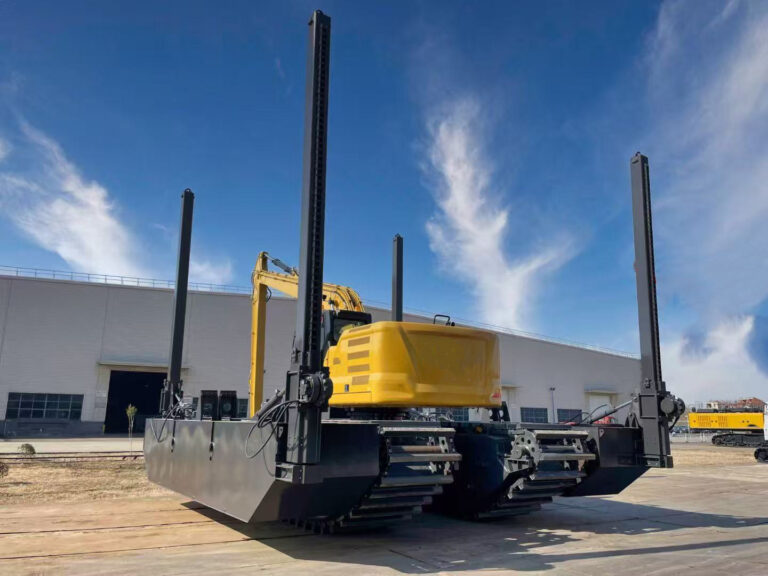
b) For weed clearance in the river: We added two side pontoons and positioning spuds to allow the unit to float. After confirming the river current was mild, we recommended only two spuds—ensuring stability while controlling costs. Four spuds more suitable for strong current
c) With our professional input, the customized solutions were quickly finalized.
Production timeline
a) The client required delivery within 40 days from order placement.
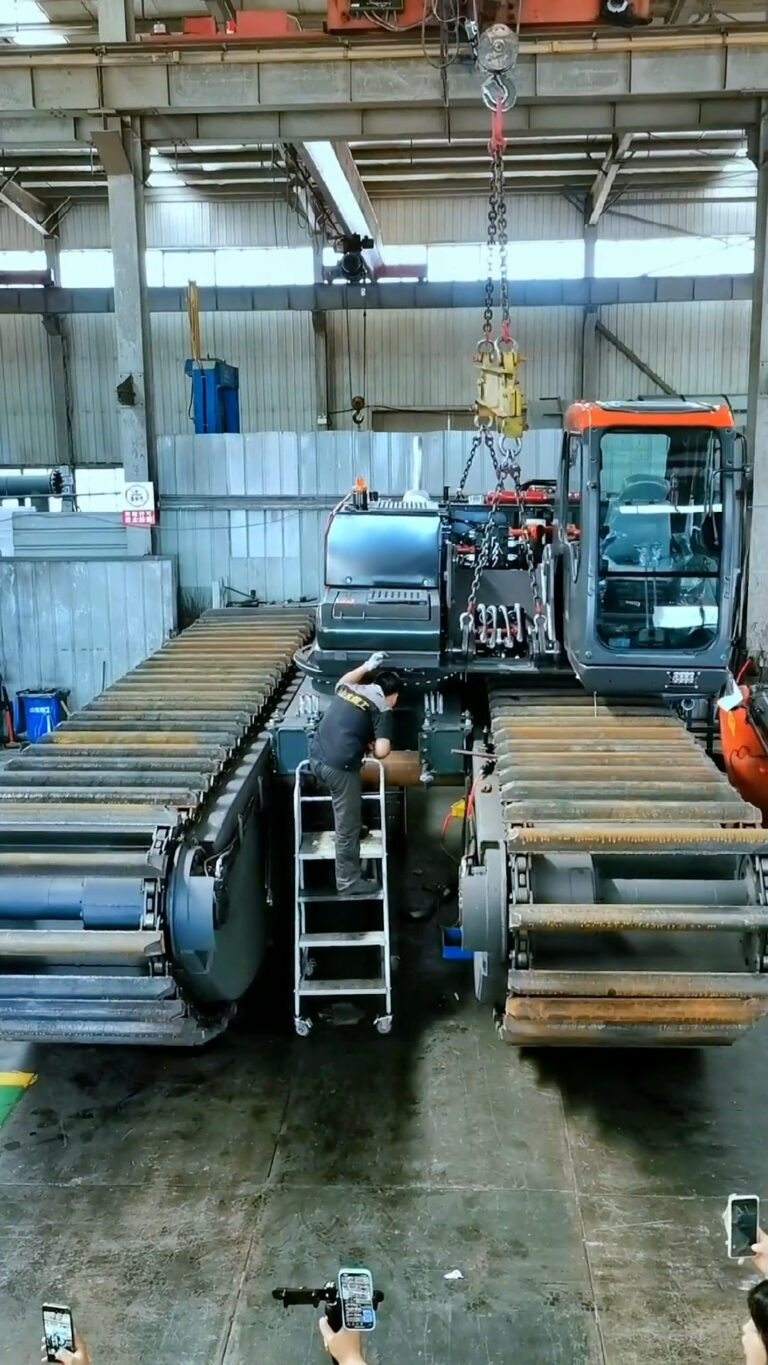
b) We carried out parallel production of the upper structure and pontoons, followed by assembly, testing, disassembly, and shipment.
Finalizing shipping and quotation
a) Due to the large size of the pontoons, we proposed separate shipment of the pontoons and upper structure to optimize sea freight costs. The client was concerned about on-site reassembly, preferring whole-machine delivery. We patiently explained:
i. Land transport of the fully assembled unit was impossible—no trailer is wide enough to carry the four pontoons intact.
ii. We would provide training, installation videos, and remote guidance to their technical team.
iii. The client appreciated this supportive approach and accepted our proposal.
b) After finalizing all plans, we submitted the quotation. The client reviewed key parameters, after-sales terms, and major production milestones, then confidently placed the order.
c) Delivery was completed by the requested date, and we included a package of wear-resistant spare parts along with installation videos.
Key Takeaways
a) Understand the client’s working conditions and budget to recommend suitable solutions—e.g., upgrading from a 12m to a 16m arm, and saving pontoon costs for the pond machine which did not need full flotation.
b) When clients have special requests—such as wanting whole-machine delivery due to reassembly concerns—guide them toward cost-effective options while providing full support to ensure successful installation.
c) In summary, helping clients achieve full functionality with the most economical solution is what truly wins their trust.