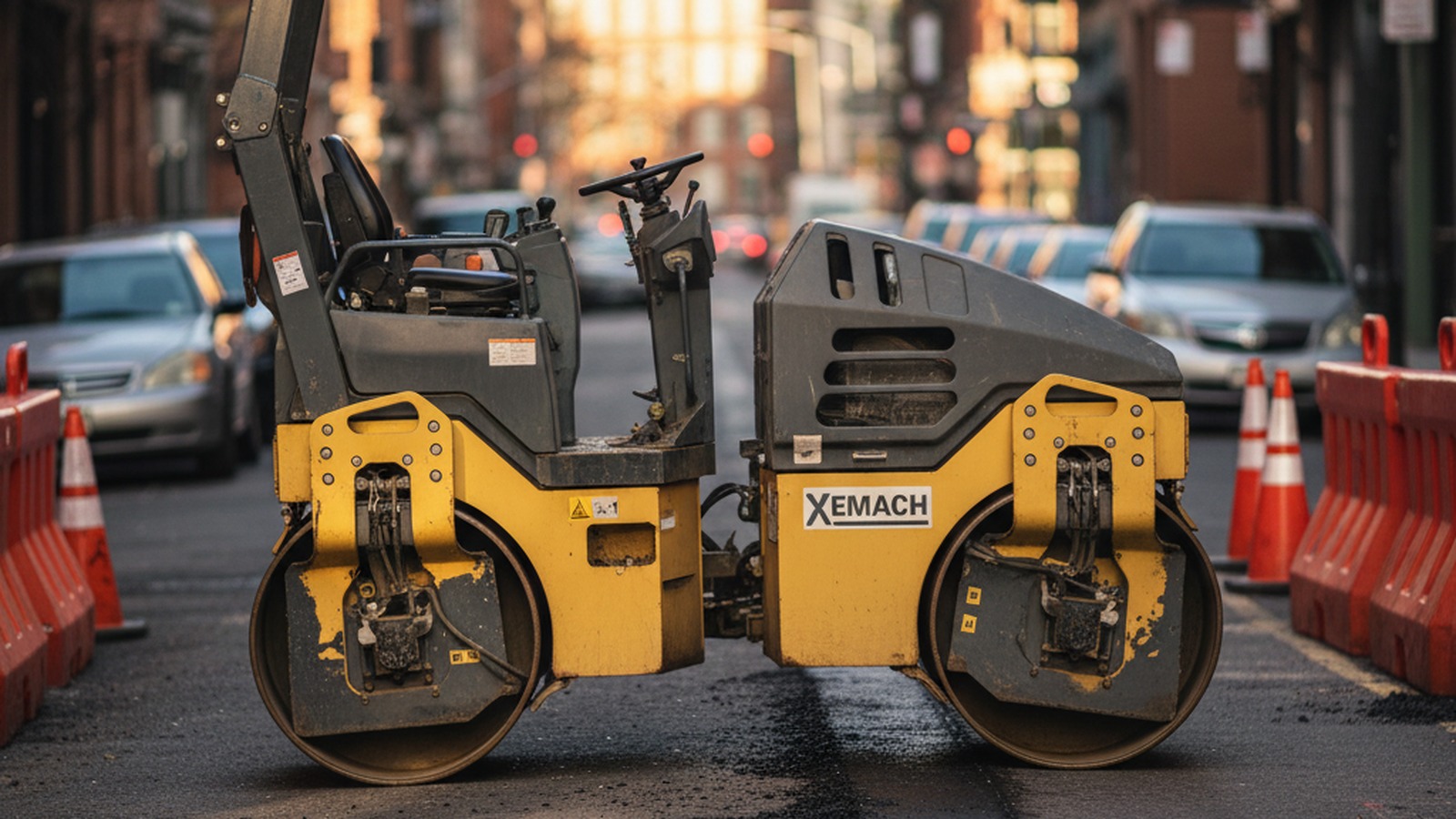
Picture a city street after an overnight water‑main repair. The trench has been backfilled, asphalt has been patched, and the crew has a tight reopening deadline. The roller operator asks the same question every foreman has heard: "One more pass… or are we done?"
That moment is where intelligent compaction (IC) is quietly winning. Not the full highway-project setup with big screens and detailed maps. More often, it is the practical feedback that helps compaction crews stop guessing on small, high-risk jobs where rework gets expensive fast.
What intelligent compaction looks like on today’s rollers
On asphalt rollers and soil compactors, IC usually means the machine uses vibration sensors to track how the material response changes from pass to pass, then shows the operator real-time feedback. In higher-end setups, positioning data and machine control can be layered on top to document coverage and guide the process.
But the market is also moving toward a lighter layer of IC that focuses on day-to-day decisions:
- On-machine feedback (often an LED/light-bar style indicator)
- Clear “keep going vs. move on” signals when the results plateau
- Weak-spot awareness when a section behaves differently than the surrounding area
For many contractors, that simpler IC layer is the sweet spot: better consistency without turning the roller into a complicated mapping project.
Why “simple IC” matters more than people think
Compaction is rarely one giant job. It is thousands of short segments: utility cuts, patches, curb work, ramps, shoulders, and quick subgrade fixes. These tasks are where quality can swing between operators—and where over-compaction wastes time while under-compaction creates callbacks.
A straightforward feedback system changes behavior on real jobs:
- Fewer unnecessary passes once the material response stops improving
- Less operator fatigue (no more counting and second-guessing under pressure)
- More consistent outcomes across crews, sites, and seasons
It does not replace good practice. It makes good practice easier to repeat.
The next step: proof of work, not just better feel
Some contractors do not just want to compact well—they need to prove they did it. Municipal projects, regulated work, and quality-driven owners increasingly ask for documentation.
That is where the direction is clear:
1. Feedback on the machine helps the operator stop at the right time.
2. A lightweight data layer helps the office answer questions later:
– Which areas were compacted?
– How many passes were made?
– Where did the crew spend time reworking soft spots?
This is not about replacing density tests. It is about reducing surprises and tightening the loop between field work and inspection conversations.
Why fleets care right now: idle time and “data no one can use”
A recent equipment-use survey of fleet operators (600 respondents across several English-speaking markets) painted a tough picture. Many fleets believe a large share of machines sit underused, and the biggest obstacles are not sensors—it is access and workflow.
Takeaways that matter directly to rollers, soil compactors, and other jobsite machines:
- Many fleets estimate roughly 40–50% of equipment is underused at any given time.
- Data access and integration is often cited as the biggest blocker to improving day-to-day use.
- Fleets also point to location intelligence and maintenance disruption as frequent pain points.
The implication is simple: IC and telematics only create value if the data is easy to pull, easy to read, and tied to a daily habit (dispatch, QA, maintenance planning).
What buyers should ask before choosing a roller or soil compactor with IC
If you are evaluating a tandem roller, pneumatic roller, or soil compactor with IC features, keep the questions practical:
- What exactly is being measured and shown? (trend/stiffness indicator vs. absolute density)
- How does the operator know they have hit the practical maximum? (plateau logic, thresholds)
- Can the system help flag weak spots or inconsistent lifts?
- Is there a clean way to export the data? (files, app, or API—not “portal only”)
- What happens if a sensor fails—does the roller still work normally?
- How rugged is the hardware for vibration, heat, water, and jobsite abuse?
Most “IC disappointment” comes from mismatched expectations—treating an indicator system like a lab instrument.
XeMach’s practical view: build for the questions crews ask on real jobs
We see the strongest demand around mid-sized rollers and soil compactors that make the operator’s next decision obvious—and, when needed, can produce a lightweight job record without turning the machine into an IT project.
A useful next step before you buy is to write down two things:
- The field question you want IC to answer (for example: “Are we done compacting this lift?”)
- The office question you want data to answer (for example: “Can we show consistent coverage during inspections?”)
Once those questions are clear, picking the right feature level becomes much easier—and you avoid paying for complexity your team will not use.
Sources
- https://www.constructionequipment.com/directory/compactor-roller/article/55365791/intelligent-compaction-comes-to-walk-behind-plate-compactors-and-trench-rollers
- https://www.constructionequipment.com/technology/construction-telematics/article/55367783/5-things-construction-equipment-fleets-should-fix-according-to-teletrac-navmans-2026-utilization-report