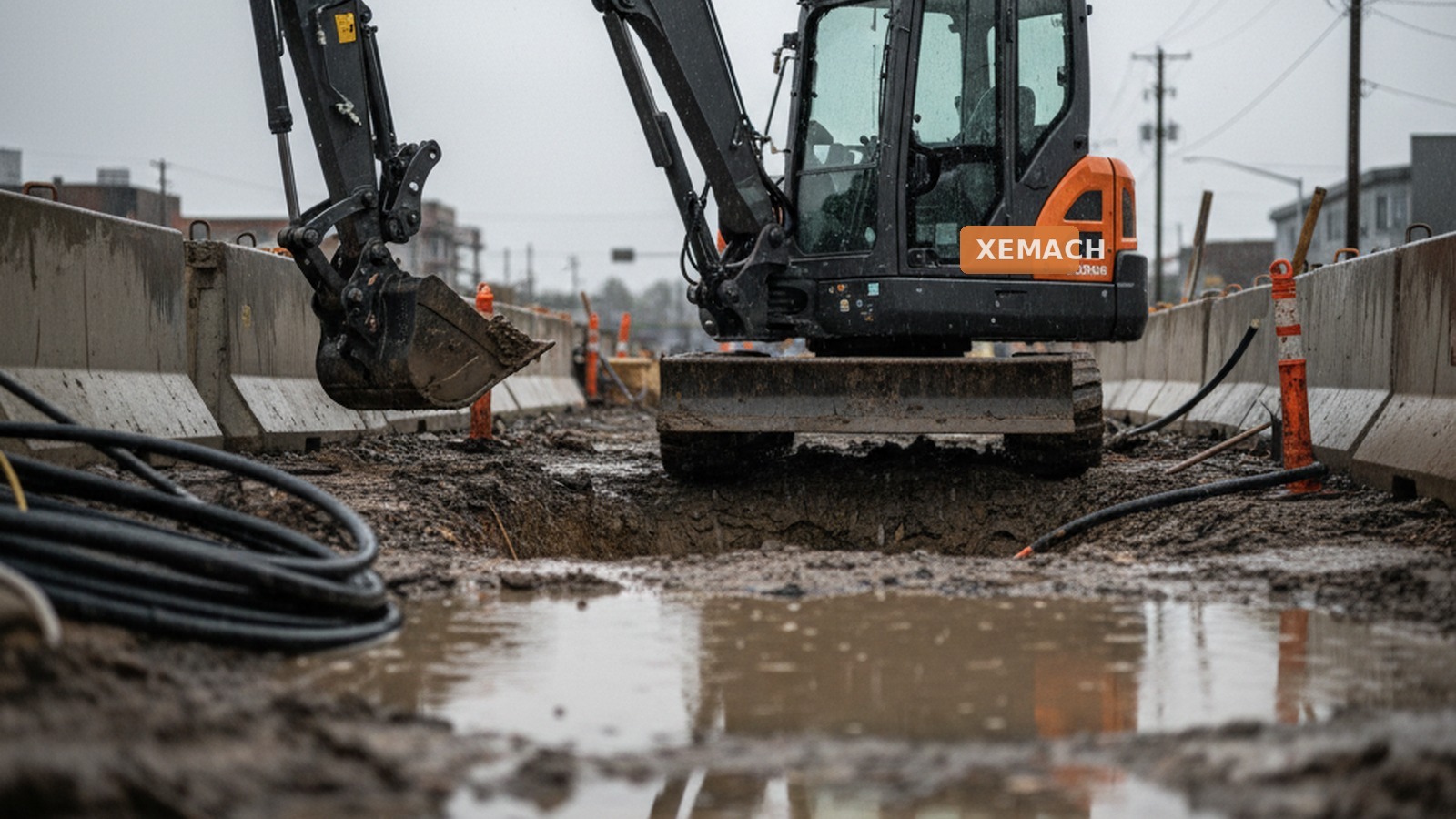
A utility crew arrives before sunrise to open a narrow trench between parked cars, a shopfront curb, and a cluster of marked underground lines. The job is small, the margin for error is even smaller, and there is no room for a machine that is either too bulky or too basic. That jobsite explains why the mini excavator market in 2026 is not just growing in volume — it is changing in character.
Recent industry reporting points in the same direction: compact equipment keeps winning work, while mini excavators in particular are moving up the value chain. Buyers are no longer satisfied with a small machine that simply digs. They are asking for better attachment performance, easier grade assistance, safer motion limits, lower operator fatigue, and more predictable ownership costs.
Why mini excavators are staying at the center of the jobsite
Mini excavators still fit the reality of today’s work mix. Urban utility repair, residential development, municipal maintenance, landscaping, and small commercial packages all reward machines that are easy to move, easy to place, and productive in tight footprints. Contractors want equipment that can trench in the morning, set materials at noon, and switch to attachment work in the afternoon without turning the job into a transport headache.
That helps explain why compact equipment continues to hold such a strong position in 2026. The demand story is not only about price. It is about usable versatility. A mini excavator can reach spaces larger machines should not enter, yet still deliver enough hydraulic performance for many day-to-day applications. For rental fleets and mixed-use contractors, that combination remains hard to beat.
The real upgrade is control, not just horsepower
What looks like a minor model refresh on paper often says something bigger about the segment. Across recent launches, the notable shift is that mini excavators are inheriting features that used to feel optional, premium, or limited to larger machines.
Entry-level grade indication is one example. On many jobs, contractors do not need the cost and complexity of a full 3D machine control package. They do need a faster way to stay close to target depth and slope, reduce overdigging, and help less experienced operators work more consistently. That is where simpler guidance systems are finding their place.
Motion-limiting features matter just as much. On utility and urban jobsites, the risk is often not whether the machine can complete the dig, but whether it can do so without clipping a wall, swinging into traffic management, or getting too close to overhead and buried services. Boundary-based systems that constrain ceiling, floor, front, or swing movement are becoming more practical for compact machines because the operating environment is exactly where those safeguards earn their keep.
The result is a subtle but important shift in buyer expectations: a mini excavator is no longer judged only by dig depth, tail swing, and transport weight. It is increasingly judged by how confidently it can work around constraints.
Attachment performance is becoming a buying filter
Another clear signal from the market is the growing importance of attachment-ready hydraulics and stable tool performance. Contractors expect mini excavators to do more than bucket work. Hydraulic breakers, compactors, grapples, augers, and couplers turn the machine into a multi-role carrier, but only if hydraulic flow, controllability, and machine balance are engineered well enough to support them.
This is especially relevant in the upper end of the mini excavator range. As more buyers look at 6- to 10-ton classes, they want compact-radius packaging without giving up the confidence to run demanding attachments. That is pushing the segment toward stronger hydraulic capability, smarter flow management, and layouts that make quick tool changes easier in real working conditions.
For manufacturers and buyers alike, the takeaway is straightforward: attachment compatibility is no longer a brochure bonus. It increasingly shapes the purchasing decision.
Operators are choosing machines that reduce friction during the day
There is also a practical labor story behind these upgrades. When crews are short on experienced operators, ease of use becomes a production factor. Joystick travel control, customizable touchscreen settings, cruise functions for longer site moves, better camera coverage, and simpler service access are not flashy talking points, but they directly affect adoption on site.
A compact machine that feels easier to understand is easier to assign across crews. A machine that lets operators switch travel modes quickly, check settings without hunting through menus, and finish routine checks from ground level can save more time over a month than a small headline gain in engine output.
This matters for dealers, rental fleets, and end users. The winning mini excavator is often the one that shortens the gap between machine capability and operator confidence.
What buyers should ask before choosing their next machine
- How well does the machine perform with the attachments we actually use every week?
- Is there practical grade assistance for crews that do not need full 3D systems?
- Are motion limits or avoidance features available for work around utilities and structures?
- Can operators move between jobs and crews without a long learning curve?
- Are routine maintenance points and emissions components designed to reduce downtime surprises?
- Does the compact layout improve access without compromising lift confidence and hydraulic stability?
Those questions get closer to total jobsite value than a spec-sheet comparison alone.
Where the segment is heading from here
The mini excavator market still benefits from the same strengths that built it: compact size, transport convenience, and broad applicability. What is changing is the baseline. Buyers now expect compact machines to be more precise, more attachment-capable, and more operator-friendly than the category once required.
For XeMach, the lesson is not that the segment needs more complexity for its own sake. It is that compact machines win when they solve real jobsite constraints cleanly: tight access, mixed operators, changing attachments, and low tolerance for mistakes. The manufacturers that keep mini excavators practical while adding the right layer of control and usability will be the ones best aligned with where demand is moving next.