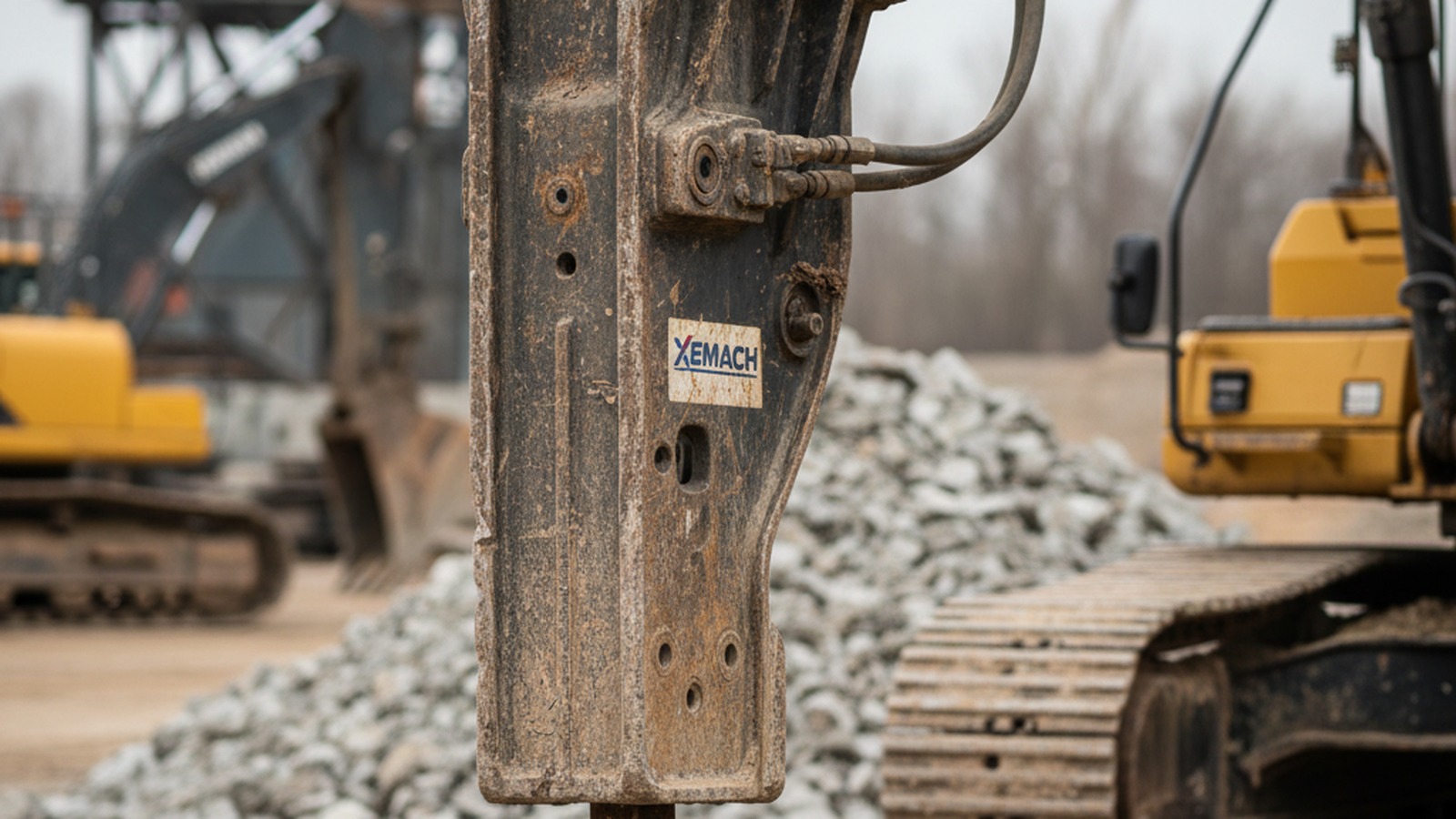
Picture this: you’re breaking out an old concrete pad and the breaker starts to feel lazy. Ten minutes later, the excavator’s hydraulic temperature is climbing and the operator is feathering the controls just to keep it going. That “bad breaker” moment is usually not a mystery failure. It’s a mismatch (or a setup mistake) showing up under load.
Start with the carrier, not the brochure
A breaker is only as good as the hydraulic system feeding it. Before anyone argues about brands or model names, lock down the basics:
- Aux flow: Too much flow can make the breaker cycle too fast and heat the oil. Too little flow makes it hit soft and waste time.
- Operating / relief pressure: Living on the relief valve is a recipe for hot oil and early seal problems.
- Return backpressure: This one gets missed. Tight couplers, small hoses, or wrong plumbing can quietly choke return flow.
- Stability and lift: Hanging a heavy hammer on a light excavator beats up the boom and turns work into a balancing act.
From a XeMach buyer’s perspective, the question to ask is simple: Does this breaker’s operating window fit my excavator without pushing the hydraulics to the edge all day? If the answer is “maybe,” you’re buying downtime.
Couplers, geometry, and job type decide how it feels in the seat
Two setups can look identical on paper and behave very differently on site.
What to check before you sign:
- Coupler and bracket fit: Slop at the coupler becomes side-load at the tool, and side-load becomes bushing wear.
- Boom/stick geometry: Pin position and working angles matter. A breaker that’s constantly fighting the wrong angle will run hotter and wear faster.
- Duty cycle: Frost, thick reinforced concrete, trench trimming, and boulder breaking aren’t the same job. Tool selection and breaker energy should match what you actually do most days.
A practical rule that saves money: avoid “just go bigger.” Oversizing often reduces real productivity because the carrier ends up stressed, unstable, and overheated.
Breakers punish lazy maintenance (and they do it fast)
If you want breaker uptime, treat it like a wear-tool program, not an accessory.
Habits that pay back quickly:
- Grease on an hourly mindset (or whatever the tool calls for), and use the right product for high-impact heat.
- Don’t blank-fire. Striking without load is a fast track to internal damage.
- Catch wear parts early: bushings, retainers, and tools are cheap compared to wrecking the housing or the carrier hydraulics.
- Keep oil clean and cool: contamination and heat shorten everything—seals, hoses, and pumps.
- If the design uses gas charge, check it: performance drop is often a pressure issue, and temperature swings don’t help.
If your team struggles to hit grease intervals, that’s not a moral failure—it’s a spec decision. Prioritize options like auto-lube and easy-to-service layouts so the routine actually happens.
Where breaker technology is heading in 2026
The trend line is clear: more “carrier protection” features and fewer ways for the operator to accidentally abuse the tool.
Across the market, you’ll see more of:
- auto-lube and clearer service prompts
- adaptive energy / power management so output tracks material resistance
- better noise and vibration control for urban work
- sealing and accumulator choices aimed at fewer routine checks
- usage data (hours, strike count, temperature) to plan rebuilds before failure
XeMach’s view: the winning breaker setups in 2026 are the ones engineered for predictable uptime. Spec accuracy is step one. Step two is making sure parts, rebuild paths, and setup guidance are all easy enough that a busy fleet can follow them.
A quick breaker checklist (worth printing)
- Confirm aux flow, operating pressure, and backpressure limits match the breaker.
- Verify hose sizing and return plumbing (don’t guess—measure if needed).
- Match breaker weight to stability and lift capacity, not just excavator operating weight.
- Choose tool style for your dominant material.
- Decide the maintenance plan before the first day of production.
Reference (used for topic selection and fact direction; article above is an original summary):
- https://www.constructionequipment.com/equipment-attachments/breakers/article/55364479/breaker-attachments-for-excavators-how-to-spec-maintain-and-buy