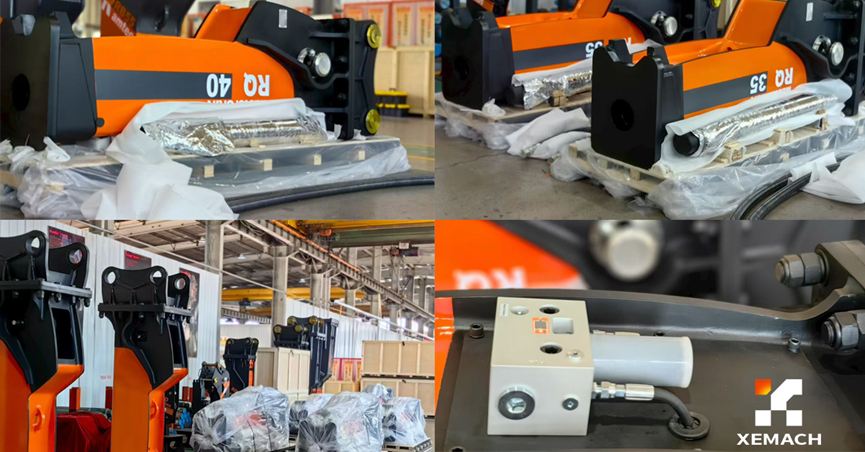
For many contractors, the hydraulic breaker only works a few months a year and then sits in the yard “for a while.” The problem is that “for a while” easily becomes six months or even more than a year. If the breaker is not stored correctly, internal corrosion, contamination and seal damage can show up very quickly, leading to high repair costs when you finally need it again.
To keep your breaker in good condition during long-term storage, focus on three essential steps:
1. Seal the hydraulic connections
Before storage, both the inlet and return oil line ports must be properly sealed.
• Use clean, dedicated caps or plugs to close the ports.
• Make sure no dust, sand, rainwater or other contaminants can enter the hydraulic system from these interfaces.
• Avoid using dirty rags or random plastic bags, which often let moisture and fine particles in.
Once contamination enters the breaker, it can damage the piston, valve components and hydraulic system of the carrier machine. Spending one minute to seal the ports can save you days in the workshop later.
2. Position the breaker correctly and release the nitrogen pressure
Choose a flat, dry and stable surface for storage. Then:
• Remove the tool (rod/chisel) from the breaker.
• Lift the rear end of the breaker body slightly, so that internal components are in a relaxed position.
• Safely release the nitrogen from the rear nitrogen chamber according to the manufacturer’s procedure.
• After releasing the nitrogen, gently push the piston back into the cylinder (middle housing) to avoid exposing the piston surface for a long time.
This positioning helps prevent the piston and internal parts from staying under pressure or in a vulnerable position for months, reducing the risk of corrosion and sticking.
3. Protect all key surfaces with grease or anti-rust oil
Before covering the breaker:
• Apply grease or anti-rust oil to the piston head area.
• Coat the tail of the tool (rod/chisel) evenly.
• Protect both inner and outer bushings with a suitable lubricant or anti-rust product.
When this is done, wrap the entire breaker with a waterproof tarpaulin:
• Make sure the cover keeps out rainwater and dust.
• At the same time, leave some space for air circulation to reduce condensation.
Good surface protection is the cheapest insurance against rust, pitting and premature wear.
Before you put the breaker back to work
If the breaker has been stored for a long time, it should not be put directly back into operation. Before use, a professional service technician should:
• Disassemble key components where necessary.
• Clean and re-grease internal parts.
• Inspect and, if needed, replace seals and other wear parts.
• Check nitrogen pressure and restore it to the correct specification.
Only after these steps is the breaker truly ready to return to the jobsite. This approach protects both your attachment and your carrier machine, and reduces the risk of unexpected downtime.
Long-term storage is not complicated, but it does require discipline. A few simple actions today can protect the value of your hydraulic breaker for many years.
#HydraulicBreaker #BreakerMaintenance #ExcavatorAttachment #ConstructionEquipment #PreventiveMaintenance #XEMACH