At 6:30 a.m., a site manager on a dense urban project has a familiar problem: the loader will run all day in short cycles, the excavator will work in bursts between utility checks, and the haul units cannot afford long charging delays. That one morning planning meeting explains a lot about where electrification is actually gaining traction in construction equipment.
Recent industry reporting suggests the battery-electric story is no longer one big trend. It is separating into segments with very different adoption speeds. Wheel loaders are beginning to scale in real volume, electric excavators are still concentrated in smaller classes, and larger dump trucks are finally moving from prototypes into serial production. For buyers, that matters more than broad claims about “the future of electric machinery.”
Why wheel loaders are getting to scale faster
The strongest signal in the market right now is that battery-electric wheel loaders are no longer just demonstration products. According to recent Interact Analysis commentary reported by Construction Equipment, wheel loaders have become the first construction segment where competition is starting to be shaped by production scale and execution rather than early-stage experimentation.
There are practical reasons for that. Many loader applications have predictable cycles, defined travel distances, and centralized work zones. In urban yards, recycling plants, ports, and some industrial sites, overnight charging is easier to plan than it is for machines that roam across a broad jobsite. In China, the model goes further: larger wheel loaders are benefiting from charging networks and electrified equipment ecosystems already built around mining and heavy industrial operations.
That combination matters. Once charging, duty cycle, and real-day use line up, electric wheel loaders stop being a policy statement and start looking like an operations decision.
Why electric excavators are still mostly a compact play
Excavators remain one of the most watched categories, but the market is not moving evenly from mini machines to larger classes. Industry reporting points to electric excavator adoption still being concentrated mainly in mini excavators, while production in 2025 was flat to down for many manufacturers outside a few exceptions.
The reason is not hard to understand from the field. Excavators often face more variable workloads, more travel between work zones, and wider performance expectations across attachments and digging conditions. A compact machine on an urban trenching job may have a battery profile that fits the shift. A larger excavator in quarry support, deep excavation, or long-cycle utility work may not.
That does not mean the segment is stalled. It means the commercial path is narrower than the marketing language often suggests. The near-term growth case is strongest where contractors can clearly predict idle time, charging windows, and peak load demands before the machine even arrives on site.
Dump trucks are crossing an important line
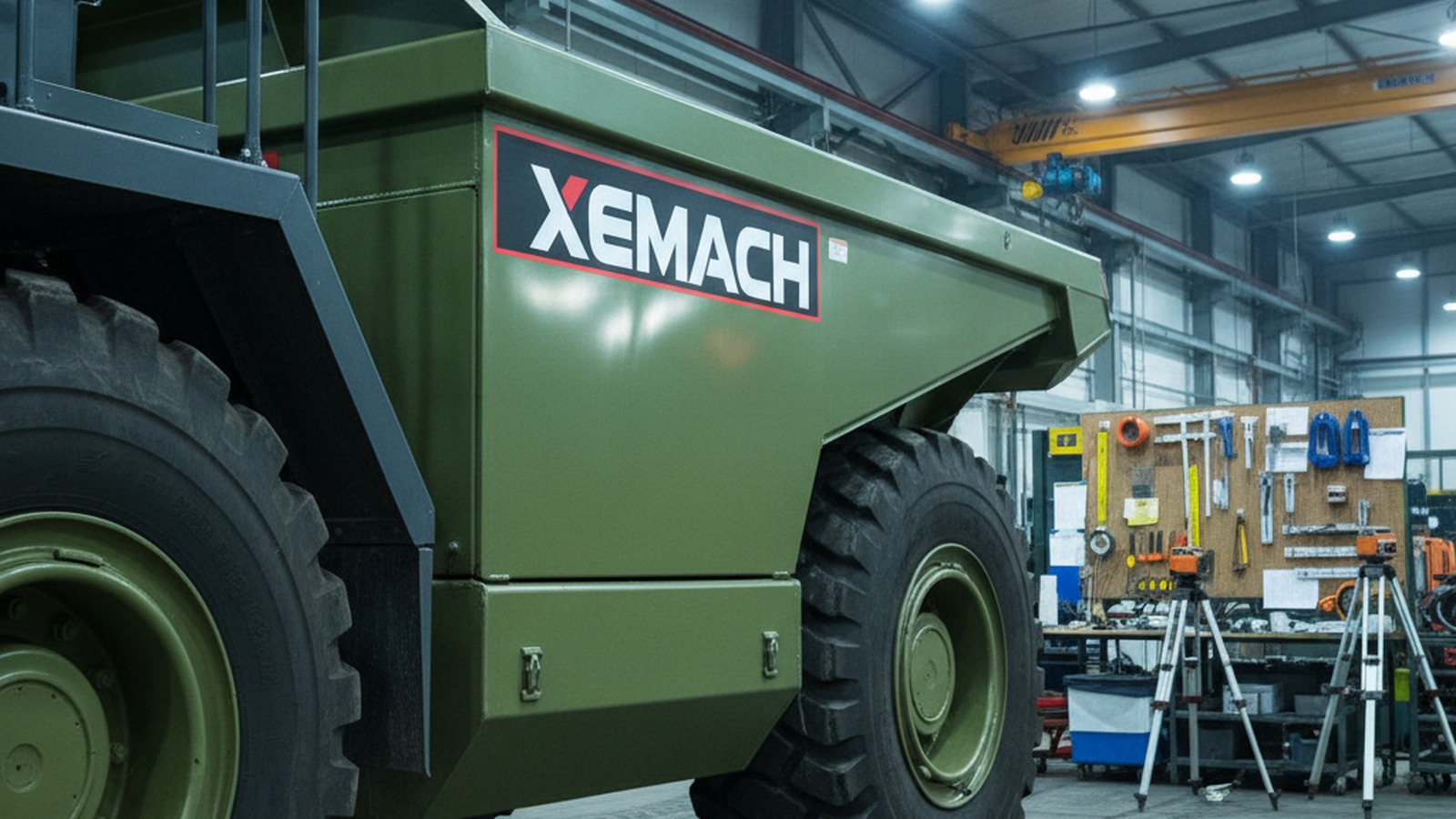
The other notable development is in articulated dump trucks. A recent report highlighted the start of serial production for 30-ton and 40-ton battery-electric articulated haulers in Europe, with early deliveries expected in markets that already show higher readiness for zero-emission quarry and mining applications.
This is an important threshold. Large electric dump trucks have been easy to talk about and hard to industrialize. Once a manufacturer moves a heavy hauler from prototype status to repeatable production, the conversation changes from “Can this be built?” to “Where can this work economically?”
The answer will still depend on route length, grade, payload consistency, charging strategy, and local power availability. But serial production matters because it gives fleet owners something more concrete to evaluate: uptime planning, serviceability, residual value, and the discipline of real customer deployments.
What buyers should examine before betting on electrification
The most useful lesson from this week’s reporting is that electrification is not one procurement decision. It is a matching exercise between machine type and jobsite conditions.
Buyers evaluating electric wheel loaders, excavators, or dump trucks should look past headline claims and ask a few simple questions:
- Is the duty cycle predictable enough to size charging realistically?
- Will the machine return to a fixed base, or does it move too far during a shift?
- Are peak power demands occasional, or constant for long periods?
- Can the site support overnight charging or scheduled fast charging without disrupting production?
- Is the electric model a ground-up platform, or a conversion of a diesel machine with compromises in packaging and service access?
Those questions are not glamorous, but they tend to separate a workable fleet decision from an expensive pilot.
The XeMach view: sell the right machine into the right pattern of work
From XeMach’s side of the market, the takeaway is straightforward: the next phase of electrification will reward application discipline, not broad catalog claims. Wheel loaders are showing how battery-electric equipment can scale when charging and work patterns are structured. Excavators still need tighter job matching, especially beyond mini classes. Dump trucks are becoming more credible, but only in operations prepared for serious energy planning.
That suggests a practical direction for suppliers and buyers alike. Focus less on whether electric equipment is “winning” in the abstract, and more on which machine can deliver a dependable day of work in a specific environment. The contractors who make that distinction early will make cleaner purchasing decisions—and manufacturers that design around real duty cycles will be the ones that stay relevant.