Electric Wheel Loaders Are Now Mainstream in China. Exports Aren’t—Yet.
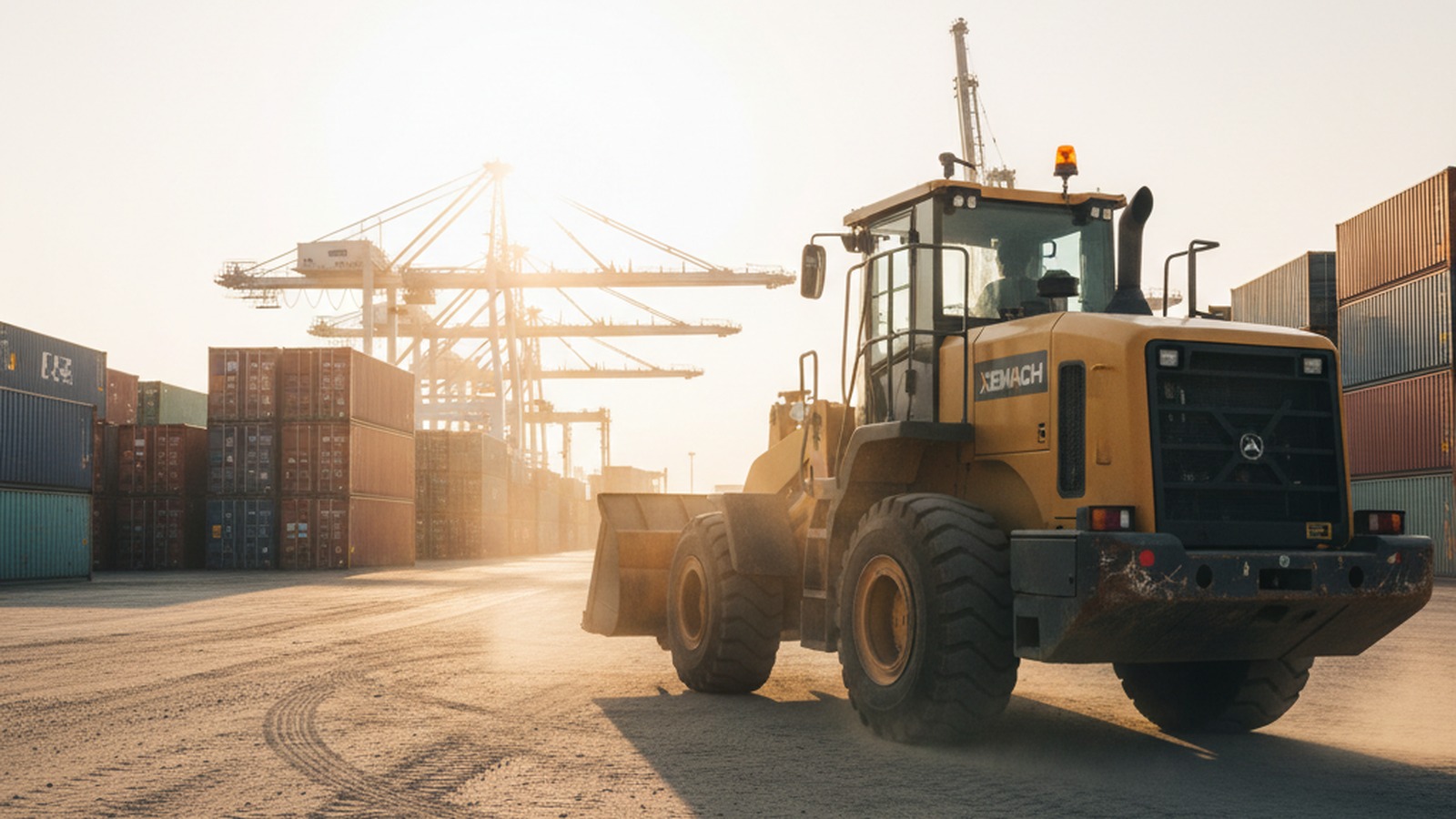
Picture this: it’s 6:30 a.m. at a port logistics yard. Containers are piling up, the air-quality monitor is blinking amber, and you need a wheel loader to keep moving material for a full shift with short breaks. Fuel cost matters, noise complaints matter, and downtime matters most.
New sales figures in China show a clear split: electric wheel loaders have become a default choice in many domestic yards, while export markets are still overwhelmingly diesel. For fleets and buyers planning 2026 purchases, that gap is the story.
What the latest data is really telling us
Industry reporting based on China Construction Machinery Industry Association data indicates that in February 2026, total wheel loader sales reached 9,540 units (up 9.28% year on year). Exports were 5,677 units (up 34.4%), close to 60% of the month’s volume.
The same reporting shows electric wheel loader sales of 2,142 units in February. More importantly, electric loaders made up roughly 52% of China’s domestic loader sales, while electric penetration in exports sat around 2–3%.
The takeaway isn’t “electric is the future” (everyone already says that). The takeaway is that wheel loaders are entering a two-track market: electrification is moving fast in predictable, fixed-site work, and moving slowly where the supporting conditions aren’t ready.
Why electric wins at home (in the right sites)
Electric wheel loaders aren’t a drop-in replacement for diesel on every job. But in yards that look the same every day, they can be a very rational decision.
Charging is easier when the job is stationary
Ports, quarry stockpiles, concrete plants, and logistics parks tend to run short cycles on repeatable routes. Charging becomes scheduling, not guesswork: plug in at shift change, top up during breaks, and keep the machine inside its comfort zone.
Lower daily operating cost is easier to prove
When a loader stays on one site, it’s much easier to measure energy use, maintenance hours, and downtime. In many operations, the value comes from fewer routine engine-related service items and a more stable cost per hour.
Compliance pressure turns into purchasing behavior
Where local emissions controls are tightening around ports and industrial parks, the “clean yard” requirement often hits the easiest equipment first. Wheel loaders in mid-size classes are a natural early target.
Why exports lag: three practical blockers
If domestic electric penetration can sit above 50%, why is export penetration still under 5%? It usually comes down to execution, not marketing.
Power planning is a project
Many overseas sites don’t have stable power, and temporary generators are often sized for tools and lighting, not for high-capacity charging. Even with grid access, you still need distribution planning, protection, cable management, and a procedure that crews will follow.
Service readiness takes time to build
Diesel support is universal. Electric drivetrains, inverters, battery thermal systems, and high-voltage safety procedures are not. Until diagnostics, parts stocking, and technician training are in place locally, buyers will treat electric as higher risk.
Residual value and financing rules the real world
A machine can pencil out on paper and still fail in procurement. If the local secondary market for electric loaders is thin, financiers price that uncertainty into lease rates, terms, and approvals.
Three questions buyers should ask before switching
Before you order electric wheel loaders for a fleet, especially for export projects, ask:
- What is the real duty cycle (cycle time, idle time, peak loads, ambient temperature)?
- How will you charge on week two, not day one (power availability, connectors, safety, cables)?
- Who is responsible for uptime (remote diagnostics, local technicians, parts stock, response time)?
What this means for XeMach-style procurement teams
Global demand for core iron is healthy; early-2026 customs reporting also shows excavator exports rising sharply. But for electric wheel loaders, “selling a machine” is not enough in many markets. The winning approach is selling a working system: the loader configuration, the charging plan, the service backbone, and the operating guidance that keeps crews productive.
From a XeMach standpoint, the next step is practical. Match the loader to the site workflow, make charging simple, and back it with parts and diagnostics that don’t rely on heroics. That’s how electric wheel loaders move from a promising demo to a dependable daily tool.