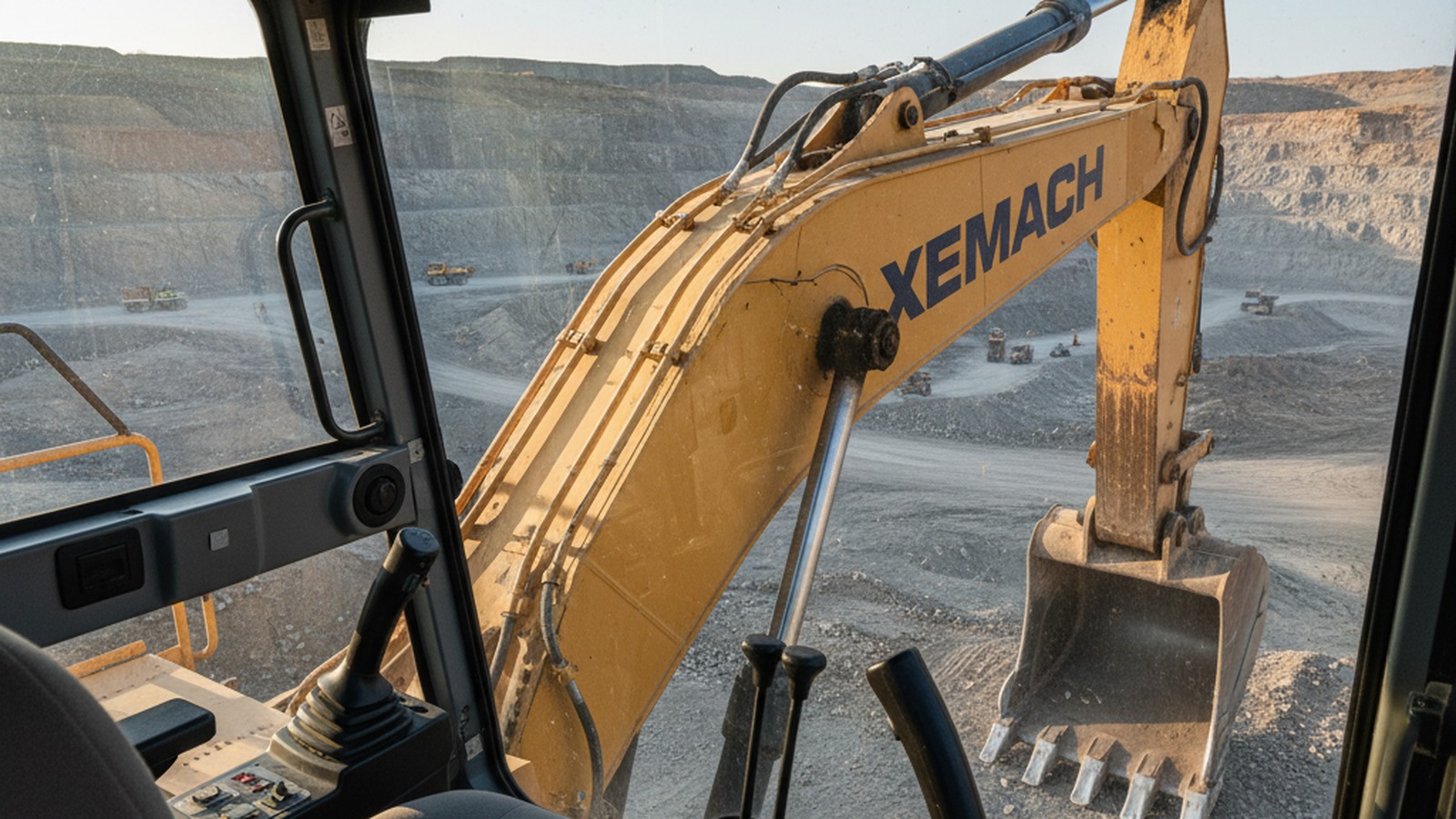
Picture this: you're planning a new pit pushback. The ESG team wants lower emissions. Ops wants more tonnes per shift. Maintenance wants fewer surprise shutdowns. Then someone says, "Let's switch the loading unit to an electric mining excavator."
That sounds simple—until you realize an electric excavator isn't just a different powertrain. It changes how you plan power supply, uptime, safety, and even haulage dispatch.
Below is a practical way to judge whether a large electric excavator makes sense in an open-pit mining or heavy earthmoving operation, and what numbers to ask for before you sign anything.
Start with the metric that matters: kWh per tonne, not "battery size"
In diesel discussions, people talk about litres per hour. For electric excavators, the equivalent is kWh per hour. But the more useful metric is kWh per tonne moved (or per cubic metre, if that's how your mine measures).
Why it matters:
- A machine that looks efficient per hour can still be inefficient per tonne if it's slow, frequently waiting on trucks, or operating outside its sweet spot.
- kWh/tonne lets you compare across different cycle times, material types, and site layouts.
One recent large-mine deployment case shared in Chinese industry media reported about 0.5 kWh per tonne of material moved for a 100+ ton class electric excavator, with roughly 280 kWh consumed per operating hour under that site's conditions. Treat this as a reference point, not a guarantee—but it's the kind of KPI buyers should request up front.
Uptime isn't only about the machine—power and dispatch become part of the product
Electric drive systems can reduce mechanical complexity (no engine, fewer engine-related services). But the operation becomes more dependent on:
- power availability and stability
- charging or power-cable logistics
- coordination with haul trucks
In that same reported case, the operator highlighted high availability and fewer unplanned stops. Those benefits often come from simpler drivetrains plus stronger condition monitoring.
What to ask vendors and integrators:
- What is the planned power supply architecture (substation, mobile power unit, cable management, protection)?
- What is the failover plan if the site loses power or voltage drops?
- How does productivity change when the system limits output to protect batteries or power electronics?
Frame the economics as "energy + maintenance + productive hours"
Electric excavators are often sold on energy savings alone. That's incomplete. A better framework is:
- Energy cost (electricity price × kWh/tonne)
- Maintenance cost (planned + corrective)
- Productive hours (how many hours per month the machine is actually moving material)
The published case claimed operating cost per hour at roughly one-third of a comparable diesel unit, with maintenance costs down by 60%+, leading to multi-million RMB annual savings at high machine hours.
Even if your site doesn't match those exact numbers, the logic holds: payback depends on consistent loading work and a power solution that doesn't create new downtime.
Safety and labor: remote operation changes the risk profile
For mines pushing toward "people out of the line of fire," electric excavators are increasingly paired with:
- remote control and tele-operation
- cameras and proximity sensing
- dispatch integration
In the same report, the operator described shifting from "human-machine collaboration" to physical separation, keeping operators out of high-risk zones.
If you're evaluating remote operation, ask:
- What latency and link redundancy is supported (private LTE/5G, Wi-Fi mesh, fiber)?
- What functions can be controlled remotely (digging, truck spotting, swing control, emergency stop)?
- How are permissions and safety interlocks managed?
Don't judge electrification in isolation—pair it with the right haulage plan
In many mines, the real win comes when you treat loading + hauling as one system:
- electric excavator + electric dump trucks (or trolley-assist where available)
- coordinated charging windows
- dispatch rules that reduce idle time at the face
When you improve dispatch and reduce waiting, you often cut kWh/tonne further—and you make the capex easier to justify.
What XeMach would focus on (and what buyers should request)
If you're considering an electric excavator for mining or heavy earthmoving, the buying conversation should include hard, auditable inputs:
- kWh per tonne by material type and typical bench height
- availability and root causes of downtime (machine vs. power vs. dispatch)
- thermal management performance at your ambient temperature range
- service plan for high-voltage components (spares, training, diagnostics)
- a site-specific power-integration proposal (not a generic brochure)
The trend is clear: electric excavators are moving from demos to production sites. The mines that get the most value won't be the ones that "buy the newest machine." They'll be the ones that engineer the whole operating system around reliable power, disciplined dispatch, and measurable KPIs.
XeMach takeaway: if your operation can consistently measure tonnes moved, power consumed, and downtime causes, you're already halfway to making electrification a business decision—not a slogan.