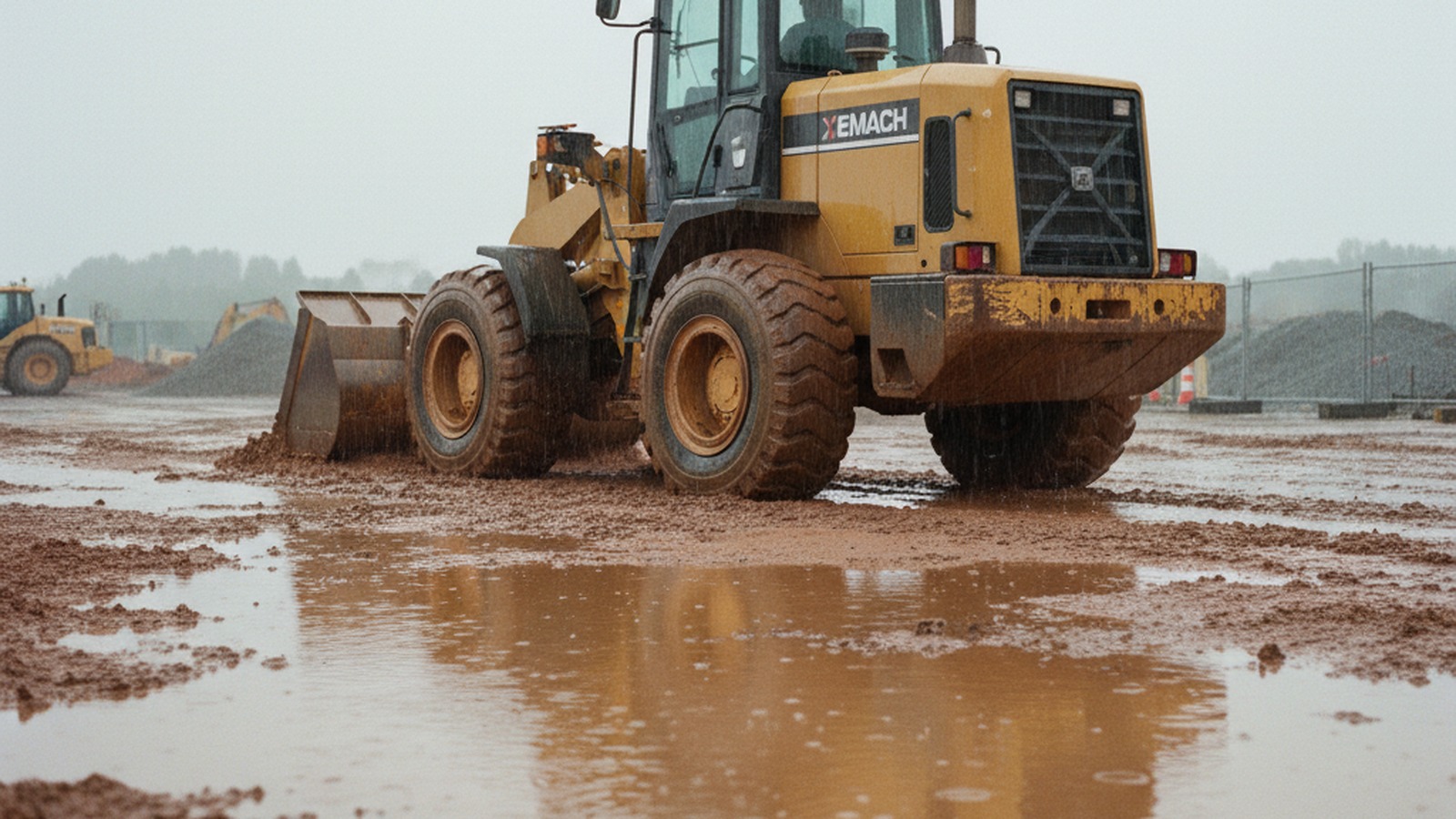
At 6:10 p.m. on a muddy road job, a wheel loader is backing toward a stockpile while a mini excavator waits on the shoulder and a grader is trimming the lane. Everybody is moving, visibility is getting worse, and the operator has maybe one second to notice a person stepping into a blind spot. That is the kind of situation pushing AI cameras from a nice-to-have gadget into a real fleet decision in 2026.
Recent trade coverage points in the same direction: contractors are looking beyond passive backup cameras and asking for systems that can detect people, warn operators sooner, and in some cases tie into machine controls or other safety logic. The shift matters most on machines with changing work zones and unpredictable pedestrian traffic, especially excavators, wheel loaders, and motor graders.
Why blind-spot tech is moving up the priority list
The old camera setup did one job: record video and show a view. That still has value for incident review, but it does not solve the hardest part of the problem, which is reaction time. On a busy site, operators are already managing grade, traffic flow, material movement, and attachment position. Asking them to treat four or six video feeds like a perfect 360-degree safety shield is unrealistic.
AI camera systems are gaining traction because they narrow the operator’s attention to the moments that matter. Instead of making the driver watch everything all the time, the system looks for specific risks such as a person entering a danger zone, movement behind the machine, or a near-miss pattern around repeated loading cycles.
For excavators and graders, that matters because the hazard area is not fixed. The tail swing changes. The blade or bucket path changes. Trucks pull in and out. A system that can flag risk in context is more useful than a camera that simply proves what went wrong after the fact.
The market is moving from recording to intervention
One of the more important changes this year is that safety technology is no longer stopping at alerts. Industry reporting in May highlighted two parallel moves: camera systems that identify people and escalate warnings in real time, and excavator safety tools that can trigger a physical stop before a bucket reaches a buried utility.
Those are different products, but the direction is the same. The industry is trying to close the gap between seeing a hazard and preventing the machine from completing a dangerous motion.
That is a bigger step than it sounds. A warning-only system still depends on perfect human response under stress. An intervention-ready system begins to act more like a layer of jobsite protection. For earthmoving fleets, especially those working around utilities, traffic, or mixed crews, that changes the ROI discussion. The value is not just fewer recorded incidents. It is fewer bad seconds.
Which machines will benefit first
Excavators remain the clearest early case because they work close to trench edges, pedestrians, and underground risk. But loaders and graders are not far behind.
Wheel loaders often repeat short-cycle movement in tight loading zones where people, trucks, and stockpiles constantly reshape the operator’s sight lines. AI-assisted detection can help in those messy transition moments: reversing, turning back into the pile, or approaching a waiting truck.
Motor graders face a different issue. Their work is spread out, often along live traffic routes or long road sections where fatigue and repeated passes make situational awareness harder to maintain. A smart camera system is not a substitute for traffic control, but it can add a useful layer when visibility drops or the jobsite layout keeps changing.
The common thread is simple: these systems make the most sense on machines that move through shared space rather than isolated production zones.
What buyers should ask before retrofitting
Fleets looking at AI cameras or intervention-linked safety packages should stay practical. The first question is not whether the demo looks impressive. It is whether the system fits the job.
A useful evaluation checklist:
- What exactly does the system detect: people, vehicles, obstacles, utilities, or only motion?
- Are alerts different by distance and risk zone, or is every warning the same?
- Can the machine keep working in dust, rain, glare, and low-light conditions?
- Does the system only warn, or can it connect to machine logic for slowdown, lockout, or stop functions?
- How hard is calibration after attachment changes, repairs, or transport?
- Can site managers review clips and event data without adding another disconnected platform?
The second question is operational: where will crews trust it enough to use it every day? False alarms kill adoption. So does a system that takes too long to reset, gets blinded by mud, or demands perfect camera cleaning discipline on a muddy shift.
What this means for 2026 fleet planning
The big takeaway is not that every machine needs full intervention tomorrow. It is that the safety conversation around construction machinery is getting more specific. Buyers are no longer choosing between "camera" and "no camera." They are choosing between passive visibility, active detection, and partial intervention.
That is a healthier conversation for the market. It forces suppliers to prove performance in real jobsite conditions, and it pushes contractors to think machine by machine instead of buying generic tech packages.
From XeMach’s side, the interesting opportunity is not hype around AI itself. It is the practical packaging of safety functions on the machines that spend all day around changing hazards: excavators in trench work, wheel loaders in tight loading areas, and graders on long road sections. The winners will be the equipment platforms that make these systems easy to install, easy to trust, and easy to maintain after the first muddy week on site.