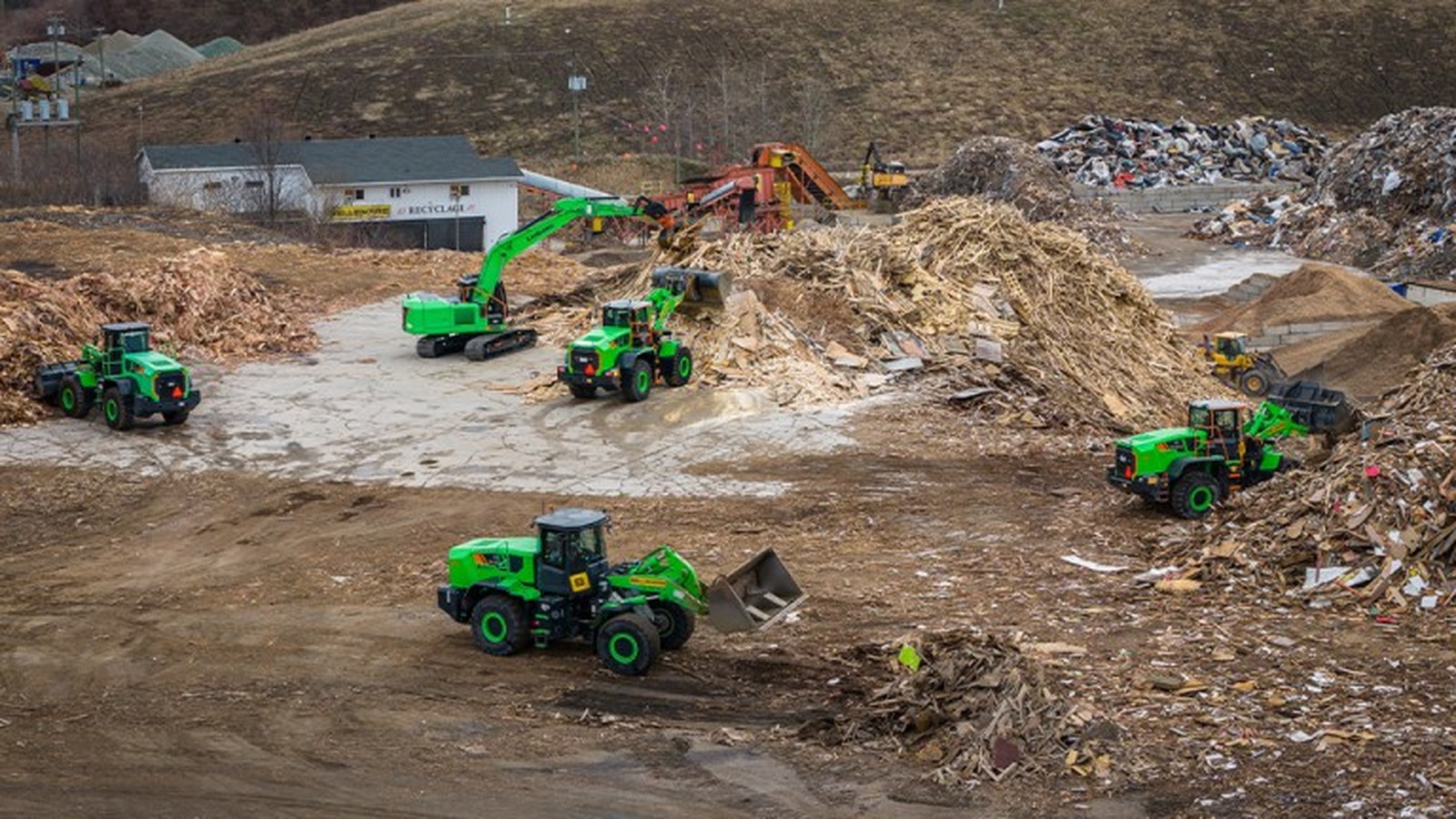
Picture an indoor recycling yard at the start of a second shift. The wheel loader is still running the same short loop between stockpile, crusher, and hopper. Travel distances are tight, grid power is close, and diesel exhaust hangs where people work. In that setting, an electric loader stops looking like a concept machine and starts looking like a very practical answer to an old operating problem.
Over the past few days, three reports pointed in the same direction. Heavy Equipment Guide covered the first serially produced battery-electric articulated dump trucks going into tunnel-related hydropower work in Norway. The same publication also looked at a Quebec operator that has already put multiple mid-size electric wheel loaders and an electric excavator into daily production. Construction Briefing, meanwhile, reported on a compact dumper platform in Europe that is being pitched around battery architecture, charging practicality, and hybrid transition options rather than headline-grabbing prototype talk.
The common message is simple: electrification in construction machinery is no longer about proving that a machine can move. It is about proving that a machine can fit a real duty cycle, and wheel loaders are turning into one of the clearest proof points.
Where electric machines are working first
The early wins are showing up in places with three characteristics.
First, machine movement is repetitive and geographically tight. Wheel loaders feeding crushers, dumpers cycling around a compact site, and articulated haulers running inside tunnel or hydropower works all benefit from known routes and repeatable travel distances.
Second, charging can be built into the job rather than added on top of it. Tunnel blasting pauses create natural charging windows. Indoor and yard-based operations often have stable grid access. Compact dumpers on urban or enclosed sites can charge overnight without needing a complicated fuel-and-service routine.
Third, the value proposition is broader than fuel savings. In enclosed environments, the real gain may be lower ventilation burden, less noise, and better operator comfort. In fixed-site materials handling, the economics improve because electricity costs are easier to predict and machine utilization is more controlled.
That matters because electric construction equipment has often been discussed as if every application should decarbonize at the same pace. The field evidence says the opposite. Adoption starts where the work pattern is disciplined.
Why wheel loaders are a logical bridge product
Among earthmoving machines, wheel loaders may be one of the clearest bridge products into electrification. Their cycles are often short. Their work is visible and measurable. Many spend long hours inside recycling halls, transfer yards, aggregates plants, or enclosed industrial sites where diesel exhaust is a genuine operating issue, not just a compliance topic.
One fleet case in Quebec makes that point well. The operator reported that its electric wheel loaders matched or exceeded the output of comparable diesel units in short-cycle work, while also lowering energy cost and improving the working environment. Just as important, the site already had enough electrical capacity to add chargers without last-minute panic spending. That is what real adoption looks like: not just buying the machine, but matching the machine to a site that can support it.
For buyers, the lesson is not that every loader should go electric tomorrow. The lesson is that loaders with fixed routes, indoor use, and two-shift material flow are becoming serious candidates now.
Dump trucks and dumpers need the jobsite to cooperate
Dump trucks are a tougher category because haul lengths, grades, payload swings, and idle patterns vary so much from site to site. That is why the recent movement in electric dumpers and articulated dump trucks is worth watching. The most promising projects are not chasing universal replacement claims. They are picking situations where the site itself helps the machine succeed.
In Norway, the first serially produced electric articulated dump trucks were deployed into tunnel-related hydropower construction, where charging can fit between blasting cycles and zero-emission operation carries an immediate benefit underground. In Europe, the modular battery strategy now showing up in compact dumpers points to the same mindset. The story is no longer “here is an electric machine.” The story is “here is a machine platform with battery sizes, voltage architecture, and even range-extender options that can be matched to site reality.”
That shift is important. Contractors do not buy around slogans. They buy around uptime risk.
The next bottleneck is not the motor
The powertrain is only one part of the adoption problem. Charging layout, operator acceptance, service readiness, and machine calibration will decide whether electric fleets scale.
Early fleet users are already showing where friction appears. Operators who spent years in diesel machines still care about steering feel, hydraulic response, visibility, and charging routines. Maintenance teams need high-voltage safety habits. Site managers need to know whether a machine can finish a shift without turning the workday into a charging plan.
In other words, the next phase of competition will not be won by the machine with the loudest launch. It will be won by the OEM or supplier that solves the boring parts: charger placement, battery right-sizing, technician support, software calibration, and honest application matching.
What buyers should ask before going electric
- Is the machine working in a fixed area, or does it travel unpredictably across the site?
- Can charging happen during natural pauses, shift changes, or overnight idle time?
- Is there reliable grid access without a major temporary-power workaround?
- Are ventilation, noise, or indoor emissions creating hidden diesel costs today?
- Does the supplier offer more than one battery or powertrain path for the same machine concept?
- Can the local service team actually support high-voltage equipment, not just sell it?
These questions sound basic, but they will separate the good pilots from the expensive disappointments.
What this means for the next 24 months
The most realistic near-term growth will likely come from selected wheel loaders, compact dumpers, electric dump trucks in controlled haul loops, and excavators working in constrained or emissions-sensitive environments. The pattern is not “diesel is gone.” The pattern is narrower and more useful: electric machines are becoming credible in jobs with repeatable cycles and a charging plan that fits the work.
From the XeMach side of the table, that is the signal worth paying attention to. Buyers do not need sweeping electrification claims. They need a machine-site match, a charging plan, and a supplier willing to talk about duty cycle before horsepower. The manufacturers that treat electrification as an application problem, not a branding exercise, are the ones most likely to win the next round of practical demand.