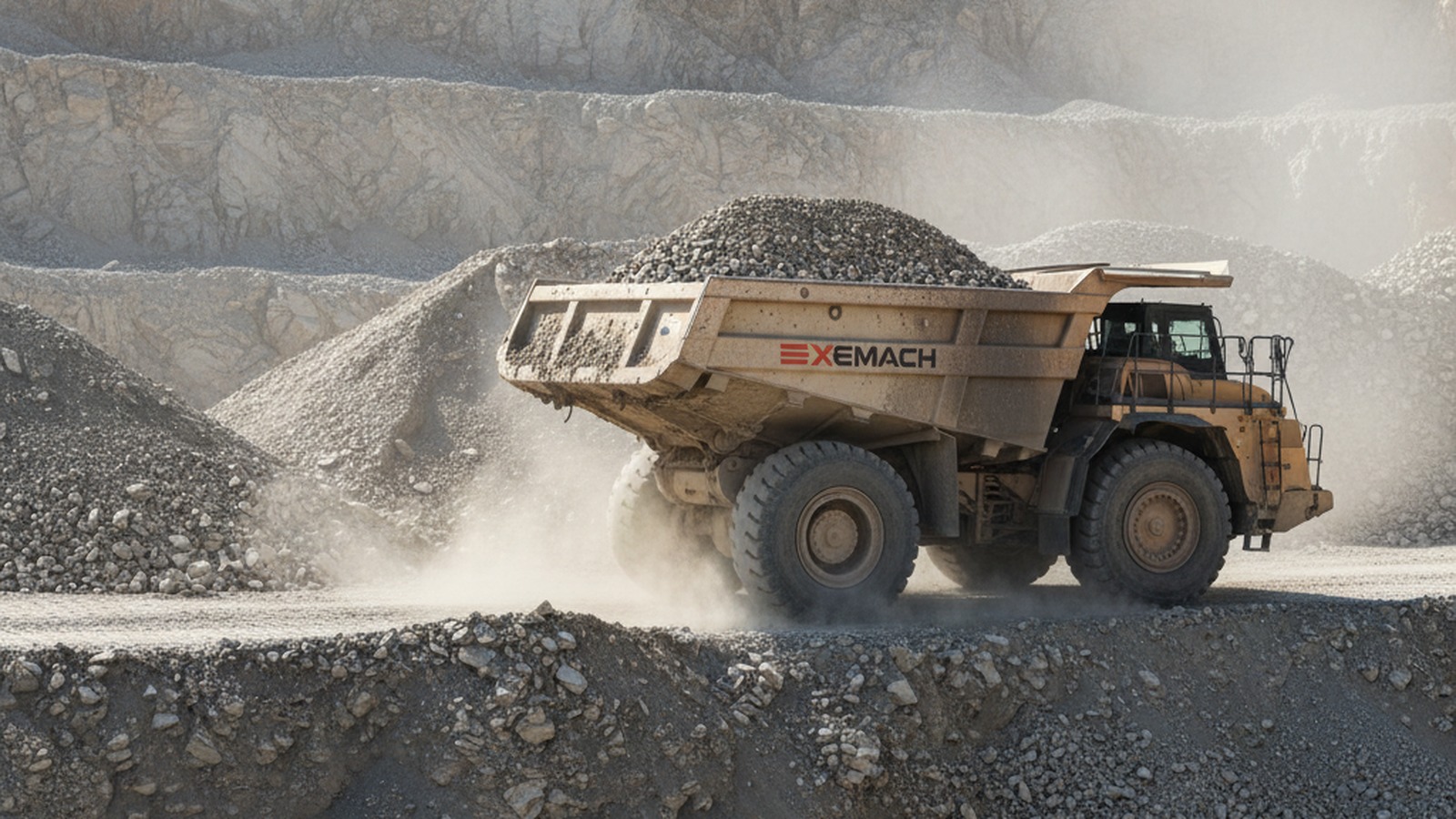
At 6:30 in the morning, the haul road still carries last night's rain. The loader is filling trucks on time, the site target looks fine on paper, and the dump truck brochure says the machine can handle the payload. Then the shift settles in: tires start slipping on the climb, operators back off to protect stability, material carries back in the bed, and the whole cycle slows down without anyone calling it a breakdown.
That is a useful way to read the latest articulated dump truck discussion in the market. Recent trade coverage is not really arguing about who can print the biggest number on a spec sheet. The stronger signal is that buyers are getting more practical. They are looking harder at haul-road conditions, pass match with the loading tool, traction control, vision systems, and the maintenance points that quietly decide whether an ADT makes money or burns it.
The haul road decides whether the payload is real
An articulated dump truck is only as productive as the road beneath it. That sounds obvious, but it changes how fleets should evaluate a truck.
On rough or slippery ground, the limiting factor is often not rated payload. It is how confidently the truck can climb, brake, turn, and dump without forcing the operator to slow the cycle. That is why traction systems, downhill speed control, differential lock logic, and stable dumping support are getting more attention. A truck that keeps moving smoothly on wet grades can outperform a larger machine that spends half the day protecting itself from wheel slip, harsh braking, or side-slope nerves.
This matters even more on mixed jobsites where conditions change through the day. A haul road that is decent at 8 a.m. can be broken up by noon. In those conditions, fleets are starting to treat driveline control and chassis stability as production tools, not luxury features.
Pass match still beats headline payload
Buyers also seem more disciplined about matching ADTs to the loading machine. That is a healthier trend for the whole segment.
A truck that needs too many passes to fill gives away time every cycle. A truck that is too small for the excavator or wheel loader invites overfilling, spills, and tire stress. Neither mistake looks dramatic in the purchase meeting, but both show up quickly in fuel burn, operator fatigue, and underwhelming tons per hour.
The practical target is simple: spec the truck around the loader or excavator that will actually feed it, then check the road layout and haul distance before chasing maximum payload. That usually leads to better fleet balance than buying the biggest unit the budget can stretch to.
Body choice belongs in the same conversation. Standard dump bodies, tailgate options, liners, bed heating, and ejector-style unloading all change how the truck behaves with wet, sticky, oversized, or abrasive material. On some sites, the right body setup removes a constant annoyance that operators would otherwise fight all season.
Tire pressure and articulation joints quietly set the cost curve
The market coverage also underlines something owners already know: tires and articulation joints are still where a lot of the real money goes.
Tires are not just a consumable line item. They are one of the fastest ways to lose margin if inflation, load discipline, and haul-road upkeep get sloppy. Under-inflation, overloading, and poor road maintenance compound each other. A bad road beats up the tire. The damaged tire changes machine behavior. The operator then compensates with speed or line choice, and the cycle gets less efficient again.
The articulation joint tells a similar story. It lives with the combined punishment of payload, turning forces, and road shock. If lubrication intervals slip or contamination builds up, the repair bill can arrive long before the fleet expected it. That is why more buyers are paying attention to auto-lube systems, service access, onboard payload data, and tire pressure monitoring. None of these items is glamorous. All of them matter.
For many fleets, the lesson is blunt: the cheapest truck to buy can become the most expensive truck to own if tire management and joint care are treated as afterthoughts.
Safety systems now protect cycle time, not just operators
Another shift worth watching is how safety technology is being discussed. Cameras, object detection, and machine-aware visibility systems are no longer framed only as compliance or incident-reduction tools. They are starting to be judged by how well they preserve steady production.
That makes sense. An operator who can see the truck's changing articulation angle, nearby obstacles, and the machine's blind-side risk has an easier time keeping the truck moving with confidence. Fewer sudden stops, cleaner reversing, and more controlled dumping all help the site keep rhythm. The same goes for traction logic and automatic braking support. These systems do protect people, which is the first job. They also reduce the small hesitations that add up across a ten-hour shift.
In other words, safety hardware is no longer sitting outside the productivity conversation. It is part of it.
What buyers should ask before they compare prices
Before comparing brands or sticker prices, fleet owners should answer a few site-level questions:
- What do the haul roads actually look like after rain, not just on a dry demo day?
- Which loading machine will fill the truck, and how many passes does that really mean?
- Is the material sticky, abrasive, oversized, or variable enough to justify a different body setup?
- How disciplined is the site on tire checks, road maintenance, and lubrication intervals?
- Does the operator team need better visibility support in tight or high-traffic zones?
Those questions sound less exciting than launch headlines. They are also closer to where ADT ownership succeeds or fails.
For XeMach, the clearest industry takeaway is this: the next strong ADT sale will not be won by payload alone. It will be won by helping buyers spec the truck around the road, the loader, the material, and the maintenance routine they actually live with. That is where uptime becomes believable, and where production claims survive first contact with the jobsite.