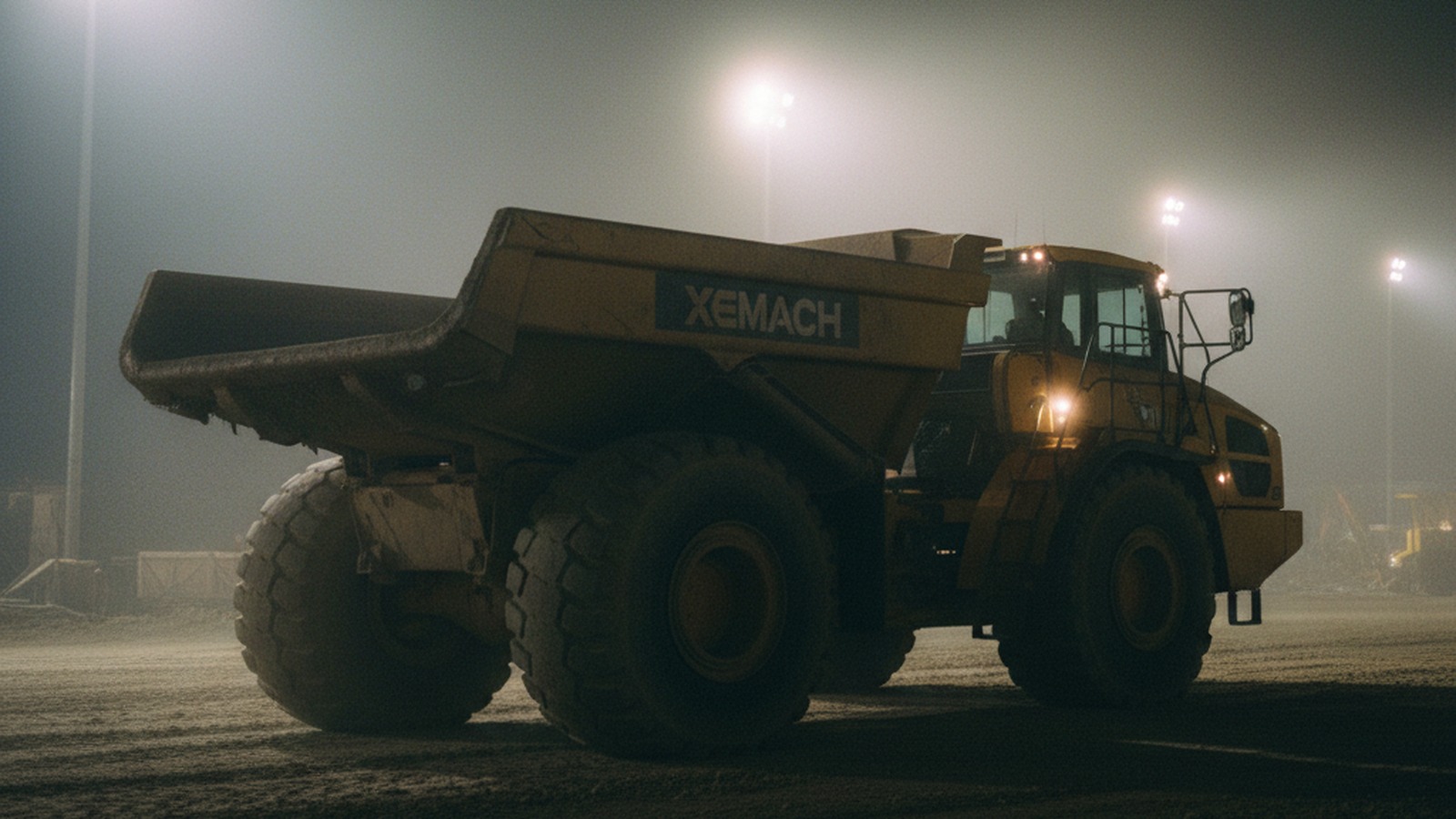
A quarry haul road turns ugly fast after a night of rain. The grade is slick, the corners are tight, and every extra wheel spin chews up tire life while the operator tries to keep the truck settled on the descent. In that moment, payload still matters, but it is no longer the whole buying story.
That is the clearest signal coming out of recent articulated dump truck coverage this spring: fleet decisions are moving beyond headline tonnage. Buyers are putting more weight on traction management, downhill control, visibility, and the running cost hidden in tires and articulation joints.
What changed in the ADT buying conversation?
For years, articulated dump truck discussions often started with payload class and horsepower. Those still matter, especially for quarry, site development, mining support, and infrastructure work. But recent product updates and fleet maintenance guidance point to a more practical shift. Contractors want trucks that hold speed more predictably on grades, recover traction automatically in soft ground, and help operators see more around the machine without extra workload.
That shift makes sense. Haul roads are not lab conditions. They change by the hour. A truck that carries more material per cycle only helps if it can keep moving safely, avoid premature tire damage, and stay available for the next shift.
Why traction control is starting to matter as much as payload
The latest market direction suggests that traction systems are becoming part of the core value proposition in ADTs, not just a secondary feature. Automatic traction control, differential lock logic, retarding systems, and downhill speed management all solve a real jobsite problem: too much power applied at the wrong moment costs time and money.
On muddy ramps or uneven haul roads, uncontrolled wheel slip does more than slow the cycle. It burns tire life, increases fuel consumption, and makes the truck harder to place cleanly at the dump point. Better traction logic helps keep the machine composed and the cycle repeatable.
From a fleet perspective, that matters because repeatability is what turns a spec sheet into production. A truck that behaves consistently across changing ground conditions usually creates fewer surprises for operators, dispatchers, and maintenance teams.
Safety systems are becoming operating systems, not add-ons
Visibility and braking support are moving in the same direction. Rear-view cameras were once easy to treat as a box-checking feature. Now the market is clearly moving toward broader machine awareness: multi-camera coverage, object alerts, smarter in-cab displays, hill-start support, and automated retard or brake functions that reduce the amount of correction an operator needs to make on the fly.
This matters most in the messy middle of real operation, not on a clean demo pad. ADTs work around loaders, light vehicles, berm edges, temporary traffic patterns, and changing weather. Systems that help the operator manage downhill speed, watch blind areas, and hold the truck steady during transitions can reduce both stress and avoidable incidents.
The broader lesson is simple: safety technology in hauling equipment is no longer only about compliance. It is becoming a productivity tool because a calmer, more predictable machine is usually an easier machine to run well.
The cost buyers still underestimate: tires and joints
One of the more grounded reminders from recent fleet guidance is that ADT operating economics are still won or lost in basics. Tires remain one of the biggest operating costs on these machines, and articulation joints absorb constant punishment from payload, road condition, and turning cycles.
That changes how smart buyers should evaluate a truck. Tire selection should match the application, not just the purchase order. Quarry and mining support work may justify heavier tire construction, while longer earthmoving cycles can favor a different setup. Inflation discipline, daily inspections, payload control, and haul road quality all feed directly into cost per ton moved.
The same is true for articulation joint life. Lubrication access, service interval discipline, protection of hoses and joint components, and the quality of the haul road all show up later as uptime or repair pain. None of this is glamorous, but this is where total ownership cost gets real.
What fleet managers should ask before choosing the next truck
Instead of asking only how much the truck can carry, buyers should press on a different set of questions:
- How does the truck manage wheel slip without forcing constant operator input?
- What systems help control speed and stability on downhill segments?
- How much blind-spot reduction has been built into the cab and camera layout?
- What tools are available for payload monitoring, tire pressure awareness, or preventive maintenance planning?
- How easy is daily service access around the engine bay, brakes, and articulation area?
- How well does the machine fit the actual haul road conditions on site, not the ideal ones on paper?
Those questions do not sound flashy, but they usually separate a truck that looks good in procurement from one that works well for three to five years.
Where the segment is heading next
The current direction of the articulated dump truck market looks fairly clear. More payload will still be part of every launch cycle, but the stronger competitive pressure is building around controllability, operator confidence, and lifecycle cost management. That means more intelligent traction response, more integrated visibility systems, more machine data for managers, and more design attention on serviceability.
For manufacturers and buyers alike, the implication is practical. The next useful ADT is not just the one with a bigger number on the brochure. It is the one that keeps its footing in bad ground, protects its tires, gives the operator better awareness, and comes back tomorrow without drama.
Quick takeaways
- ADT buying criteria are shifting from payload alone to a wider balance of traction, safety, and operating cost.
- Tire management and haul road condition remain two of the biggest hidden drivers of cost per ton.
- Visibility, retarding, and auto-hold functions are becoming central to real-world productivity.
- Serviceability and monitoring tools matter more as fleets push for longer uptime windows.
At XeMach, the useful takeaway is not to chase every feature headline. It is to keep reading the jobsite correctly: customers want machines that stay stable, stay visible, and stay economical under rough ground and long working hours. In the ADT segment, that is where the next round of product value is being defined.