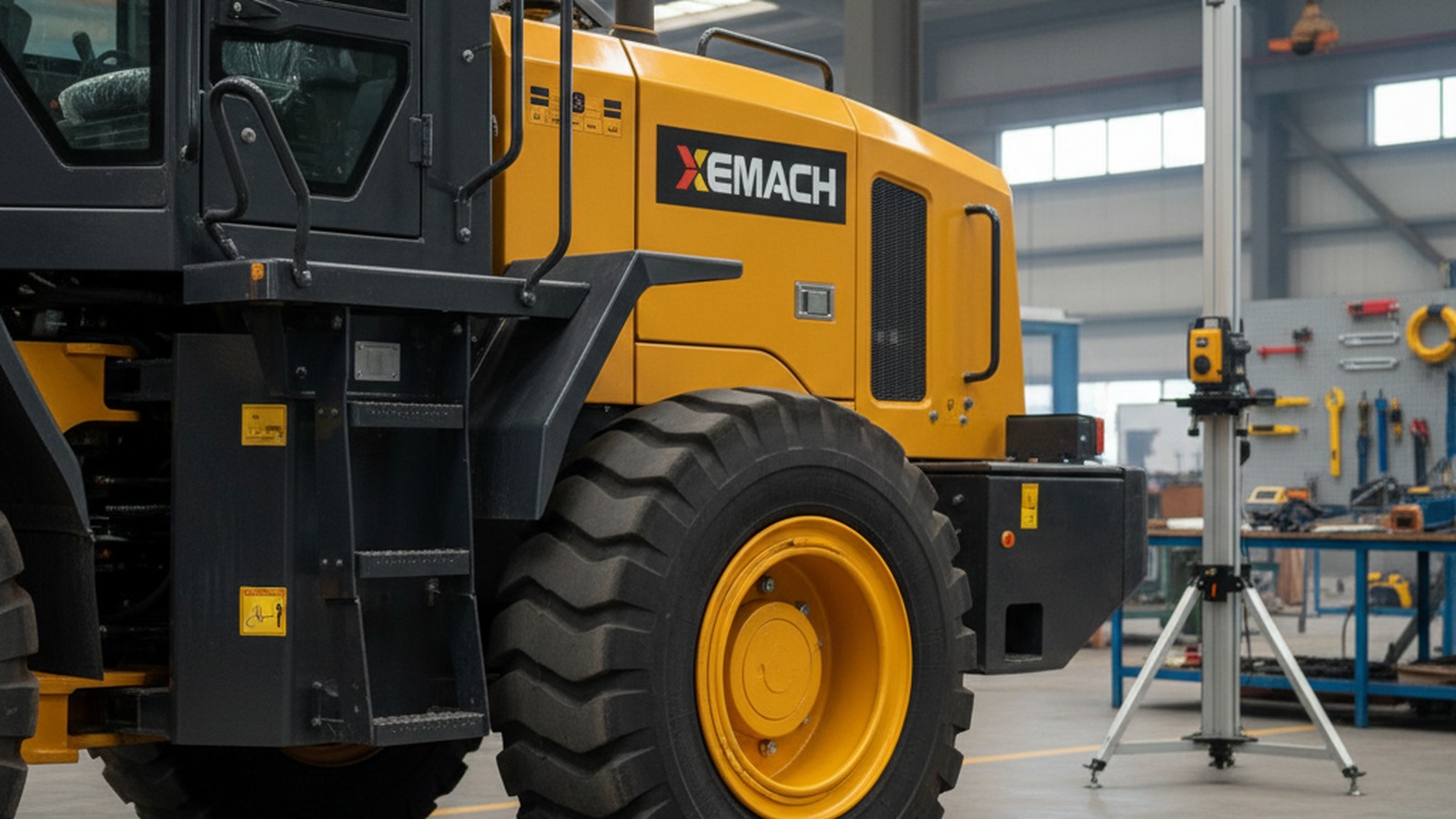
At 5:45 on a cold morning, two crews start work for very different reasons. One loader team is cycling material in a fixed yard with charging access and repeatable shifts. A few miles away, a small excavation crew is trenching beside a hospital where noise and exhaust complaints can stop the job before lunch. Both crews are part of the same electrification story, but they are not buying for the same problem.
That difference explains a lot of the market in 2026. Recent industry reporting suggests battery-electric wheel loaders are finding real production scale much faster than electric excavators, while excavators still need tighter application fit to make the numbers work.
Why wheel loaders are getting traction first
The strongest signal from recent market coverage is that wheel loaders are no longer just a pilot category in some regions. In China especially, electric wheel loaders have moved beyond early demonstration fleets and into genuine production volume. That matters because it changes the discussion from "Can this machine work?" to "Who can build, support, and export it reliably?"
There are practical reasons for that. Wheel loaders often run in repeatable cycles, return to known charging points, and work in controlled environments such as quarries, plants, yards, and ports. Their duty patterns are easier to map. Their charging plans are easier to organize. For many operators, that makes the economics easier to test and easier to trust.
The other big factor is platform design. Recent reporting points out that the manufacturers moving fastest in electric loaders are often building more integrated battery-electric architectures rather than simply swapping drivetrains into diesel-era layouts. That usually gives them a better shot at packaging, weight distribution, efficiency, and long-term serviceability.
Why electric excavators are still more selective
Electric excavators are not standing still. The product pipeline keeps growing, especially in mini excavators, and the market has become more concrete than it was even two years ago. The difference is that excavators still need a narrower set of conditions to look compelling.
A new 2.5-ton electric mini excavator introduced this spring is a good example of where the segment stands. The machine offers a published runtime of roughly four to eight hours depending on task, overnight charging, retractable width for tight access, and compatibility with common work tools. Those are useful, real-world specifications. They also quietly show the current boundary of the category.
For compact trenching, indoor work, school projects, hospital campuses, municipal repairs, and other jobs with predictable hours, that package makes sense. For remote work, long heavy digging cycles, or jobsites with weak charging access, diesel still has the easier case.
That is why electric excavators are still being won job by job instead of segment by segment. The fit can be excellent, but it is not broad yet.
The market is separating into purpose-built products and retrofits
One of the more important details in this year's reporting is not about batteries at all. It is about product strategy.
Across the market, some electric machines are still adapted from diesel platforms, while others are being designed with electric layouts in mind from the start. Buyers should pay attention to that distinction. A retrofit can get a product to market faster, but it may also carry compromises in balance, cooling, service access, or space claim. A purpose-built machine has a better chance of feeling coherent in daily use.
That design split matters most in segments that are trying to scale. Once customers move beyond demo interest, they start asking harder questions about uptime, charging workflow, component access, and how the machine behaves at the end of a long shift. Those questions expose weak packaging very quickly.
What buyers should ask before they get distracted by the badge
Electrification discussions can get noisy fast, so the useful questions are still fairly plain:
- How predictable is the duty cycle on the jobs we actually run?
- Where will the machine charge, and who controls that power access?
- Is the machine built around an electric layout, or is it effectively a converted diesel platform?
- What happens to productivity when the battery drops late in the shift?
- Are attachment performance, hydraulic response, and operator visibility as good as the diesel machine this unit would replace?
- Can the dealer or supplier support battery, charging, and software issues with the same speed they support iron and hydraulics?
Those questions are more valuable than broad promises about sustainability. They get closer to the real buying risk.
What this means for the next 12 to 24 months
The likely near-term pattern looks pretty clear. Electric wheel loaders should keep expanding first where charging is organized and machine use is high enough to justify the switch. Electric mini excavators should continue growing in urban, enclosed, or noise-sensitive work where quiet operation solves an immediate problem. Larger excavators will move more slowly unless infrastructure, battery cost, and jobsite planning improve together.
That does not mean excavators are behind forever. It means the order of adoption is becoming easier to read. Loaders are proving the scale case. Mini excavators are proving the application-fit case. The next winners will be the manufacturers that match product design to those realities instead of forcing the same electrification pitch across every class.
From XeMach's point of view, the takeaway is practical: the next serious electric opportunities are not hiding in broad slogans. They sit in the places where charging routine, machine duty cycle, and operator expectations already line up. Builders who understand that will spec better machines, and suppliers who design around that reality will have a much stronger 2026 than those still treating electrification as a trade-show talking point.