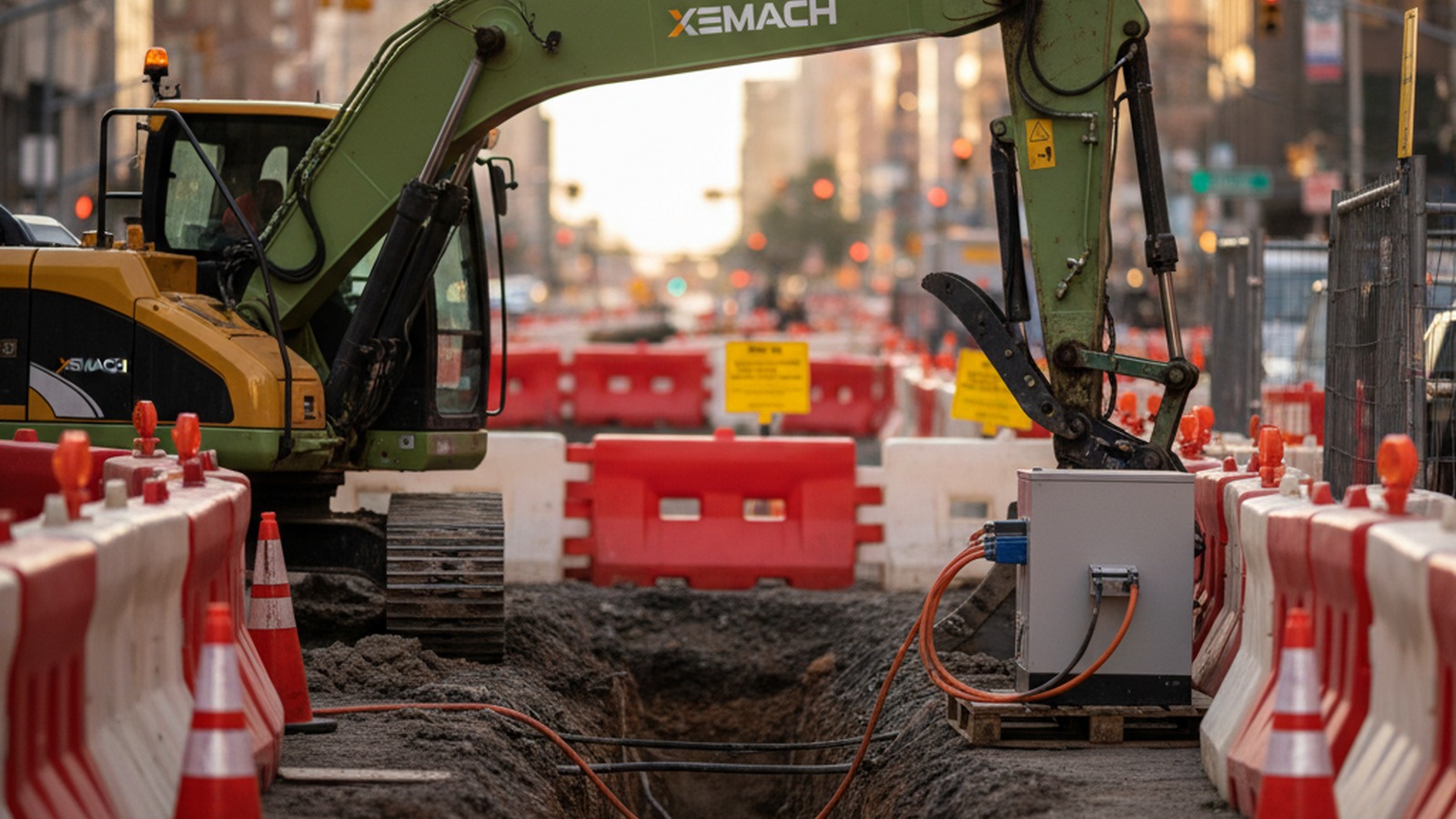
A utility crew gets an overnight permit to open a trench beside a hospital. The window is short, the neighbors are close, and the site manager has no room for exhaust complaints or unnecessary noise. That is the kind of job where electric excavators stop being a trade-show talking point and start becoming a practical tool.
The short version
Electric construction equipment is still a small slice of the market, but the direction is clearer now than it was a year ago. Recent industry coverage points to the same conclusion: battery-powered machines are not replacing diesel across the board yet, but they are becoming a serious option in jobs where emissions, noise, access, and predictable duty cycles matter more than brute all-day range.
For buyers, that means the question is no longer “Is electric coming?” The better question is “Which jobs in my fleet can already support electric without creating new bottlenecks?”
Where electric excavators are gaining real traction
The strongest fit is still in compact and lighter-duty excavator work. Urban utility work, indoor demolition, basement digging, municipal jobs near schools or hospitals, and other noise-sensitive applications all line up well with the strengths of current battery systems.
That is not just because electric machines are quieter. Many compact excavator jobs are already intermittent by nature: the machine digs, swings, repositions, waits for trucks, pauses for crews, then digs again. Those stop-start cycles are far easier to support with today’s battery capacity than continuous high-load production work.
This matters for dealers and fleet owners because it changes how electric units should be sold and evaluated. The right comparison is not “Can this machine replace every diesel excavator in the yard?” It is “Can this machine handle a specific group of jobs better than diesel can?”
Why the market is still selective
The barriers have not disappeared. They have simply become easier to define.
Charging access remains the first filter. If the machine can be charged overnight on available site or depot power, the discussion becomes realistic. If not, the operator is immediately forced into workarounds that erase the convenience advantage.
Runtime is the second filter. Buyers need to judge actual duty cycle, not brochure claims. A trenching crew with attachment changes, idle periods, and short transport distances is very different from a crew running heavy continuous digging for most of the shift.
Attachment load is the third filter, and it still gets ignored too often. A machine that performs well with a standard bucket can look very different once a hydraulic breaker or other high-demand attachment enters the picture. Electric excavator planning should always include the attachment mix, not just the base machine specification.
Purchase price is still a hurdle in many markets, especially when the customer compares invoice totals only. But the conversation is shifting. Lower routine maintenance, fewer consumables, reduced ventilation needs in enclosed work, and the ability to win projects in sensitive environments all matter. The machine has to fit the job, and the job has to reward the machine’s strengths.
What the rest of the excavator market is telling us
Even outside pure electrification, the broader excavator category is moving in a useful direction. Mid-size excavators are adding better cameras, obstacle awareness, assist systems, grade tools, smarter displays, and more configurable hydraulics. That trend matters because it shows what buyers increasingly expect from the machine as a working platform.
In other words, the electric conversation is no longer only about the powertrain. Customers also want visibility, control logic, jobsite safety, attachment readiness, and easier operator onboarding. If an electric excavator enters the fleet but creates friction in those areas, it will struggle no matter how good its battery story looks on paper.
That is why the next phase of electric excavator adoption will likely favor machines that are honest about application boundaries while still delivering the same practical features customers already expect from advanced diesel models.
What buyers should ask before they schedule a demo
- What percentage of this machine’s weekly work happens in urban, indoor, low-noise, or low-emission environments?
- How many hours of real hydraulic work does the machine do, versus waiting, repositioning, or travel?
- Is overnight charging already possible where the machine is parked?
- Which attachments will actually be used, and how do they change energy demand?
- Does the crew need the machine for predictable daily cycles, or for highly variable emergency dispatch?
- Will quieter operation help extend working windows or reduce neighborhood complaints?
- Is the fleet prepared to track energy use and charging discipline with the same seriousness used for fuel management?
Those questions sound simple, but they are often the difference between a solid pilot program and an expensive experiment.
A practical XeMach view
From XeMach’s side, the most sensible way to read the market is this: electric excavators are entering the phase where fit matters more than hype. The winners will not be the machines with the loudest launch language. They will be the ones that solve a specific site problem cleanly, reliably, and without forcing the contractor to redesign the whole operation around the machine.
For manufacturers and buyers alike, that points to a clearer product strategy. Focus on duty-cycle honesty. Focus on charging simplicity. Focus on attachment compatibility, thermal stability, and operator familiarity. Keep improving the rest of the machine as well—visibility, controls, service access, and safety systems—because customers do not separate those things from electrification in the real world.
Key takeaways
- Electric excavators are still niche, but the use cases are becoming more concrete.
- Urban, indoor, and noise-sensitive jobs remain the best near-term fit.
- Charging access, real runtime, and attachment demand matter more than headline claims.
- Mid-size excavator trends show that buyers expect smarter, safer, and easier-to-run machines across the board.
- The next growth step for electric excavators will come from better job matching, not from pretending every diesel application is ready to switch.
Closing thought
A few years ago, electric excavators were mostly a signal of where the market wanted to go. In 2026, they are better understood as a tool for selected environments where the operating conditions are already doing part of the selling. For contractors, the opportunity is not to electrify everything at once. It is to identify the jobs where electric already makes operational sense and build adoption from there.