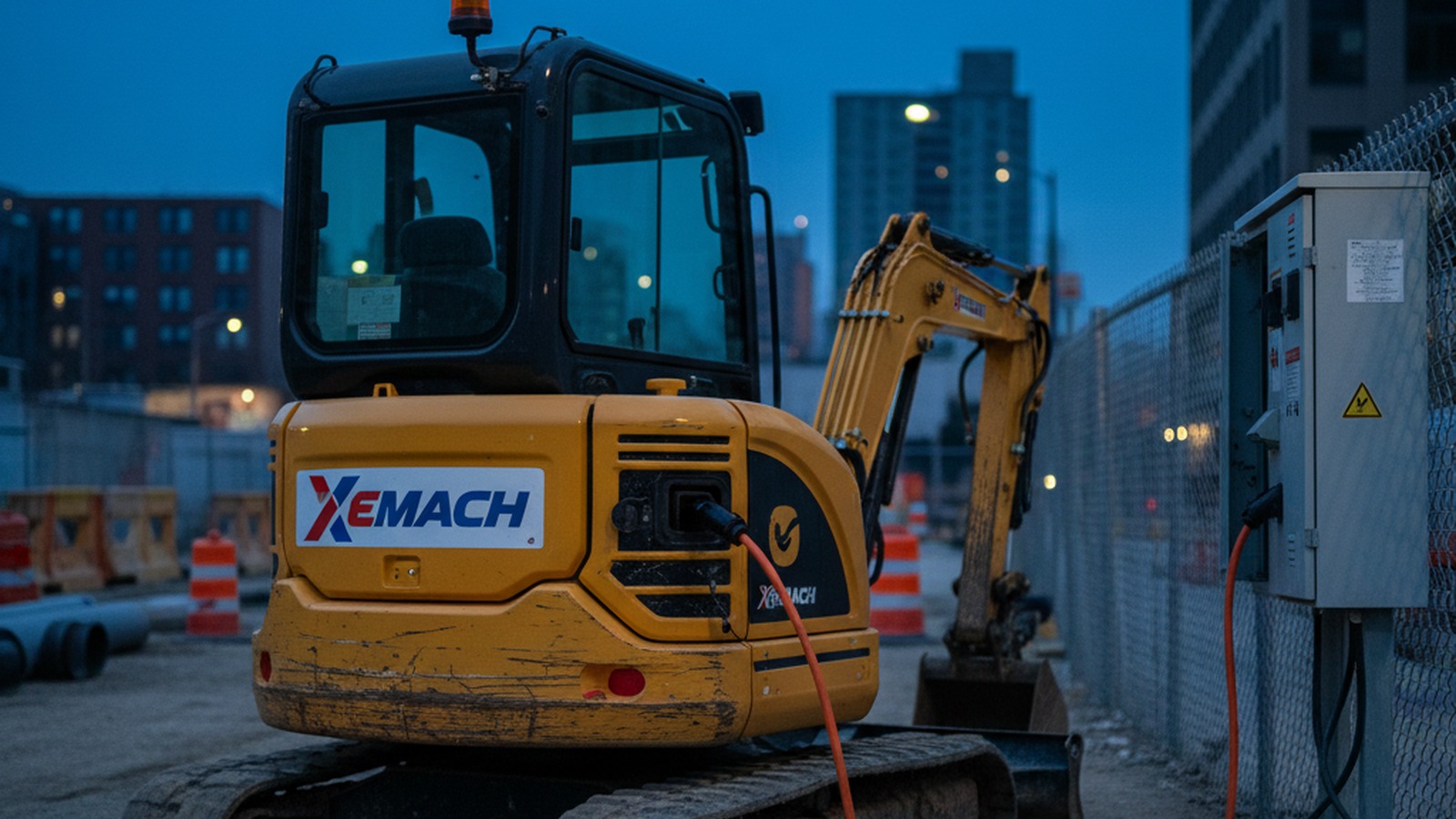
At 6:30 in the morning, a utility crew is setting barriers beside a hospital loading dock. They need to open a short trench, move spoil, and be gone before delivery traffic stacks up. The machine has to work quietly, fit in a narrow lane, and avoid filling the area with exhaust. That kind of job explains why electric mini excavators are finally moving from trade-show curiosity to a serious buying conversation in 2026.
Recent industry coverage points in the same direction: electric equipment is still a small slice of total sales, but it is starting to win clear use cases instead of vague sustainability headlines. For mini excavators and other compact machines, the question is no longer whether battery power exists. The real question is where it makes operational sense, and what buyers need to plan before they commit.
The first breakthrough is not "all jobsites" — it is the right jobsites
Electric mini excavators are not replacing diesel across the board. That is not what the market is showing. What is happening instead is much more practical. Contractors are matching electric machines to jobs where noise, ventilation, neighborhood restrictions, or indoor work create a cost for running conventional equipment.
That matters because compact excavators already spend much of the day in stop-and-go cycles. They dig, swing, reposition, wait for trucks, change attachment tasks, and then dig again. In that pattern, battery machines have a better chance of delivering useful runtime than many skeptics assume. For short urban utility work, indoor demolition, municipal maintenance, and projects near schools, hospitals, transit corridors, or residential streets, electric power is starting to solve a real problem rather than just checking an ESG box.
From a XeMach viewpoint, this is the most important industry signal: adoption is being pulled by site conditions, not pushed only by marketing. When the operating environment penalizes noise and exhaust, buyers start looking at electric excavators more seriously.
What buyers are really comparing now
The buying discussion has become more disciplined this year. Instead of asking whether electric is "the future," fleet owners are comparing five practical points:
- Usable runtime, not brochure runtime. Buyers want to know how long the machine can actually dig, travel, and run attachments in mixed duty.
- Charging fit. Overnight AC charging may be enough for many fleets, but some contractors need faster turnaround or predictable access to site power.
- Maintenance reduction. Fewer engine-related service items can simplify upkeep, especially for fleets trying to reduce downtime and technician pressure.
- Site access advantages. Lower noise and zero tailpipe emissions can open work windows that are harder to secure with diesel equipment.
- Total job economics. Higher purchase price is still a barrier, so the machine has to earn its place through operating cost, scheduling flexibility, or project access.
That last point is where many decisions will be made. Electric mini excavators do not need to beat diesel on every line item. They need to win on enough lines that the application works.
Why compact excavators are a logical entry point
Among earthmoving categories, mini excavators are one of the most believable starting points for electrification. Their size, transport flexibility, and common use in dense environments give them a cleaner path to adoption than larger machines working far from reliable power.
The broader mini excavator market also remains strong. Industry data cited in recent buyer coverage shows compact excavators are still one of the most active construction equipment categories, with sales volumes well above a decade ago. That matters because manufacturers and buyers are not evaluating electric machines in a weak segment. They are testing them inside a class that contractors already understand and use heavily.
Another reason the category fits: mini excavators are increasingly attachment-driven. Crews expect a compact machine to switch between buckets, breakers, augers, and couplers without becoming a one-task asset. That raises the bar for hydraulic performance and energy management. Buyers are watching closely to see which electric platforms can support real attachment work without turning charging into a scheduling headache.
The quiet advantage may matter more than the emissions story
Zero on-site emissions are important, but in many real buying decisions, noise may prove just as influential. A quieter excavator changes how a machine fits around occupied buildings, retail areas, campuses, and public works schedules. It can reduce complaints, improve operator comfort, and give project managers more flexibility in start times or shift planning.
This does not mean every electric machine will automatically create a better jobsite. Battery weight, charging logistics, and runtime discipline still have to be managed. But the market is maturing because the argument is getting more specific. Contractors are no longer talking in abstract terms. They are asking whether a machine can handle a school retrofit, basement dig, streetscape repair, or hospital-adjacent utility job with fewer restrictions than diesel.
That is a healthier market signal than hype. Specific jobs create repeatable demand.
What buyers should ask before making the switch
Before adding an electric mini excavator, contractors should pressure-test the application instead of buying on momentum:
- How many hours of true digging and attachment work happen in a normal shift?
- Is overnight charging enough, or will the fleet need faster recovery between jobs?
- Will the machine mostly work in urban, indoor, municipal, or other noise-sensitive environments?
- Does the branch or dealer network understand battery diagnostics and uptime support?
- Is the machine being purchased as a primary unit or as a specialist machine for a defined type of work?
These questions matter because the early winners in electric excavators will probably not be the fleets that try to force one machine into every role. They will be the fleets that define the role clearly from day one.
The next phase is not mass adoption. It is application discipline.
The 2026 market does not suggest an overnight shift away from diesel mini excavators. Diesel will remain the default choice for many remote, high-demand, and power-constrained jobs. But the market does suggest something more durable: electric mini excavators are carving out their first dependable territory.
For contractors and distributors, that territory is easy to recognize. It sits where access is tight, public sensitivity is high, and compact machines already do short-cycle work close to people. In that zone, electric excavators are becoming less of an experiment and more of a tool choice.
For XeMach readers, the takeaway is simple. Watch the jobsite before you watch the headline. The strongest opportunities in electric excavators will come from matching the machine to the site constraints with discipline, then building the fleet plan around that reality.