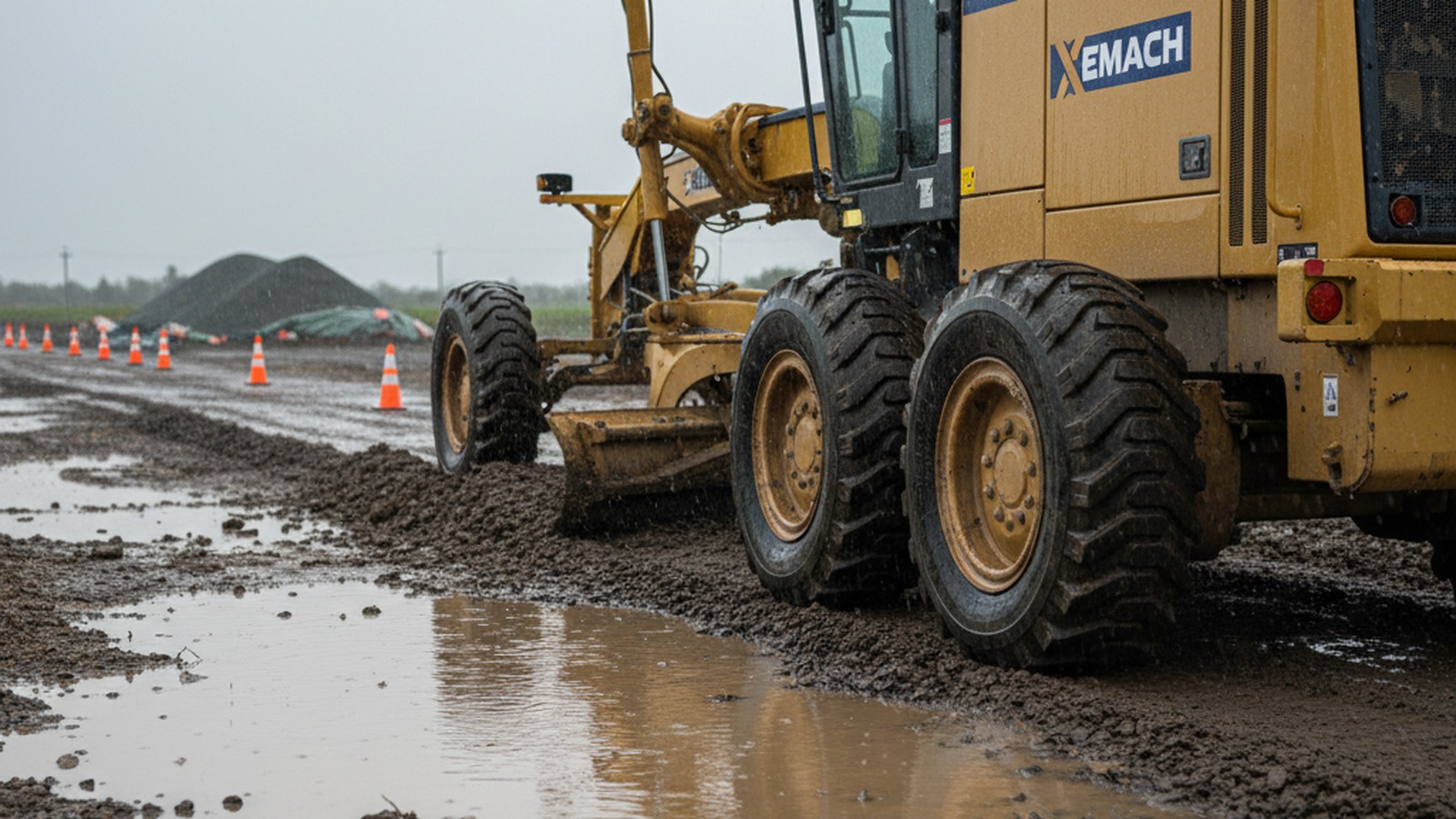
A municipal road crew is trying to clean up shoulders and reshape drainage after a wet week. The site is tight, traffic is close, and the operator in the seat is competent but not a 20-year grading veteran. In that situation, the biggest question is not raw horsepower. It is whether the motor grader lets the crew work accurately, comfortably, and repeatably without burning time on extra passes.
That is why recent motor grader news matters beyond one launch cycle. The latest industry coverage points to a broader shift in buyer priorities: control layout, sightlines, and upgrade-ready grade technology are moving closer to the center of the purchasing decision.
The operator bottleneck is now a machine-spec question
Recent reporting on new motor grader introductions at ConExpo 2026 highlighted something telling: manufacturers are spending real development effort on control choices, cab redesigns, easier low-speed operation, and simpler access to automated blade functions. That is not cosmetic. It reflects what many fleets are dealing with already — good operators are hard to replace, and mixed-experience crews need machines that are easier to learn without giving up finish quality.
For graders, this matters more than it does on many other machines. A loader can still stay productive with a wider operating band. A grader is less forgiving. Small control differences show up directly in surface quality, drainage accuracy, and rework.
Why control layout matters more than buyers used to admit
One of the clearest signals from recent product coverage is the attention being paid to joystick-versus-lever configurations, programmable hydraulic response, and creep-speed control in tighter work zones. Buyers used to treat this as operator preference. In 2026, it is becoming a fleet-management issue.
If a contractor expects one machine to work across roadbuilding, shoulder maintenance, ditching, snow removal, and municipal repair jobs, operator consistency starts to matter as much as peak capability. The best machine is not always the one with the most aggressive spec sheet. It is the one that helps more operators produce acceptable results with less fatigue.
That changes how buyers should evaluate a grader. Instead of asking only about moldboard size, horsepower, and top speed, they should also ask how quickly a new operator can become productive, how easily the controls can be tuned, and how much low-speed precision the machine gives in cul-de-sacs, edge work, and obstacle-heavy areas.
Visibility is no longer a comfort feature
Recent grader updates also put heavy emphasis on cab visibility: better views to the moldboard, tire edges, and the work area around the machine; cleaner control grouping; and optional camera packages. That is not just a selling point for brochures. It addresses a real cost center.
When visibility is weak, experienced operators compensate. Less experienced ones slow down, second-guess blade placement, or over-correct. The cost shows up as extra passes, slower finishing, and a higher risk of mistakes around curbs, structures, and live traffic.
For many buyers, especially in municipal work and road maintenance, visibility should now be evaluated as a production feature. A grader that helps the operator read the blade edge and surrounding space more naturally can reduce fatigue over a full shift and improve consistency when the work is repetitive but precision-sensitive.
Grade control is moving from premium add-on to planned upgrade path
A second 2026 industry signal is just as important: grade control is getting simpler and more common across construction equipment, but adoption is still uneven. Recent reporting says factory-installed 2D systems are becoming easier to use and more affordable, while broader 2026 survey data still shows nearly 65% of respondents do not use 2D or 3D machine control.
That gap matters for grader buyers.
It means many fleets are not ready to jump straight into a full 3D workflow across every machine. But they also do not want to buy a machine that becomes technologically boxed in after two years. That is why upgrade-ready architecture is so important. Wiring provisions, sensor mounts, clean display integration, and a practical path from manual work to assisted blade control can be more valuable than a headline feature that the fleet will not fully use.
In other words, buyers should think less about a simple yes-or-no choice on grade control and more about how expensive and disruptive it will be to step up later.
The real buying question: how many passes does this machine save on an average crew day?
This is where the discussion becomes more useful. The strongest 2026 grader packages are not just offering more technology. They are trying to cut friction out of ordinary work:
- fewer corrections because the controls are easier to manage
- fewer wasted movements in tight areas because low-speed modulation is better
- fewer visibility-related mistakes around the moldboard and tires
- fewer upgrade headaches when a fleet decides to move into 2D or 3D guidance
- less operator fatigue over long shifts
That combination matters because grader economics are not driven only by purchase price. They are driven by whether the machine can hold quality with the crew you actually have.
What buyers should ask before signing for a new motor grader
- How easy is it for an average operator to become productive on this control layout?
- Can hydraulic response and control feel be tuned by application or operator preference?
- How clear is the sightline to the moldboard, front wheels, and edge work?
- What camera or visibility aids are integrated rather than added later as workarounds?
- Is the machine grade-control ready from the factory, and what exactly is included in that readiness?
- If the fleet is manual today, what is the realistic upgrade cost and downtime to move toward assisted grading later?
- How much daily maintenance access has been simplified for crews that handle basic service in-house?
From the XeMach side, the market signal is pretty clear: motor grader buyers are becoming less impressed by isolated headline specs and more focused on how a machine supports real-world production with real-world operators. In the next buying cycle, the winning grader will not just push more material. It will help more crews hit grade with less fatigue, less rework, and a cleaner path into assisted control when they are ready.