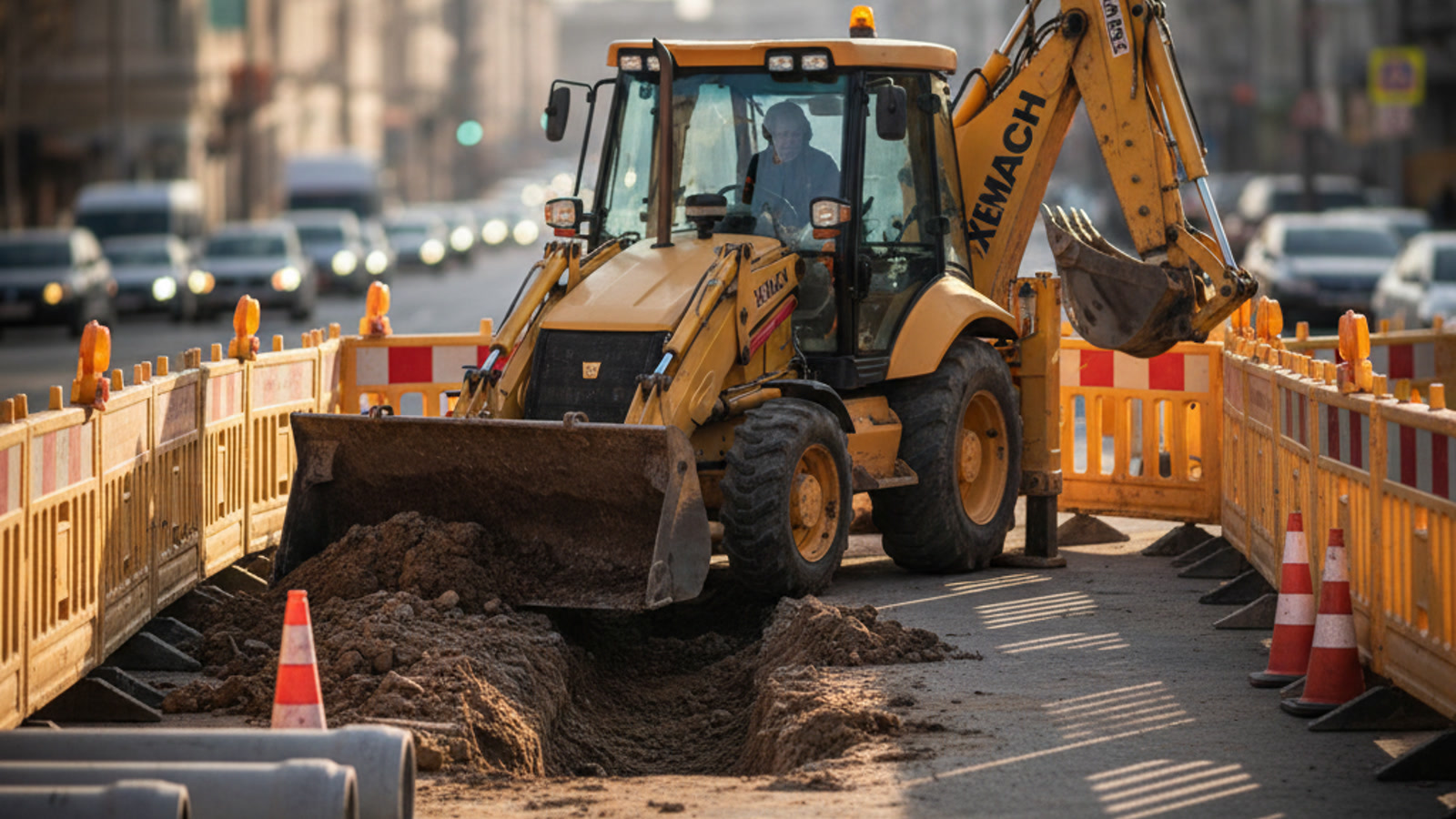
At 6:40 a.m., a municipal crew is sent to repair a water-line leak, move spoil, carry pipe, and reopen a lane before rush hour gets ugly. On paper, a mini excavator plus a compact loader could cover the work. In practice, two machines, two transports, and sometimes two operators are exactly what the crew does not have.
That helps explain why the backhoe loader is getting renewed attention in 2026. Recent market commentary suggests buyers are looking at the category with fresher eyes, especially in municipal, utility, rental, and general construction fleets. The old story was versatility. The new story is versatility under labor pressure.
Backhoe loaders are not replacing excavators or compact loaders outright. But they are regaining ground in jobs where one operator, one machine, and fast relocation matter more than having the absolute best single-purpose tool for every task.
The one-operator machine still solves a real problem
Two recent market discussions from Construction Equipment point in the same direction. Across the current backhoe lineup, the strongest demand is clustering around practical, everyday jobs rather than niche applications. That includes municipal maintenance, utility work, and rental fleets that need equipment to do many things reasonably well without creating a transport headache.
The buying logic is straightforward. A backhoe loader can dig, load, travel between nearby jobs, run attachments, and carry out cleanup with one operator. In a market where skilled labor is still tight, that matters more than it did a few years ago.
This does not mean the classic mini-excavator-plus-compact-loader combination has lost its place. Tight sites still favor smaller dedicated machines, and some contractors prefer the productivity of running two units at once. But the backhoe loader remains attractive when the job keeps changing and the crew needs to keep moving without adding another machine to the day.
Roading is not glamorous, but it saves time
One of the clearest reasons the category still holds value is mobility. Buyers often talk about lift, dig depth, hydraulic performance, and attachment capability. Those are important. But the unglamorous feature that keeps showing up in fleet decisions is roading.
When a machine can travel between nearby sites on its own instead of waiting for a truck and trailer, small jobs become easier to price and easier to execute. That matters for municipalities, utility contractors, and service crews whose days are built around short hops, not one long production cycle in a fixed location.
In other words, the backhoe loader wins some jobs before the bucket ever touches the ground.
Smaller dig-depth classes look well aligned with today's work mix
Another useful signal from recent market coverage is where demand appears strongest. Buyers are showing continued interest in the under-15-foot dig-depth class. That makes sense. A large share of real-world work is not deep trenching on a major civil project. It is roadside utility access, municipal maintenance, small foundations, repairs, cleanup, and general support work.
For those jobs, buyers are often less interested in headline digging numbers than in transport ease, visibility, attachment flexibility, and how quickly the operator can move from loader work to hoe work. A machine that fits the actual workday beats a machine that only wins the brochure comparison.
That is also why guarding packages, ride control, auxiliary hydraulics, and better visibility are drawing attention. These are not flashy extras. They help keep a do-it-all machine productive in the mixed, stop-start duty cycles that define much of the backhoe loader market.
Controls and operator comfort are becoming part of resale value
The category is also borrowing more ideas from loaders and excavators. Joystick controls are spreading. Cab visibility is improving. Rear camera systems, ride quality, and easier transitions between front and rear work positions are gaining importance.
This matters for more than comfort. Fleets are trying to reduce onboarding friction for newer operators while keeping experienced operators productive through long shifts. Better control layouts and clearer visibility make a machine easier to hand over, easier to train on, and often easier to resell later.
That is a quiet but meaningful shift. The modern backhoe loader is not being judged only as a rugged utility machine. It is being judged as an operator platform.
What buyers should ask before choosing a backhoe loader over a two-machine combo
The wrong way to compare a backhoe loader with a mini excavator plus compact loader is to ask which setup wins every category. It will not. The better question is which setup wastes less time and labor in the work your crew actually does.
A practical evaluation should include:
- How often does the crew need to move between nearby sites in the same day?
- Is the labor plan built around one operator or two?
- Are tight-space constraints common enough to rule out a backhoe on many jobs?
- Which attachments really earn their keep: 4-in-1 bucket, forks, hydraulic breaker, thumb, broom, or plate compactor?
- How much time is lost today in transport, trailer coordination, and repositioning?
- Does the fleet need a specialist, or a machine that keeps the day moving?
Those questions usually lead to a clearer answer than a spec-sheet debate.
The XeMach view: the category's strength is not nostalgia
From XeMach's perspective, the 2026 backhoe story is not about sentiment or legacy. It is about fleet math. When labor is tight, job types are mixed, and crews need to travel between short tasks, the backhoe loader still makes practical sense.
The category's opportunity is not to imitate mini excavators or compact loaders. It is to double down on the things those machines do not combine as easily in one package: self-mobility, front-and-rear versatility, attachment range, and one-operator efficiency.
For buyers reviewing municipal, utility, and rental fleet plans this year, the right question may no longer be whether the backhoe loader is old-school. It may be whether the job mix still rewards a machine that can dig, load, travel, and adapt without asking for a second operator.
Sources
- Construction Equipment: John Deere breaks down the modern backhoe and where it fits in today's fleets
- Construction Equipment: Caterpillar breaks down the 2026 backhoe market: lineup, trends, and advice