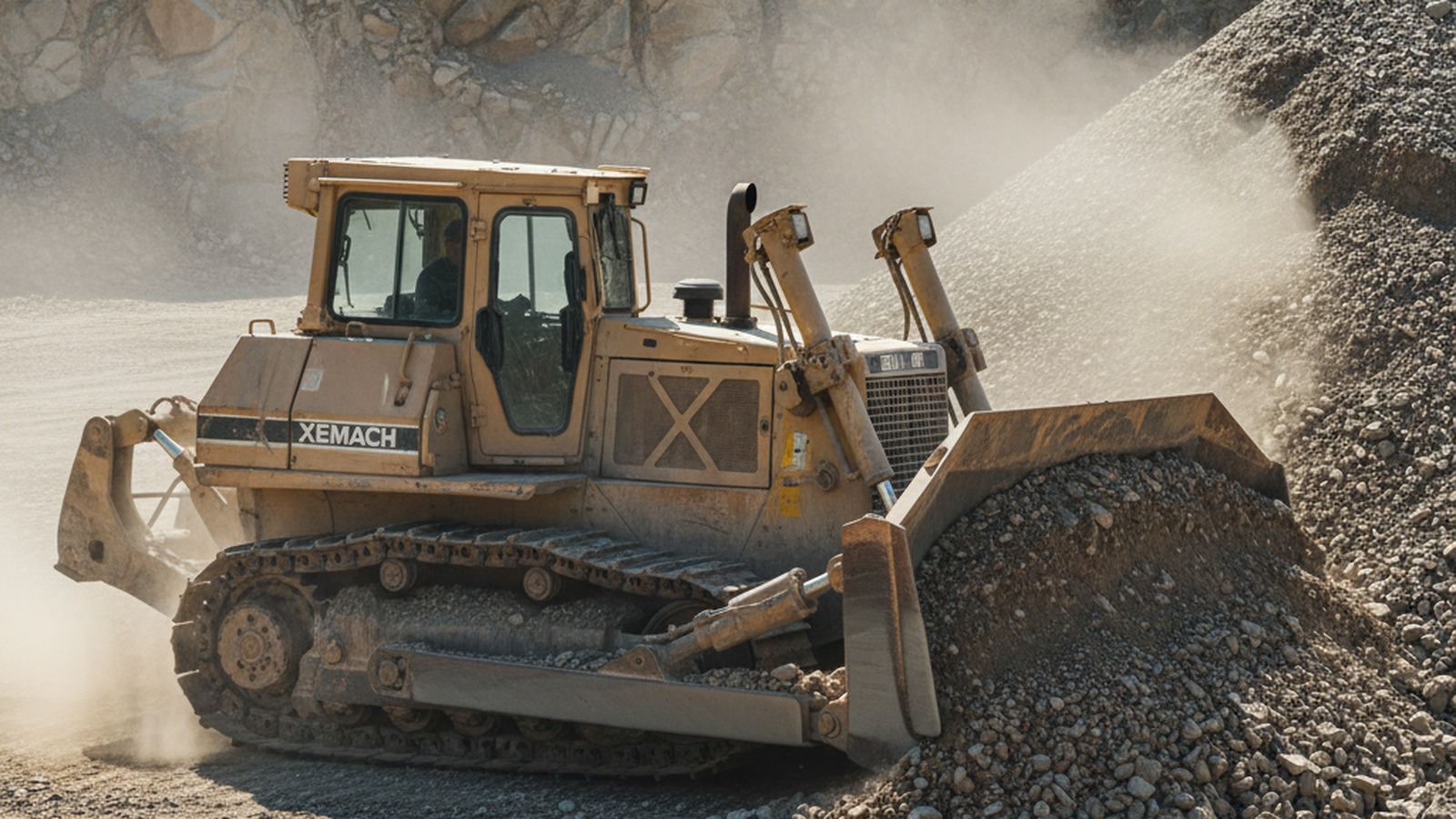
A site superintendent is trying to finish a warehouse pad before the next rain. The survey crew is delayed, a newer operator is in the seat, and every extra pass burns time that the project no longer has. In that situation, the deciding factor is not raw pushing force alone. It is whether the bulldozer can help the crew cut, carry, and finish grade with less guesswork.
That is why the bulldozer conversation in 2026 is shifting. Across the market, buyers are still looking at horsepower, undercarriage life, and blade configuration. But more of the purchasing decision is now tied to guidance, visibility, automation, and how quickly an average operator can produce a clean result. Recent industry reporting shows the same pattern from two angles: grade control is becoming easier to adopt across construction equipment, and newer crawler dozers are being equipped with more built-in assistance, remote features, and broader powertrain choices.
The blade is becoming a guided tool instead of a guessing tool
For years, advanced grade control was treated like a premium option reserved for large earthmoving fleets and specialist operators. That is changing. Simpler 2D systems are moving closer to standard specification, while 3D options are becoming easier to install, easier to train, and easier to justify on jobs where rework is expensive.
For bulldozer buyers, this matters because the machine's value is no longer measured only by how much material it can push in one pass. It is also measured by how reliably it can hit grade without repeated checking, overcutting, or cleanup passes. On projects with compressed schedules, that can have a direct effect on fuel use, labor efficiency, and project flow.
The practical takeaway is straightforward: buyers should stop treating blade intelligence as a luxury line item. For many jobs, it is becoming part of the core performance package.
Why labor pressure is pushing smarter dozers into the mainstream
The labor problem is not abstract anymore. Many contractors are asking machines to deliver more consistent results with a wider mix of operator experience levels. That is one reason the latest bulldozers are being designed with programmable electrohydraulic controls, in-cab displays, load and traction assistance, and semi-automated blade functions.
Those features do not remove the need for skill. What they do is narrow the gap between a highly experienced operator and a less seasoned one. If a dozer can help prevent excessive blade load, reduce track slip, maintain blade consistency, and make machine responses easier to tune, crews can get to acceptable production faster.
This is especially important on residential site prep, road building support work, industrial pad development, and other jobs where schedule pressure is high but operator depth is not always ideal. In that environment, smarter assistance is not about gadget appeal. It is about making performance more repeatable.
Safety and visibility are no longer optional extras
Another clear shift is the move from basic sight lines to active awareness. Industry trend reporting points to AI-assisted camera systems and wider multi-camera packages becoming normal safety tools rather than trade-show talking points. In crawler dozers, that broader shift shows up in better visibility, larger monitors, rear and surround views, and remote-control options for higher-risk applications.
That matters because bulldozers are still asked to work in rough, congested, and changing environments. Waste handling, quarry work, steep terrain, and tight site development all raise the cost of poor visibility. A buyer comparing machines today should not only ask how well the cab sees the blade. They should ask what the machine can do when direct visibility is limited, when site conditions change during the shift, or when the safest operator position is outside the cab.
Remote and non-line-of-sight operation will not be necessary for every fleet. But the fact that it is moving into the mainstream tells buyers something important: productivity technology and safety technology are starting to merge.
Powertrain choice is widening, and that changes the buying conversation
Hydrostatic dozers still dominate the market, and for good reason. They are familiar, versatile, and well understood. But the market is opening up. Newer electric-drive approaches are getting more attention because they promise smoother power delivery, better efficiency in production work, and a different maintenance profile.
Not every contractor needs to chase the newest drivetrain architecture. Still, buyers should pay closer attention to how the machine transfers power to the ground, how it behaves in repeated slot dozing or grading cycles, and how the powertrain fits their own maintenance capabilities. The right answer may differ between a fleet that runs long, repetitive earthmoving programs and one that needs a flexible all-rounder for mixed work.
The bigger point is that bulldozer selection is becoming more application-specific again. That is healthy for the market. It rewards buyers who define the job clearly instead of buying on headline specifications alone.
What buyers should ask before signing the order
Before committing to a new bulldozer, buyers should push for concrete answers on a few points:
- What guidance functions are included as standard, and what requires an upgrade?
- How easy is it to move from entry-level 2D guidance to a full 3D workflow later?
- What visibility package is included, and does it support the actual site risks the machine will face?
- How much of the machine's performance depends on operator skill versus built-in assistance?
- What training, calibration, and software support will the dealer or supplier provide after delivery?
- Is the selected blade and undercarriage setup matched to grading work, production dozing, or mixed use?
Those questions matter more in 2026 because the dozer itself is becoming part machine, part workflow tool. Buying mistakes now tend to show up in adoption problems, training delays, and underused features rather than in obvious mechanical mismatch alone.
A more useful XeMach takeaway
From XeMach's point of view, the bulldozer market is moving toward practical intelligence rather than flashy complexity. Buyers do not need every possible feature. They need the combination that reduces rework, shortens the learning curve, improves sight awareness, and makes daily output more predictable. The winners in this market will be the machines and suppliers that package those gains in a way crews can actually use on Monday morning, not just admire at an expo.