From Nice-to-Have to Standard Kit: Machine Control and AI Safety Are Becoming Default on Excavators and Grading Fleets
At Conexpo 2026, the most interesting story in jobsite tech was not a single gadget. It was how several pieces are being packaged together so crews will actually use them every day: cheaper entry-level 3D guidance, smarter excavator workflows (including tiltrotators), positioning that keeps running when a signal drops, and camera-based safety that helps operators manage blind spots.
This matters for excavators, graders, dozers, and pavers because the market is moving in one direction: less time fighting the system, more time cutting grade.
1) Sensor fusion is really a reliability play
Guidance providers are leaning harder into mixed sensor stacks (GNSS, local positioning/total stations, optical tracking, and sometimes LiDAR). The point is simple: when one input becomes unreliable, the operator should not have to stop.
XeMach view: Feature checklists do not win jobs. Uptime does. The best systems are the ones that stay usable through the messy realities of active sites.
2) Entry-level 3D is pulling smaller fleets into the 3D world
A clear theme is “3D for the rest of us.” New configurations focus on the cutting edge and a simpler interface, instead of a full sensor suite and complex calibration. That lowers the barrier for smaller contractors and municipal fleets.
What changes on the ground:
- More graders and dozers move beyond 2D
- Mixed fleets can standardize how they build to design
- The ROI conversation shifts from “special projects” to “daily production”
3) Excavator guidance is getting more dexterous, especially with tiltrotators
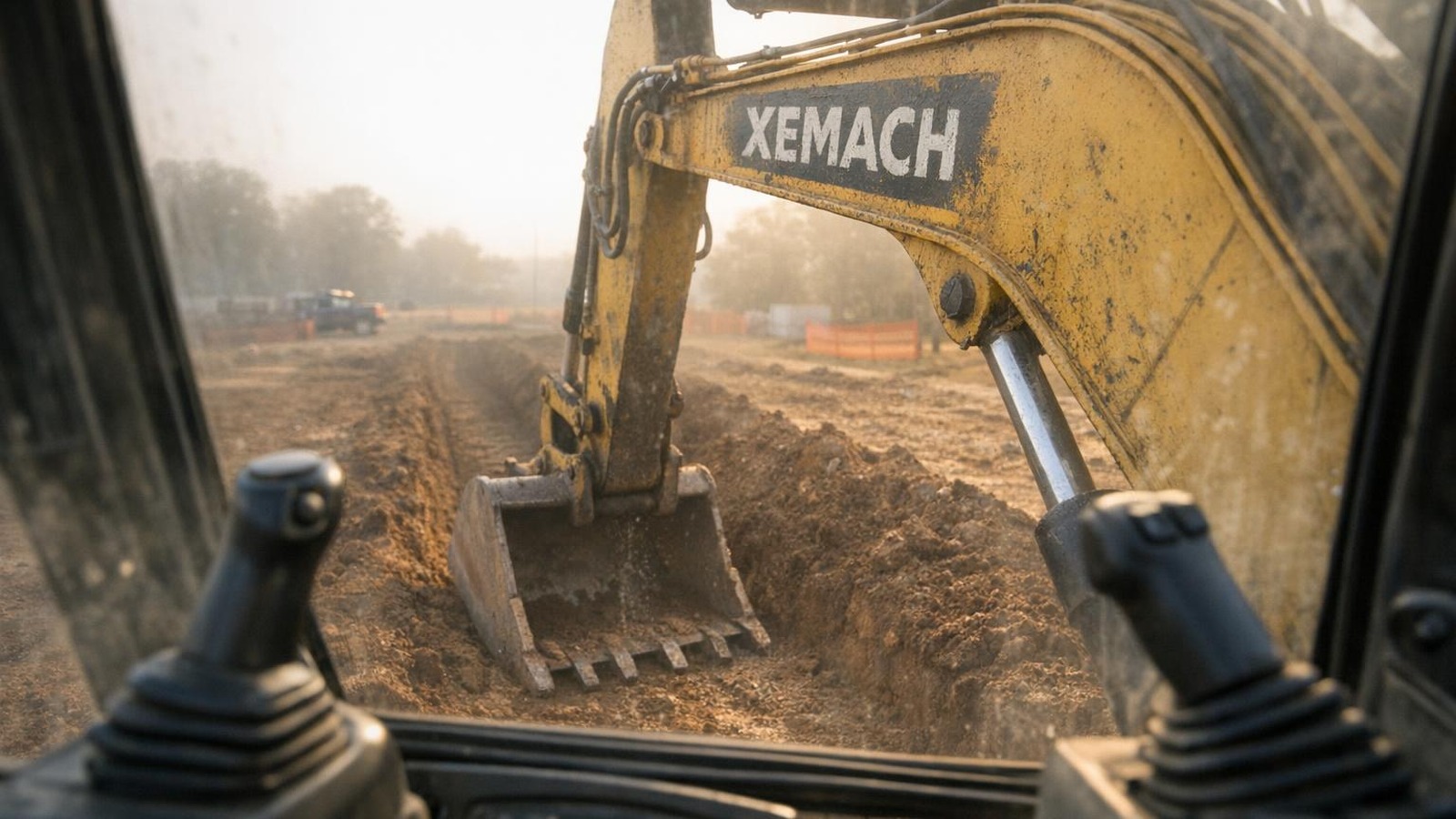
Excavators are increasingly expected to finish, not just rough-dig. When the bucket rotates and tilts, guidance has to keep up. That is why tiltrotator-aware control is drawing attention. It aims to hold grade accuracy regardless of bucket orientation.
XeMach view: Attachments are no longer an afterthought. As quick couplers and tiltrotators become more common, contractors will expect fast tool changes without losing calibration or burning time on re-setup.
4) Hybrid positioning removes a common source of downtime
Robotic total stations can lose line of sight. On crowded sites that can happen repeatedly. Hybrid approaches that switch between local positioning and GNSS can keep the guidance running instead of forcing a pause.
Small interruptions add up over a shift. Anything that cuts “stop-and-wait” time is a real productivity feature.
5) Cloud platforms are turning into the coordination layer
Telematics is moving past “where is the machine and how many hours.” The newer model is closer to a workflow hub: push design files to machines, sync progress back to the office, and tie reporting to what actually happened on site.
XeMach view: The value is not the dashboard. The value is fewer wrong files, fewer re-dos, and earlier visibility when something drifts.
6) AI safety cameras are becoming expected equipment
Multi-camera systems with AI detection are showing up more often. They can warn operators about people or machines entering risk zones, and they can also create a record that helps training.
For excavators and grading machines working in tight corridors, this is practical safety, not just compliance.
What fleets should do next
- Standardize your guidance workflow across excavators and grading equipment so training scales.
- If you run tiltrotators or swap tools often, plan for attachment-aware control.
- Clean up your data flow (design files, revisions, reporting) before you buy another screen.
- Treat AI safety as a system: camera placement and alert tuning decide whether it helps or becomes noise.
Bottom line: The next wave of jobsite tech will feel less like “tech.” It will feel like fewer stops, fewer reworks, and fewer close calls.