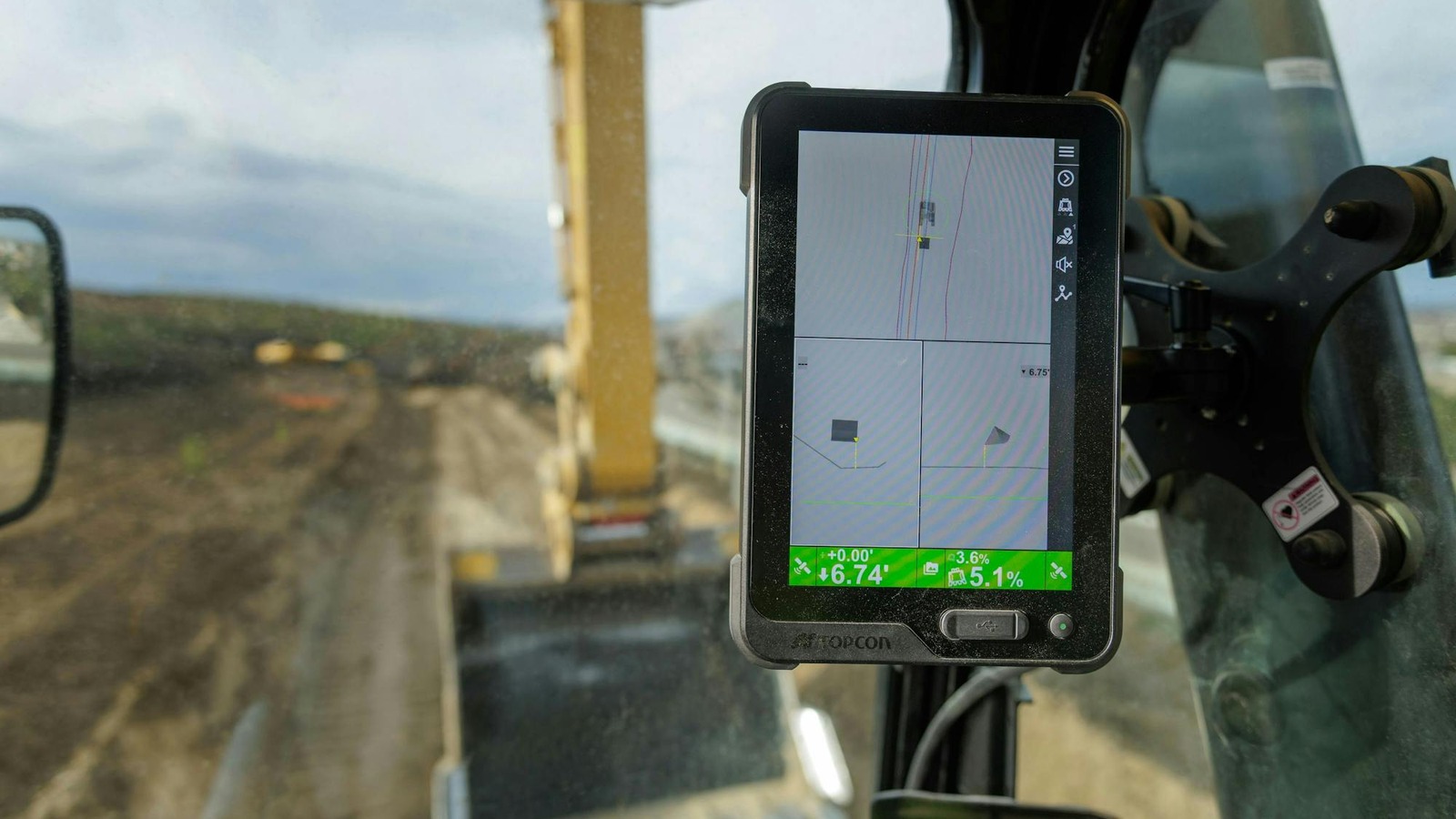
At Conexpo 2026, one message came through clearly for earthmoving fleets: guidance, connectivity, and safety features are no longer “nice-to-have” upgrades. They’re being redesigned to be easier to use, easier to retrofit, and in some cases factory-integrated as standard equipment on new excavators.
What changed: the tech stack is being packaged, not piled on
For years, jobsite technology often meant bolting different systems onto a machine: one vendor for grade control, another for weighing, another for cameras, plus a laptop’s worth of setup steps. That approach can work, but it creates friction. Downtime goes up, calibration becomes a chore, and operators quietly switch things off when they get annoying.
Now we’re seeing a shift toward packaged workflows:
- “Sensor fusion” that combines GNSS, optical tracking, and other inputs so guidance keeps working when one signal is blocked or degraded.
- Entry-level 3D guidance aimed at smaller contractors and municipalities, built to deliver real productivity without high-end complexity.
- Cloud platforms that move design files to machines and send progress data back to the office with fewer manual steps.
In plain terms, the industry is treating jobsite tech like an operating system: one interface, fewer surprises.
Excavators: 2D guidance is becoming baseline, and 3D becomes an upgrade path
The biggest implication for excavators is standardization.
Factory integration of 2D machine control on mobile and crawler excavators changes the economics of adoption:
- Less downtime at delivery. If sensors and displays are installed and validated at the factory, fleets avoid the “new machine, immediate install appointment” bottleneck.
- Cleaner future upgrades. A machine ordered “3D-ready” can move to full 3D guidance later with less rework, which matters when budgets are phased.
- More consistent operator experience. When the guidance layer is tied into the OEM display and menus, training gets easier and mistakes drop.
- fewer passes to hit grade,
- better drainage and finish quality on slopes,
- less rework when transitioning between operators or shifts.
- reinforcing consistent safe behavior across crews,
- enabling better near-miss review and coaching,
- supporting work in congested urban utility sites and night shifts.
- Spec upgrade-ready excavators where possible. If 2D guidance is standard or easy to enable, make sure the machine is wired and bracketed for a clean jump to 3D later.
- Treat machine control as a training program, not a product. One strong operator champion is often worth more than a higher-end sensor package.
- Prioritize safety systems that fit daily routines. Alerts must be consistent, configurable, and measurable, or they’ll fade into background noise.
For contractors, this changes how you spec machines. Instead of debating whether you want machine control at all, the new question is what level of capability you want on Day 1, and how fast you want to scale.
Attachments and complex grading: guidance needs to follow the tool, not just the boom
Excavators are increasingly asked to do precise work with attachments: tiltrotators, grading buckets, and other couplers that change tool orientation constantly.
That pushes guidance systems to answer the real-world question: where is the cutting edge right now, not just where is the stick.
As these capabilities improve, the payoff shows up quickly:
AI camera safety: the second system operators will actually keep on
Safety cameras aren’t new. What’s new is the move from passive video to active detection.
AI-enabled camera systems can watch multiple views around the machine and flag approaching objects or high-risk zones. When it’s tuned well, it supports good operators instead of nagging them.
For fleets, the value isn’t only avoiding a single incident (though that alone is worth it). It’s also:
XeMach view: what fleets should do in 2026
Technology adoption wins when it reduces friction. Three practical moves stand out:
Closing
Earthmoving equipment is entering a phase where digital features are no longer bolt-on accessories. They’re part of how the machine is delivered, operated, and improved over time. For excavator fleets, the winners will be the ones that spec for scalability, keep the operator experience simple, and use data to drive safer, cleaner production.