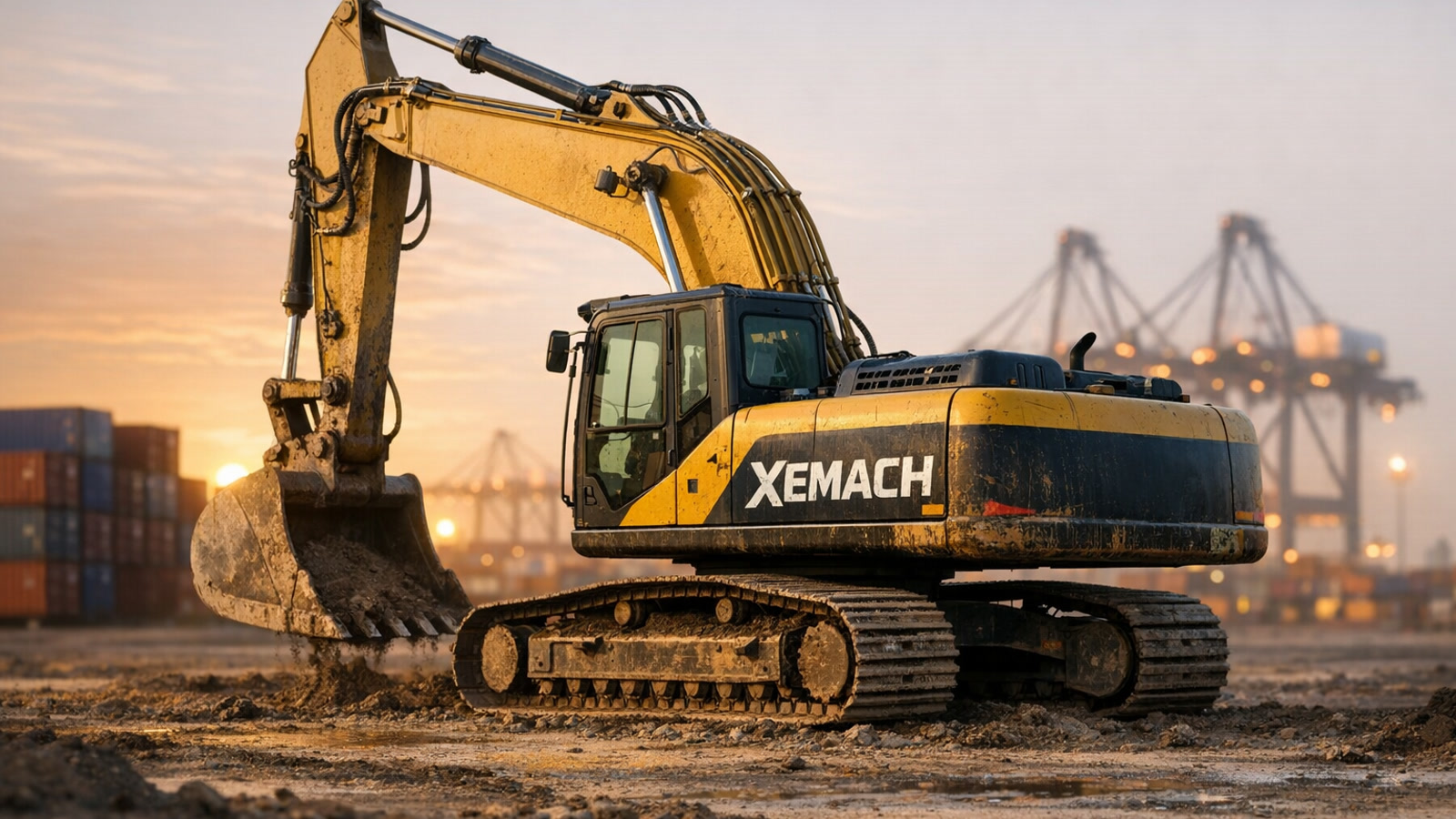
China’s excavator export channel stayed strong in February even as domestic demand softened. The latest monthly bulletin from the China Construction Machinery Association (CCMA) shows exports accounting for roughly three-fifths of total excavator sales — a reminder that for many OEMs, overseas markets are now the main growth engine.
Headline numbers (February 2026)
- Total excavator sales: 17,226 units (-10.6% YoY)
- Domestic sales: 6,755 units (-42% YoY)
- Exports: 10,471 units (+37.2% YoY)
Based on the same CCMA release, year-to-date (Jan–Feb 2026) excavator exports reached 20,456 units (+38.8% YoY). That implies January exports of about 9,985 units, putting February exports at roughly +4.9% month-on-month (derived).
Export share: exports are now the majority
In February 2026, exports were approximately 60.8% of total excavator sales (10,471 / 17,226). This mix shift is strategically important: export strength can offset domestic cyclicality, but it also exposes OEMs to FX, shipping, and regional policy risk.
Why did exports rise? (3+ key drivers)
- Overseas project demand remains resilient. Infrastructure and mining activity in multiple regions continues to support excavator utilization, and fleets with high hour accumulation are more willing to replace or expand capacity.
- Channel build-out and faster delivery cycles. Chinese OEMs have been strengthening overseas dealer coverage, parts availability, and service teams. Better support reduces buyer hesitation and improves conversion for mid-size and larger machines.
- Currency and pricing competitiveness. Even modest FX moves can improve price positioning for export quotes. Combined with scale manufacturing and aggressive product refresh cycles, Chinese brands can win share in price-sensitive markets without relying on one-off discounts.
- Replacement cycle + used equipment dynamics. In several markets, the used inventory pipeline has tightened and late-model availability has been uneven. That can pull forward new-machine demand, especially for standardized configurations.
What to expect after March: trend and risk outlook
Base case (next 1–3 months): exports are likely to remain a stabilizer for China’s excavator industry, with continued YoY growth possible as long as overseas dealer momentum and project pipelines hold. Seasonality could still make month-to-month comparisons noisy.
Key risks to watch:
- Trade and compliance headwinds: shifting tariff rules, local-content policies, or certification requirements can slow deliveries or raise landed cost.
- FX and freight volatility: currency swings and shipping constraints can quickly change OEM margin and dealer stocking appetite.
- Credit conditions in emerging markets: financing availability (and public-sector payment cycles) can tighten abruptly, affecting order conversion and dealer receivables.
- Competitive response: incumbent global brands may counter with targeted promotions, extended warranty/service packages, or faster model updates in key regions.
XeMach takeaway
February’s data reinforces a clear message: China’s excavator export story is no longer a side channel. With exports contributing ~61% of unit volume in the month, the operational winners will be OEMs and dealers that can sustain parts/service performance overseas, protect margin under FX pressure, and manage regional compliance risk — while domestic demand works through its cycle.
Source
CCMA monthly bulletin (Chinese): http://www.cncma.org/article/22330