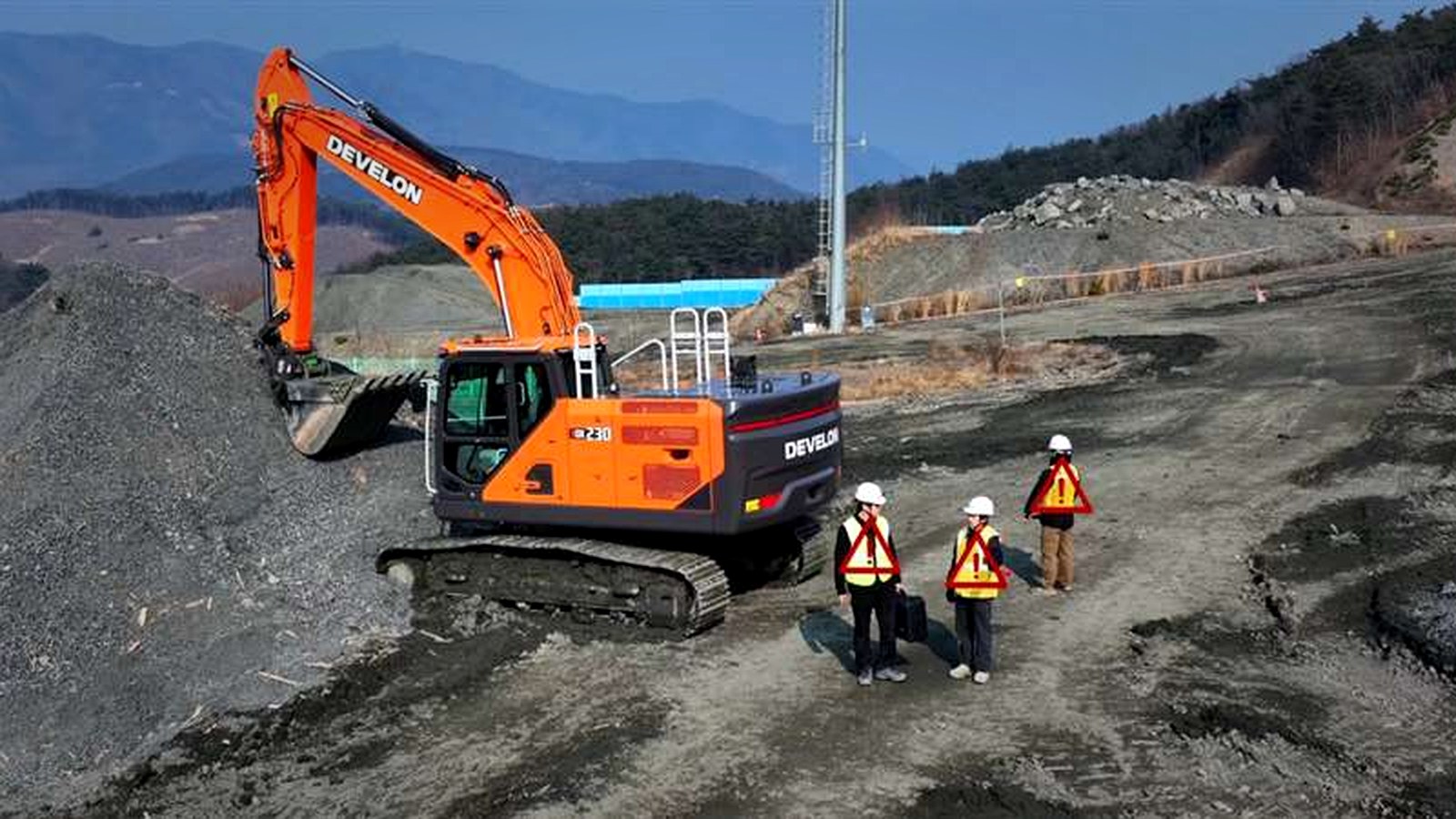
Jobsite safety is entering a new era: instead of relying only on alarms and operator visibility, machines are beginning to perceive people and hazards around them—and then automatically limit motion when risk crosses a threshold.
Two recent announcements highlight the same direction: AI-based human detection tied to automatic slow/stop functions around excavators, and machine-control software that can enforce 3D “avoidance zones” near power lines, underground utilities, and other no-go areas. Together, they point to a broader shift: safety features are becoming systems—not add-ons.
From passive awareness to active intervention
Historically, many safety aids were passive: mirrors, cameras, proximity beepers, and simple object detection. The new generation is different in two ways:
- Better perception: multi-camera plus radar (or similar sensor fusion) improves coverage around blind spots and reduces false positives compared with single-sensor solutions.
- Actionable logic: instead of only warning the operator, the machine can automatically reduce travel speed, and in defined scenarios stop specific motions (for example, swing or reverse) when a person enters a danger zone.
Why “zones” matter: predictable behavior on crowded sites
What makes these systems operationally useful is how they translate detection into clear, repeatable boundaries:
- Two-stage safety zones (e.g., warning zone vs. danger zone) help crews understand what the machine will do before it does it.
- Virtual boundaries (a “virtual wall” concept) can prevent accidental encroachment into tight work areas, especially when multiple trades are working in parallel.
- 3D avoidance zones extend the same idea to machine-control workflows, allowing contractors to define above- and below-ground exclusion volumes tied to real job constraints.
XeMach view: the next safety baseline is software-defined
At XeMach, we think the key change isn’t a single sensor or feature—it’s the architecture. Safety is moving toward a software-defined layer that sits between operator intent and machine motion, using live context (people, obstacles, geofences, utilities) to reduce risk without stopping productivity.
For contractors and fleet owners, this creates a practical checklist when evaluating equipment and retrofits:
- Coverage: does the system monitor 360° and key blind spots, and how does it perform in dust, low light, and rain?
- False positives vs. trust: how often does it interrupt work unnecessarily, and can it distinguish people from static objects?
- Integration: is it integrated into machine control/hydraulics (slow/stop), or is it only an alerting layer?
- Workflow fit: can avoidance zones/geofences be imported from project data, and can they be updated as the site evolves?
What to watch next
Over the next 12–24 months, expect three developments to accelerate adoption:
- Standardization: more OEMs will package perception + intervention as an option across core excavator lines, not only premium trims.
- Interoperability: safety zones will increasingly connect with digital site plans, utilities mapping, and machine-control ecosystems.
- Data governance: fleets will demand clarity on what data is stored, shared, and used for training—especially as AI assistance becomes more common.
Conclusion
Safety technology is shifting from “help the operator see” to “help the machine decide when not to move.” The winners will be solutions that are transparent, predictable, and integrated—reducing incidents without adding friction to daily production.
Sources
- Construction Briefing – AI-based E-Stop and human detection around excavators
- Construction Equipment – 3D avoidance zones integrated with machine control software