
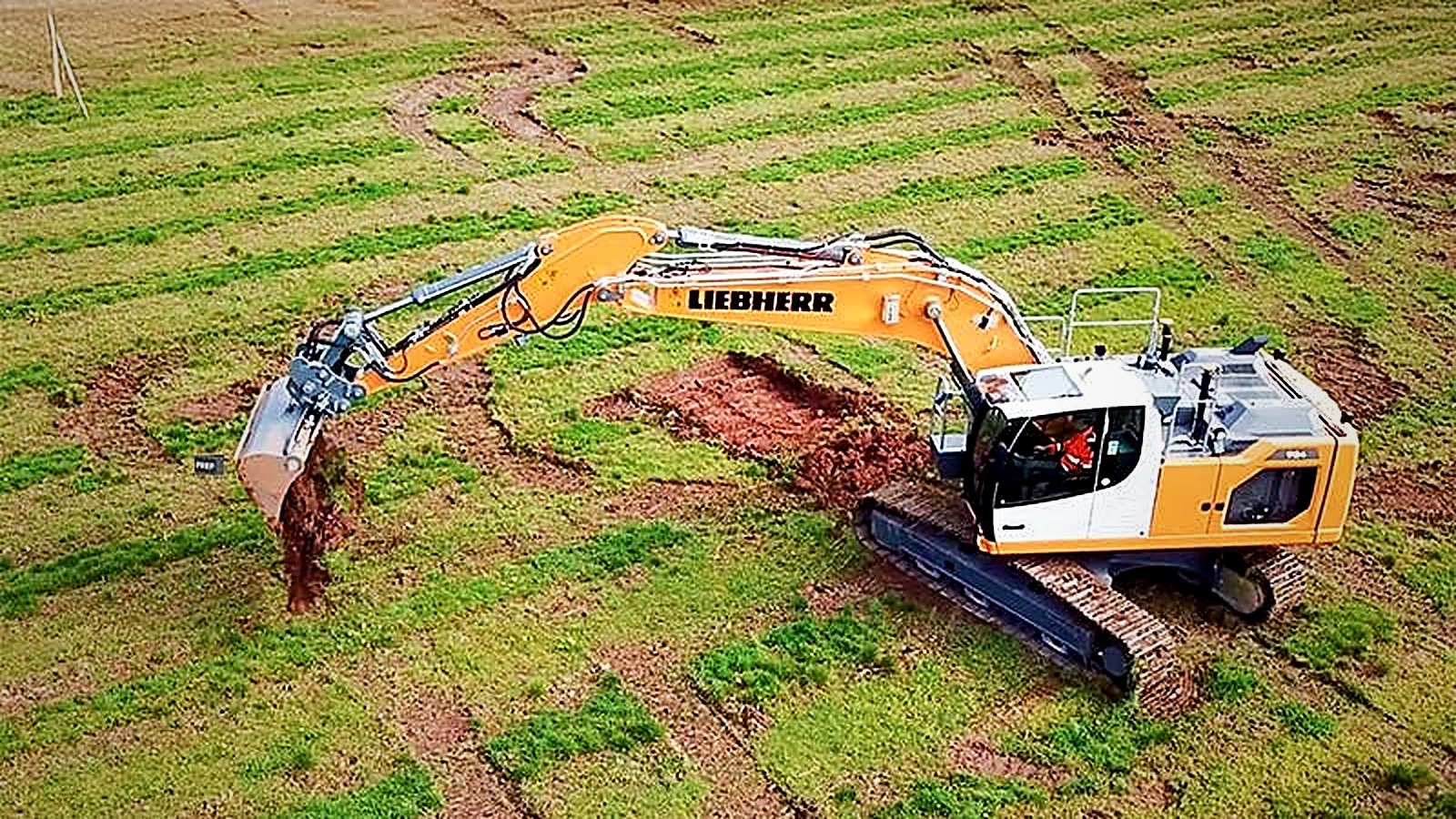
As OEMs push more guidance and sensing into the factory build, ‘machine control-ready’ is quickly turning from a premium option into an expectation. The latest example is the expanded collaboration between Leica Geosystems and Liebherr, bringing an integrated sensor chain and standard 2D guidance across many Generation 8 excavators—with a clear upgrade path to 3D.
What changed: from aftermarket add-on to factory architecture
For years, contractors treated 2D/3D guidance as an accessory decision: buy the machine first, then decide later whether to install sensors, displays, GNSS receivers, and wiring. That model works—until you factor in real-world friction: downtime for installation, calibration variability, and the challenge of keeping mixed fleets consistent across sites.
By integrating the sensor chain at the factory level, Liebherr can deliver a uniform baseline (including 2D guidance on the in-cab display) and let customers specify ‘3D-ready’ or full 3D from day one—or upgrade later without reopening the machine. In practice, this shifts machine control from an optional kit to part of the machine’s core electrical and software platform.
Why it matters to contractors: productivity is only half the story
- Less downtime, more predictable commissioning: Factory integration reduces the time and coordination needed to get a new excavator ‘site-ready.’
- Standardization across crews: When 2D guidance is consistent and built-in, training is simpler and operator transfers are smoother.
- A safer route to automation features: Once sensors and interfaces are standardized, semi-automatic functions (bucket fill assist, weighing, guidance modes) become easier to deliver reliably.
Even if you’re not running 3D on every job, having the machine wired and calibrated for it is increasingly valuable—especially for contractors who move between mass excavation, utility, and grading work where scope changes are common.
The OEM perspective: the cab display becomes a control center
OEMs are converging on a familiar pattern: the in-cab display is no longer just a monitor—it’s the user interface for guidance, payload, diagnostics, and service workflows. A factory-integrated approach helps OEMs control the entire experience, from setup to updates.
From a lifecycle standpoint, this also supports a cleaner upgrade story: customers can start with 2D, move to 3D when the job mix demands it, and add automation features as crews mature. That reduces the ‘all or nothing’ barrier that historically kept machine control adoption uneven across the industry.
XeMach takeaway: plan for “digital-first” excavator specifications
At XeMach, we see machine control moving toward a default expectation in bidding and project delivery—similar to how telematics went from novelty to necessity. For fleet owners, the practical question is shifting from “Do we want 3D?” to “Do we want every new machine to be 3D-upgradeable and standardized from day one?”
Three procurement tips we recommend:
- Specify upgradeability, not just features: Ask whether the machine is 3D-ready ex-factory, and what the upgrade process looks like.
- Audit training and process readiness: The ROI depends on workflows—grade checks, as-builts, and operator habits—not only hardware.
- Align guidance with fleet data: Machine control, payload, and telematics should tell a single story about production and cost, not live in separate silos.
What to watch next
The next competitive edge will come from integration depth: how well OEMs combine guidance, weighing, assist functions, and service tools into a stable platform that contractors can scale. As more excavators ship with standard 2D and ‘3D-ready’ wiring, the industry will likely see faster adoption on mid-size contractors—not just the largest fleets.
Sources: Construction Equipment; Construction Equipment (Fleetio 2026 fleet benchmark summary).